Grilled Sweet Mustard Glazed Salmon
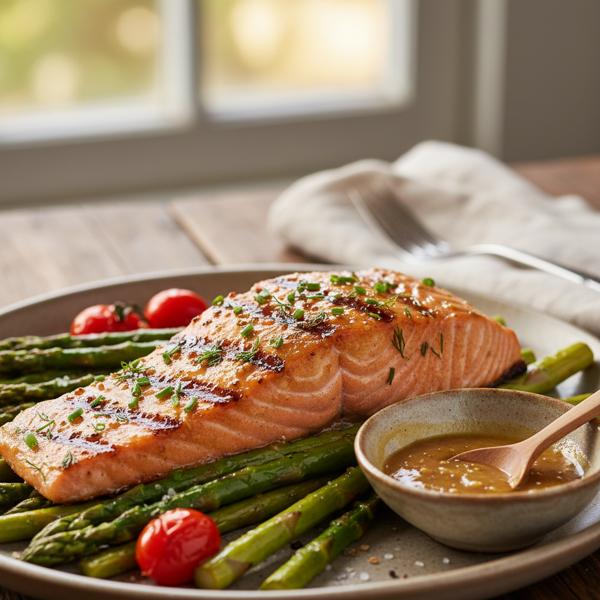
Living in the Pacific Northwest has its perks, especially when it comes to fresh, wild-caught salmon. This recipe elevates the exquisite flavor of salmon fillets by glazing them with a harmonious blend of sweetness and tanginess. The combination of brown sugar, classic Dijon, and whole grain Dijon mustard creates a deliciously sticky coating that caramelizes beautifully on the grill. While this dish can be baked, grilling is recommended to enhance the flavors and impart a smoky essence that perfectly complements the richness of the salmon. Serve it alongside seasonal vegetables for a well-rounded, wholesome meal that celebrates the best of our local resources.
N/A
Servings
N/A
Calories
5
Ingredients
Ingredients
Butter
1/4 cup (melted)
Brown Sugar
2 tablespoons (packed)
Dijon Mustard
2 tablespoons (smooth)
Whole Grain Dijon Mustard
2 tablespoons (roughly whisked)
Salmon Fillets
4 (4-6 ounces each) (rinsed and patted dry)
Instructions
1
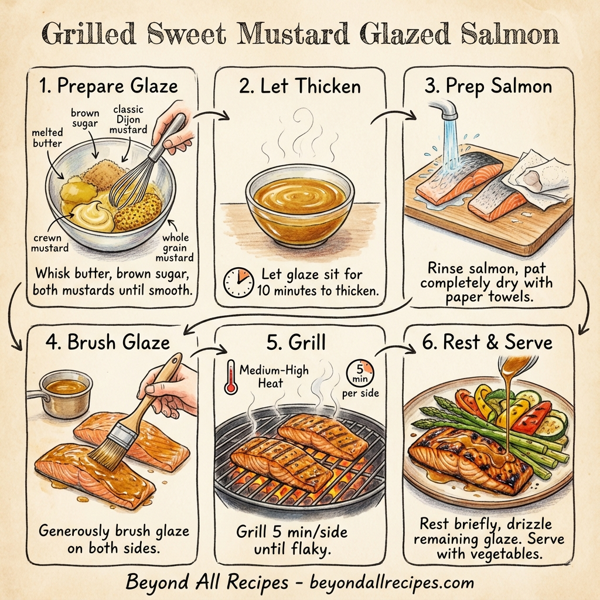
In a mixing bowl, combine the melted butter, brown sugar, Dijon mustard, and whole grain mustard. Whisk until the ingredients form a smooth glaze.
2
Allow the glaze to sit at room temperature for about 10 minutes to thicken slightly.
3
Rinse the salmon fillets under cold water and pat them dry using paper towels. This step is crucial for ensuring that the glaze adheres well.
4
Generously brush the glaze on both sides of each salmon fillet, making sure to cover them completely for maximum flavor.
5
Preheat your grill to medium-high heat. Once ready, place the salmon fillets on the grill, skin-side down. Grill for approximately 5 minutes per side, or until the salmon flakes easily with a fork and reaches your desired level of doneness.
6
Remove the salmon from the grill and let it rest for a couple of minutes before serving. Optionally, drizzle with any remaining glaze for added flavor.
Nutrition Information
Frequently Asked Questions
Frequently Asked Questions
What is Grilled Sweet Mustard Glazed Salmon?
It is a Pacific Northwest-inspired dish featuring salmon fillets coated in a sweet and tangy glaze made from brown sugar and two types of Dijon mustard.
What are the main ingredients for the salmon glaze?
The glaze consists of melted butter, packed brown sugar, smooth Dijon mustard, and roughly whisked whole grain Dijon mustard.
How many ingredients are required for this recipe?
This recipe requires a total of 5 ingredients: butter, brown sugar, Dijon mustard, whole grain Dijon mustard, and salmon fillets.
What kind of salmon is recommended for this recipe?
Fresh, wild-caught salmon, particularly from the Pacific Northwest, is recommended for the best flavor.
How should I prepare the salmon fillets before glazing?
Rinse the fillets under cold water and pat them dry with paper towels to ensure the glaze adheres properly.
Why is it important to pat the salmon dry?
Patting the salmon dry is a crucial step that allows the mustard glaze to stick to the fish effectively rather than sliding off.
How long should the glaze sit after mixing?
The glaze should sit at room temperature for about 10 minutes to allow it to thicken slightly before application.
What is the recommended grill temperature?
Preheat your grill to medium-high heat before placing the salmon on the grates.
Which side of the salmon should be placed on the grill first?
You should place the salmon fillets on the grill skin-side down first.
How long does it take to grill the salmon?
Grill the salmon for approximately 5 minutes per side.
How do I know when the salmon is finished cooking?
The salmon is done when it flakes easily with a fork and reaches your desired level of doneness.
Can I bake this salmon instead of grilling it?
Yes, this dish can be baked, though grilling is recommended to impart a smoky essence and enhance the flavors.
What are the benefits of grilling this recipe?
Grilling enhances the richness of the salmon and adds a smoky flavor that complements the sweet mustard glaze.
Should I glaze both sides of the salmon?
Yes, you should generously brush the glaze on both sides of each fillet for maximum flavor.
What should I serve with Grilled Sweet Mustard Glazed Salmon?
It is recommended to serve this dish alongside seasonal vegetables for a wholesome meal.
What is the serving size for this recipe?
The recipe calls for 4 salmon fillets, each weighing between 4 to 6 ounces.
How much butter is used in the recipe?
The recipe uses 1/4 cup of melted butter.
How much brown sugar is needed for the glaze?
You will need 2 tablespoons of packed brown sugar.
What types of mustard are used in the glaze?
The recipe uses 2 tablespoons of smooth Dijon mustard and 2 tablespoons of whole grain Dijon mustard.
Does the glaze create a specific texture?
Yes, the combination of brown sugar and mustards creates a deliciously sticky coating that caramelizes beautifully.
Should the salmon rest after cooking?
Yes, allow the salmon to rest for a couple of minutes after removing it from the grill to ensure the best texture.
Can I add extra glaze after grilling?
Optionally, you can drizzle any remaining glaze over the fillets before serving for added flavor.
Is this recipe considered healthy?
Yes, it is tagged as a healthy cooking and high protein recipe.
Is this an easy recipe to follow?
Yes, it is categorized as an easy recipe with simple steps for preparation and grilling.
What occasion is this recipe best for?
It is ideal for summer recipes and barbecues due to the grilling method.
What creates the sweetness in the glaze?
The sweetness comes from the two tablespoons of packed brown sugar.
What creates the tanginess in the recipe?
The tanginess is provided by the combination of smooth Dijon and whole grain Dijon mustards.
How do I prepare the whole grain mustard?
The whole grain Dijon mustard should be roughly whisked into the glaze mixture.
Is this recipe suitable for a high protein diet?
Yes, salmon is a great source of protein, and this recipe is tagged accordingly.
What is the culinary style of this dish?
The style is Pacific Northwest, emphasizing fresh local resources like wild-caught salmon.