Grilled Salmon with Thai Coconut Red Curry Sauce

Elevate your grilled salmon experience with this vibrant Thai Coconut Red Curry Sauce. An exotic blend of creamy coconut milk, aromatic Thai red curry paste, and fresh lime juice creates a rich sauce that perfectly complements the natural flavors of the salmon. This delightful sauce, enhanced with the sweetness of brown sugar and a fragrant touch of fresh basil, is not only easy to prepare but also packed with flavor. Whether you're hosting a dinner party or enjoying a cozy night in, this recipe is sure to impress. Serve it over a bed of fragrant Jasmine or Basmati rice for a complete meal that transports you straight to Thailand.
6
Servings
63
Calories
7
Ingredients
Ingredients
unsweetened coconut milk
1 cup (canned or carton, shake well before using)
Thai red curry paste
1 teaspoon (preferably a brand that is gluten-free)
light brown sugar
1 tablespoon (packed)
fresh lime juice
1 1/2 teaspoons (freshly squeezed)
salt
1 pinch (to taste)
cornstarch
2 teaspoons (mixed with a small amount of water to create a slurry)
fresh basil leaves
8 leaves (tightly stacked and sliced into ribbons)
Instructions
1
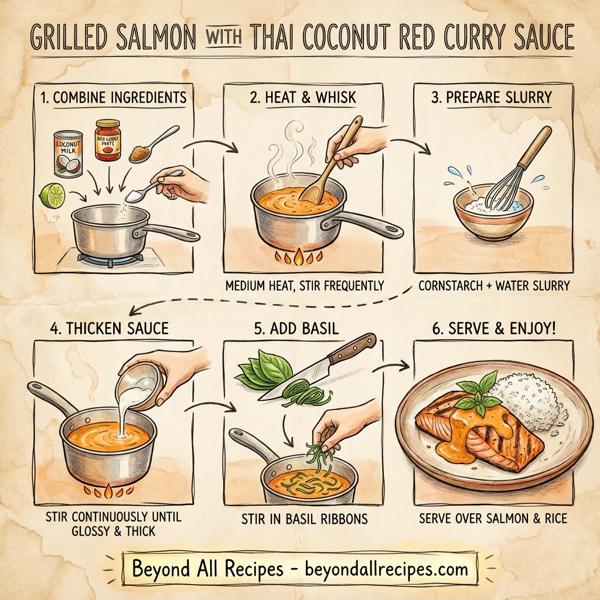
In a small saucepan, combine the coconut milk, red curry paste, light brown sugar, lime juice, and a pinch of salt.
2
Heat the mixture over medium heat, stirring frequently until well-combined and warmed through. Taste and adjust the seasoning if necessary.
3
Just before the salmon is fully cooked, prepare a slurry by mixing the cornstarch with a small amount of water in a separate bowl until smooth.
4
Gradually stir the cornstarch slurry into the warming sauce, stirring continuously until the sauce thickens and becomes glossy, coating the back of a spoon.
5
Stack the basil leaves together and roll them tightly like a cigar. Slice them crosswise into thin ribbons and stir these ribbons into the sauce just before serving.
6
Keep the sauce warm on low heat, but avoid letting it simmer for an extended period.
7
Serve the shrimp with the warm sauce drizzled over the top, and enjoy it alongside Jasmine or Basmati rice.
Nutrition Information
5g
Fat
5g
Carbs
1g
Protein
Frequently Asked Questions
Frequently Asked Questions
What is Grilled Salmon with Thai Coconut Red Curry Sauce?
It is a flavorful dish featuring grilled salmon topped with a rich sauce made from coconut milk, Thai red curry paste, lime juice, and fresh basil.
What are the main ingredients in the Thai red curry sauce?
The sauce consists of unsweetened coconut milk, Thai red curry paste, light brown sugar, fresh lime juice, salt, cornstarch, and fresh basil leaves.
How do I prepare the Thai red curry sauce?
Combine coconut milk, curry paste, sugar, lime juice, and salt in a saucepan, heat through, then stir in a cornstarch slurry to thicken before adding fresh basil ribbons.
Can I use this sauce for other proteins besides salmon?
Yes, while designed for salmon, the recipe notes it can be served over shrimp, and it also pairs well with chicken or tofu.
Is this recipe gluten-free?
It can be if you ensure your Thai red curry paste is a brand certified to be gluten-free.
What type of coconut milk should I use?
Use one cup of unsweetened coconut milk, either from a can or a carton, and be sure to shake it well before using.
How do I thicken the red curry sauce?
The sauce is thickened by gradually stirring in a slurry made of two teaspoons of cornstarch mixed with a small amount of water.
How should I prepare the basil for the sauce?
Stack eight basil leaves, roll them tightly like a cigar, and slice them crosswise into thin ribbons to be stirred in just before serving.
What are the best side dishes for this grilled salmon?
It is recommended to serve this dish over a bed of fragrant Jasmine or Basmati rice.
How many calories are in a serving of this sauce?
Each serving contains approximately 63 calories.
Can I substitute the light brown sugar?
While light brown sugar provides a specific sweetness, you could substitute it with coconut sugar or honey if needed.
Is the Thai coconut red curry sauce spicy?
The spice level depends on the brand and amount of Thai red curry paste used; one teaspoon typically provides a mild to moderate heat.
What is the fat content of this recipe?
There are 5 grams of fat per serving.
How many servings does this recipe make?
This recipe is designed to provide 6 servings.
How much protein is in the sauce?
The sauce alone provides approximately 1 gram of protein per serving.
Can I make this sauce ahead of time?
Yes, you can prepare the sauce in advance and keep it warm on low heat, but avoid simmering it for an extended period.
How do I store leftover sauce?
Store any leftover sauce in an airtight container in the refrigerator for up to 3 days.
What is a cornstarch slurry?
A slurry is a mixture of cornstarch and a small amount of cold water stirred until smooth, used to thicken sauces without creating lumps.
Can I use dried basil instead of fresh?
Fresh basil is highly recommended for its aromatic flavor and texture, but in a pinch, you can use dried basil, though the flavor will differ.
What kind of lime juice should I use?
Freshly squeezed lime juice is best to provide the vibrant, citrusy acidity required for the sauce.
Can I freeze the Thai coconut sauce?
You can freeze it, but the texture may change slightly upon thawing due to the coconut milk and cornstarch; whisk it well while reheating.
Is this recipe dairy-free?
Yes, because it uses coconut milk rather than dairy cream, the recipe is naturally dairy-free.
How do I reheat the sauce?
Reheat the sauce gently over low heat on the stovetop, stirring frequently to maintain its smooth and glossy consistency.
What does the cornstarch do for the sauce?
The cornstarch slurry thickens the sauce and gives it a glossy appearance that helps it coat the back of a spoon.
Should I boil the sauce?
You should heat it until warmed through and thickened, but avoid letting it simmer or boil for a long time to prevent the flavors from dulling.
Can I use green curry paste instead of red?
Yes, you can substitute green curry paste, but it will change the flavor profile and color of the sauce to be more herbaceous and potentially spicier.
How much carbohydrates are in the sauce?
There are 5 grams of carbohydrates per serving.
Does this sauce contain any fiber?
Based on the nutritional data provided, the fiber content is negligible or null.
What is the preparation for the coconut milk?
You should shake the can or carton well before opening to ensure the cream and liquid are fully incorporated.
How much salt should I add?
The recipe calls for one pinch of salt, but you should taste the sauce and adjust the seasoning to your preference.