Grilled Miso Soy Rice Balls
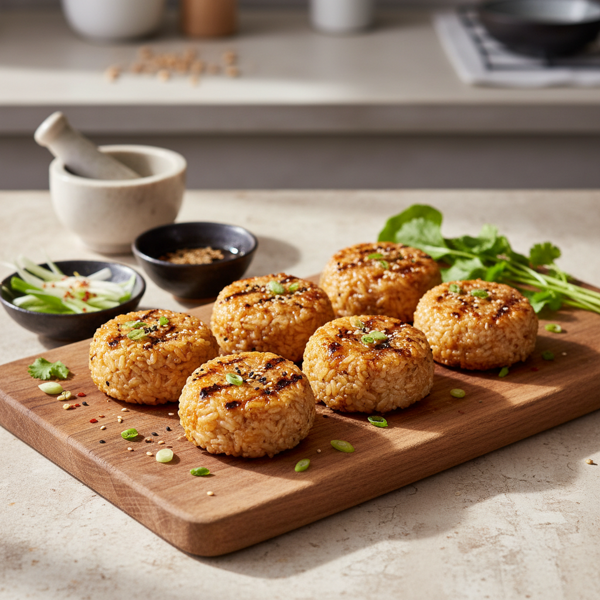
Experience the delightful flavor of Grilled Miso Soy Rice Balls, a beloved Japanese snack that’s perfect for any occasion! These crispy onigiri are formed from sticky short-grain rice and are infused with delicious umami flavors from miso and soy sauce. Whether you're packing a lunchbox for work or looking for a tasty side dish for your dinner, these rice balls deliver on both taste and convenience. They can even be made ahead and frozen for future enjoyment. Plus, the simple grilling technique creates a beautifully crispy exterior while keeping the inside soft and warm. Perfectly portable, these rice balls are sure to be a hit with family and friends!
N/A
Servings
N/A
Calories
5
Ingredients
Ingredients
cooked short-grain rice
14 ounces (about 2 cups, hot)
miso
2 teaspoons
sake
1 teaspoon (divided)
soy sauce
2 teaspoons
cooking oil
to taste (for brushing)
Instructions
1
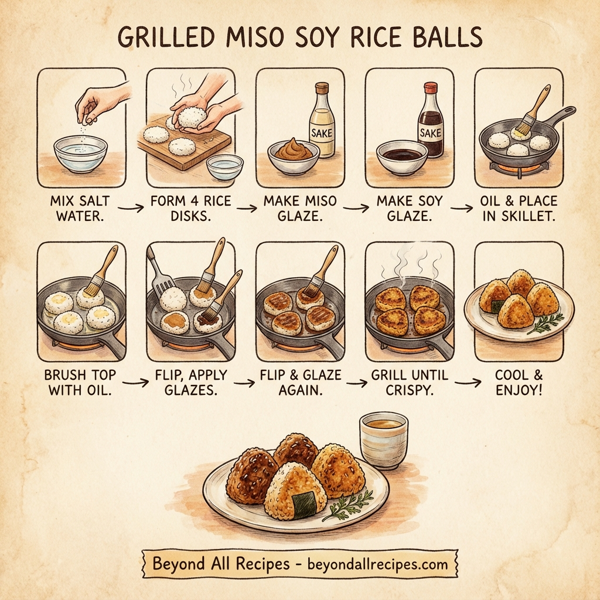
In a bowl, prepare a solution by mixing cool water with a pinch of salt. This will help prevent the rice from sticking to your hands.
2
Take the cooked hot short-grain rice and form it into four disk shapes, using the salted water to moisten your hands as needed.
3
In a small bowl, combine the miso paste with 1/2 teaspoon of sake and set aside to create your miso glaze.
4
In another bowl, mix the remaining 1/2 teaspoon of sake with the soy sauce to create your soy glaze. Set aside.
5
Heat a non-stick skillet over medium heat and lightly brush one side of each rice ball with oil. Place the oiled side down in the skillet.
6
Brush the top side of each rice ball with a bit more oil.
7
Once the bottom side is golden, carefully flip the rice balls, brushing miso glaze on two of them and soy sauce glaze on the other two.
8
Once the second side begins to brown, flip them again so that the first side (with the glaze) is facing down. Brush the now-visible side with the corresponding glaze.
9
Continue to grill until both sides are nicely caramelized and crispy, taking care not to let them burn. The soy sauce rice balls should achieve a deep golden color.
10
Remove from heat, let cool slightly, and enjoy your delicious grilled rice balls!
Nutrition Information
Frequently Asked Questions
Frequently Asked Questions
What are Grilled Miso Soy Rice Balls?
Grilled Miso Soy Rice Balls, also known as Yaki Onigiri, are a popular Japanese snack made from sticky short-grain rice that is grilled until crispy and coated with savory glazes.
What type of rice is best for these rice balls?
Short-grain rice is essential for this recipe because its high starch content makes it sticky enough to hold the rice ball shape without falling apart.
How do I keep the rice from sticking to my hands while forming the balls?
Prepare a solution of cool water mixed with a pinch of salt and use it to moisten your hands before handling the rice.
What are the two types of glazes used in this recipe?
The recipe uses two distinct glazes: one made from miso and sake, and another made from soy sauce and sake.
How do I prepare the miso glaze?
To make the miso glaze, simply mix 2 teaspoons of miso paste with 1/2 teaspoon of sake in a small bowl.
How do I prepare the soy glaze?
Mix 2 teaspoons of soy sauce with 1/2 teaspoon of sake to create the soy glaze.
Can these rice balls be made in advance?
Yes, these rice balls can be made ahead of time and are perfect for meal prep or lunchboxes.
Can I freeze Grilled Miso Soy Rice Balls?
Yes, these rice balls can be frozen for future enjoyment. Reheat them when you are ready to eat.
What is the best way to cook these rice balls?
The best method is to use a non-stick skillet over medium heat, lightly brushing the rice balls with oil to achieve a crispy exterior.
What shape should I form the rice balls into?
This recipe recommends forming the 14 ounces of cooked rice into four disk shapes.
Why is sake used in the glazes?
Sake helps to thin the glazes for easier brushing and adds a subtle umami sweetness to the exterior.
Are these rice balls suitable for lunchboxes?
Absolutely! They are perfectly portable and maintain a great flavor even after they have cooled down.
Should the rice be hot or cold when forming the balls?
It is best to use hot cooked short-grain rice as it is more pliable and sticks together better than cold rice.
What is the texture of Yaki Onigiri?
They have a beautifully crispy and caramelized exterior with a soft, warm, and tender interior.
Do I need a special grill to make these?
No, a standard non-stick skillet is all you need to get the perfect sear and crispiness.
How many rice balls does this recipe produce?
This recipe uses about 2 cups of rice to produce four individual rice balls.
When should I apply the glaze during cooking?
Apply the glaze after the first side has been oiled and flipped, then flip again to caramelize the glazed side.
How do I prevent the glazes from burning?
Watch them closely while grilling and ensure the heat is at medium; the goal is caramelization, not charring.
Is this recipe vegetarian?
Yes, based on the ingredients provided (rice, miso, soy sauce, sake, oil), this recipe is vegetarian-friendly.
What does the soy sauce glaze look like when finished?
The soy sauce glazed rice balls should achieve a deep golden, caramelized color when they are finished.
Can I use long-grain rice for this recipe?
Long-grain rice is not recommended as it is not sticky enough to hold the shape of a rice ball during grilling.
What kind of miso should I use?
You can use any miso you prefer, such as white (shiro) miso for a milder taste or red (aka) miso for a stronger flavor.
Is it necessary to use oil?
Brushing with oil is important to prevent the rice from sticking to the pan and to help create that signature crispy crust.
Can I add fillings to these rice balls?
While this recipe focuses on the grilled glaze, you can certainly add traditional fillings like pickled plum or salted salmon to the center before grilling.
Are these rice balls considered a snack or a meal?
They are versatile and can be served as a snack, a side dish for dinner, or a portable lunch item.
What does 'umami' mean in the context of this recipe?
Umami refers to the savory, deep flavor provided by the fermented ingredients like miso and soy sauce.
How do I ensure the rice balls don't fall apart in the pan?
Press the rice firmly when forming the disks and wait until the bottom is golden before attempting to flip them.
What is the significance of the salted water?
The salted water prevents sticking and adds a light seasoning to the exterior of the rice.
Can I substitute the sake?
If you don't have sake, you can use mirin or a small amount of water to thin the miso and soy sauce.
How should these be served?
Remove from heat, let them cool slightly so they firm up, and enjoy them warm for the best texture.