Greek Herb-Infused Rice Pilaf
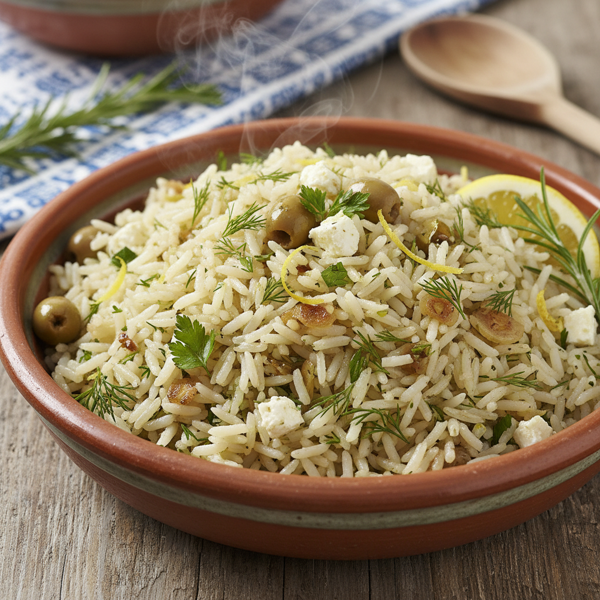
Experience the delightful flavors of Greek cuisine with this Herb-Infused Rice Pilaf. This comforting dish, known as Pilafi Me Throumbi, features long-grain rice sautéed to perfection with aromatic onions and garlic. Enhanced with fresh herbs and spices, including dried parsley and savory paprika, each bite is truly captivating. Served alongside grilled meats or vegetables, this pilaf makes a perfect addition to any meal. Elevate your dining experience by sharing this traditional recipe with friends and family.
4
Servings
N/A
Calories
10
Ingredients
Ingredients
Long Grain Rice
1 cup (Rinsed and drained)
Olive Oil
1 tablespoon (Extra virgin is preferred)
Butter
1 tablespoon (Cut into small pieces for easier melting)
Minced Onions
2 tablespoons (Freshly minced)
Minced Garlic Clove
1 clove (Finely minced)
Dried Parsley
1 tablespoon (Dried)
Paprika
1/2 teaspoon (Smoked or sweet, depending on preference)
Ground Savory
1/4 teaspoon (Dried)
Chicken Bouillon Cube
1 (Goya brand suggested)
Hot Water
2 cups (Boiling)
Instructions
1
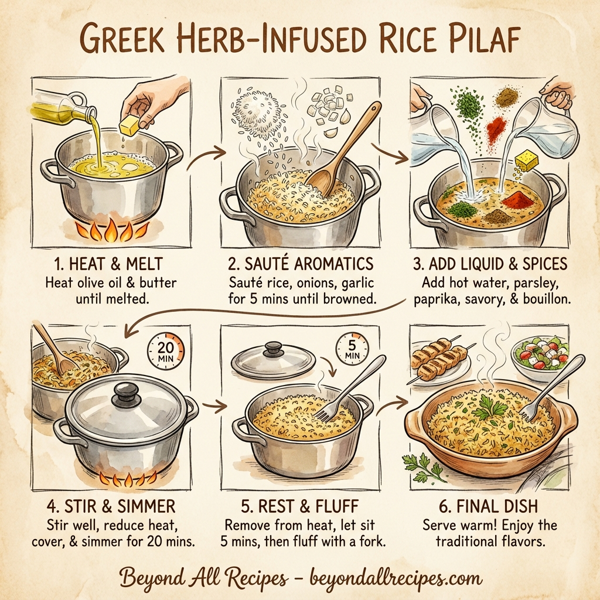
In a large pot, heat the olive oil and butter over medium-high heat until the butter is melted.
2
Add the rinsed rice, minced onions, and minced garlic to the pot. Sauté for about 5 minutes, stirring frequently until the rice is lightly browned and the onions are translucent. This step is crucial for developing the rice's flavor.
3
Once the rice mixture is browned, add the hot water along with the dried parsley, paprika, ground savory, and the crumbled chicken bouillon cube.
4
Stir the mixture well to combine, making sure the bouillon cube is fully dissolved.
5
Reduce the heat to low, cover the pot with a tight-fitting lid, and allow the rice to simmer undisturbed for about 20 minutes or until all the water is absorbed.
6
After cooking, remove the pot from heat and let it sit, covered, for an additional 5 minutes to allow the rice to fluff up.
7
Finally, uncover, gently fluff the pilaf with a fork, and serve warm.
Nutrition Information
Frequently Asked Questions
Frequently Asked Questions
What is Greek Herb-Infused Rice Pilaf?
It is a traditional Greek side dish known as Pilafi Me Throumbi, featuring long-grain rice sautéed with onions, garlic, and aromatic herbs.
What is the Greek name for this dish?
This recipe is known in Greece as Pilafi Me Throumbi.
What type of rice should I use for this pilaf?
Long-grain rice is recommended for this recipe to ensure the grains stay separate and fluffy.
How do I prepare the rice before cooking?
The rice should be rinsed and drained thoroughly before being added to the pot.
What fats are used to sauté the rice?
A combination of olive oil (preferably extra virgin) and butter is used for the best flavor profile.
Why is sautéing the rice important?
Sautéing the rice for about 5 minutes until lightly browned is crucial for developing a deep, nutty flavor.
How long should I cook the onions and garlic?
Sauté them with the rice for about 5 minutes until the onions are translucent and the rice is lightly browned.
What herbs provide the main flavor in this dish?
The pilaf is flavored with dried parsley and ground savory.
What kind of paprika is best for this recipe?
You can use either smoked or sweet paprika depending on your personal preference.
How much water is required?
The recipe calls for 2 cups of hot, boiling water for every 1 cup of long-grain rice.
Is the water added cold or hot?
You should use boiling hot water to ensure even cooking and proper dissolution of the bouillon.
What type of bouillon is recommended?
The recipe suggests using one chicken bouillon cube, with the Goya brand specifically mentioned.
How long does the rice need to simmer?
The rice should simmer undisturbed for approximately 20 minutes on low heat.
Can I stir the rice while it is simmering?
No, you should keep the pot covered with a tight-fitting lid and let it simmer undisturbed until the water is absorbed.
What should I do after the water is absorbed?
Remove the pot from the heat and let it sit, covered, for an additional 5 minutes to allow the rice to fluff up.
How do I serve the pilaf?
After the resting period, uncover the pot, gently fluff the rice with a fork, and serve it warm.
What are the best main dishes to serve with this?
This pilaf pairs perfectly with grilled meats, roasted vegetables, or other Mediterranean-style main courses.
Is this recipe suitable for vegetarians?
To make it vegetarian, simply swap the chicken bouillon cube for a vegetable bouillon cube.
How can I make this recipe vegan?
To make it vegan, replace the butter with more olive oil and use a vegetable bouillon cube instead of chicken.
How many servings does this recipe provide?
This recipe yields approximately 4 servings.
What is ground savory?
Ground savory is a dried herb with a peppery, aromatic flavor common in Mediterranean and Balkan cuisines.
Can I use fresh onions and garlic?
Yes, the recipe calls for 2 tablespoons of freshly minced onions and 1 finely minced garlic clove.
Does this dish contain gluten?
Rice is naturally gluten-free, but you should check your bouillon cube label to ensure it does not contain gluten-based thickeners.
Can I use brown rice?
If using brown rice, you will need to increase the water amount and the simmering time significantly.
What is the purpose of the butter in this recipe?
Butter adds richness and a creamy mouthfeel that complements the olive oil.
Can I use fresh parsley instead of dried?
Yes, but you should use about three times the amount of fresh parsley compared to dried.
How do I know when the rice is finished?
The rice is done when all the water has been absorbed and the grains are tender.
Is this a spicy dish?
No, it is a savory and aromatic dish. The paprika is used for depth and color rather than heat.
Can I add lemon to this pilaf?
While not in the base recipe, a squeeze of fresh lemon juice at the end is common in Greek cooking.
How should I store leftovers?
Store leftovers in an airtight container in the refrigerator for up to 3 to 4 days.