Grandma's Hearty Sage and Oyster Turkey Stuffing

This cherished stuffing recipe, passed down and inspired by my spirited Swedish grandma, brings a taste of nostalgia to your holiday table. With its savory blend of fresh vegetables, aromatic sage, and succulent oysters, this dish will evoke the warmth and love of family gatherings. Imagine the lively energy of a Ruth Gordon-like hostess infusing her warmth and culinary passion into this delicious centerpiece for your festive meal.
8
Servings
537.5
Calories
11
Ingredients
Ingredients
white bread
1 loaf (stale or toasted, crushed)
butter
1/2-1 cup (melted)
white onions
3 cups (chopped)
celery
2 cups (chopped with leaves)
salt and pepper
to taste
green zucchini
1 (diced)
yellow squash
1 (diced)
Bumble Bee oysters
8 ounces (drained and chopped)
fresh sage
2 tablespoons (chopped)
milk
1/4 cup
turkey
5 lbs (whole, with extra parts)
Instructions
1
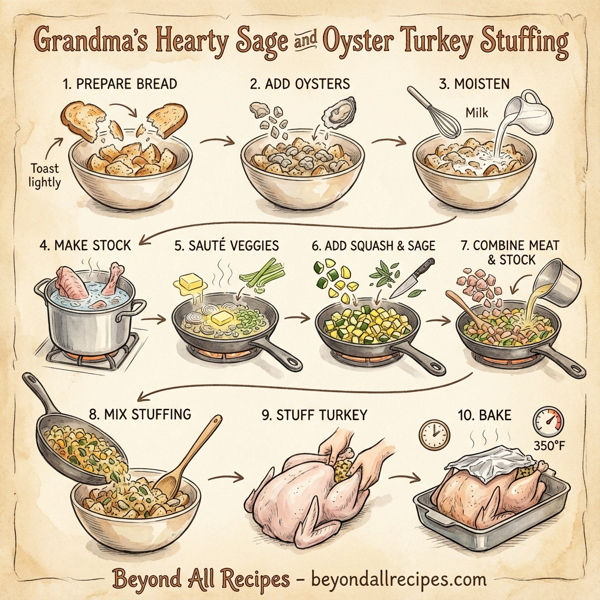
Start by preparing your bread: if it's not stale, lightly toast it to a firm texture. Tear the bread into small pieces and place them in a large mixing bowl.
2
Drain and chop the oysters into small pieces and add them to the bread.
3
Pour the milk over the bread and oyster mix, gently combining until the bread is moistened.
4
In a separate pot, cover the turkey's tail and neck with water, bringing it to a boil to make a basic stock.
5
In a skillet, melt the butter over medium heat. Add the chopped onions and celery to the skillet, seasoning with salt and pepper. Cook until the onions are translucent and the celery is tender.
6
Dice the zucchini and yellow squash, then add them to the skillet with the onions and celery. Stir the mixture well to combine.
7
Chop the fresh sage leaves and stir them into the vegetable mixture, cooking for another 2-3 minutes.
8
Remove the turkey parts from the stock and chop the meat (discarding the tail and neck) before adding it to the vegetable mixture.
9
Pour the turkey stock from earlier into the skillet with the vegetables and stir well.
10
Combine the contents of the skillet with the bread and oyster mixture. Mix thoroughly until evenly combined.
11
Stuff the cavity and neck area of the turkey securely, adding a bit more stuffing by carefully creating a small pocket under the skin if desired. Do not overpack.
12
Cover the stuffed turkey with foil and place it in a preheated oven set to 350°F.
13
Bake the turkey for 4 hours, removing the foil for the last hour to allow the skin to crisp and brown. Ensure the turkey is cooked to an internal temperature of 165°F for safe consumption.
Nutrition Information
21.25g
Fat
65g
Carbs
31.25g
Protein
Frequently Asked Questions
Frequently Asked Questions
What is Grandma's Hearty Sage and Oyster Turkey Stuffing?
It is a cherished holiday recipe inspired by a Swedish grandma, featuring a savory blend of fresh vegetables, aromatic sage, succulent oysters, and white bread.
What kind of bread is best for this stuffing?
The recipe calls for one loaf of white bread. It should be stale or toasted and then crushed or torn into small pieces.
How do I prepare the bread if it is not stale?
If your bread is fresh, you can lightly toast it to achieve a firm texture before tearing it into small pieces.
What type of oysters should be used?
The recipe specifically mentions using 8 ounces of Bumble Bee oysters.
Do the oysters need any preparation?
Yes, the oysters should be drained and chopped into small pieces before being added to the bread mixture.
How much butter is needed for the recipe?
You will need between 1/2 to 1 cup of melted butter.
What vegetables are included in the stuffing?
The stuffing includes white onions, celery (with leaves), green zucchini, and yellow squash.
Should I use fresh or dried sage?
The recipe calls for 2 tablespoons of chopped fresh sage.
How is the turkey stock made?
The stock is made by covering the turkey's tail and neck with water in a separate pot and bringing it to a boil.
What parts of the turkey are used for the stock?
The tail and the neck are used to create a basic stock for the recipe.
Is milk used in this stuffing?
Yes, 1/4 cup of milk is poured over the bread and oyster mixture to moisten it.
At what temperature should the turkey be baked?
The stuffed turkey should be baked in a preheated oven at 350 degrees Fahrenheit.
How long does the turkey need to bake?
The turkey should bake for a total of 4 hours.
Should the turkey be covered during baking?
Yes, cover the turkey with foil for the first three hours, then remove it for the final hour.
How do I ensure the turkey is safely cooked?
You must ensure the turkey reaches an internal temperature of 165 degrees Fahrenheit.
Can I add extra stuffing under the skin?
Yes, you can carefully create a small pocket under the skin to add a bit more stuffing if desired.
How many people does this recipe serve?
This recipe is designed to yield approximately 8 servings.
What is the calorie count per serving?
Each serving contains approximately 537.5 calories.
How much protein is in a serving?
There are 31.25 grams of protein per serving.
How much fat is in this dish?
The dish contains 21.25 grams of fat per serving.
What is the carbohydrate content?
There are 65 grams of carbohydrates per serving.
How should the onions and celery be cooked?
Sauté them in butter until the onions are translucent and the celery is tender.
What should I do with the meat from the neck and tail?
After making the stock, remove the turkey parts, chop the meat, discard the bones/excess, and add the meat to the vegetable mixture.
How do I get crispy turkey skin?
Removing the foil during the last hour of baking allows the skin to crisp and brown.
Is this recipe considered a comfort food?
Yes, it is tagged as traditional comfort food, perfect for family gatherings.
What size turkey is used in this recipe?
The recipe is written for a 5 lb whole turkey with extra parts.
When should the sage be added?
Add the chopped fresh sage to the sautéed vegetable mixture and cook for another 2-3 minutes before combining with bread.
Should the stuffing be packed tightly?
No, you should stuff the cavity and neck securely but avoid overpacking.
What inspired the hostess style for this recipe?
The recipe description mentions the lively energy of a Ruth Gordon-like hostess.
What holiday is this recipe best suited for?
It is ideal for Thanksgiving and other festive holiday meals.