Golden Herb-Crusted Roast Chicken with Aromatic Lemon and Onion Stuffing

Indulge in the buttery delight of our Golden Herb-Crusted Roast Chicken, perfected with a tantalizing seasoning that promises juicy, tender meat encased in a crispy, flavorful skin. This delightful recipe will guide you through creating a sumptuous roast where the chicken is meticulously seasoned and stuffed with fresh herbs, lemon, and onion to infuse it with aromatic nuances. The process of salting and air-chilling the chicken in advance helps draw out excess moisture, ensuring the flesh is firm, while the carefully crafted seasoning ensures the skin is irresistibly crispy. Perfect for family gatherings or elegant dinners, serve this roast chicken with classic sides such as crispy roast potatoes, a medley of fresh seasonal vegetables, and a rich, homemade gravy.
4
Servings
N/A
Calories
11
Ingredients
Ingredients
Fresh roasting chicken
1 (weighing approximately 1.5kg (3 1/4 lbs))
Lemon
1 (cut in half)
Onion
1 (cut in half)
Fresh herbs
A handful (such as rosemary, sage, parsley, tarragon, thyme)
Sea salt
To taste ((rock salt))
Melted butter or olive oil
To coat (as needed)
Salt
1/2 teaspoon
Ground black pepper
1/2 teaspoon
Mustard powder
1/4 teaspoon
Sweet paprika
1/4 teaspoon
Garlic granules
1/4 teaspoon
Instructions
1
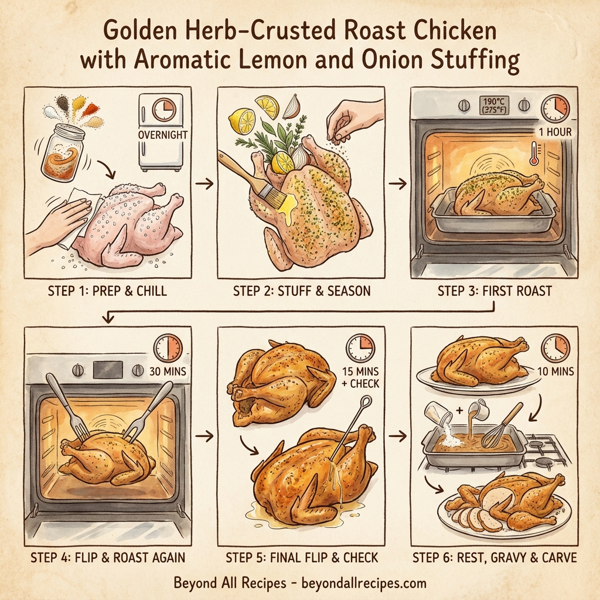
Prepare the seasoning mix by combining salt, ground black pepper, mustard powder, sweet paprika, and garlic granules in a jar. Shake well to mix and set aside.
2
Carefully unwrap the chicken, ensuring any packaging and elastic ties are removed. Pat dry with kitchen paper to remove excess moisture.
3
Generously rub the chicken all over with rock salt, ensuring a thick, even coverage to help draw out moisture and firm the flesh. Allow the chicken to rest in the fridge overnight, or for at least 8 hours.
4
Preheat the oven to 190C (375F, Gas Mark 5).
5
Remove the chicken from the fridge 30 minutes prior to roasting. Brush off any excess salt to ensure the seasoning won't be too intense.
6
Prepare a roasting tin and then season the inside cavity of the chicken with some of the seasoning mix. Stuff the cavity with halved lemon, onion, and a handful of fresh herbs of your choice (rosemary, sage, parsley, tarragon, thyme). This will create steam and impart flavor throughout the cooking process.
7
Brush the entire chicken with melted butter or olive oil, ensuring a generous coating. Liberally apply the remainder of the seasoning mix over the chicken to create a crispy crust.
8
Place the chicken breast-side up in the center of the oven and roast for 1 hour.
9
Carefully remove the chicken using two forks or spatulas, then turn it over so the breast side is down for even cooking and moisture retention. Roast for an additional 30 minutes.
10
Turn the chicken one more time to breast side up and roast for another 15 minutes, ensuring the skin turns golden brown and crispy.
11
Check if the chicken is thoroughly cooked by piercing the thickest part of the thigh with a skewer. Clear juices indicate the chicken is done. If pink, roast for an additional 10-15 minutes before rechecking.
12
Transfer the chicken to a platter and let rest for at least 10 minutes before carving. This resting period allows the juices to redistribute, ensuring moist meat.
13
To make gravy, drain all but 3 tablespoons of chicken juices from the roasting tin, then place the tin over medium heat on the stovetop. Add 2 teaspoons of plain flour and stir until combined. Slowly add 300ml of chicken stock, stirring continually until gravy has thickened and smooth. Adjust seasoning with mustard or soy sauce, and a splash of wine for enhanced flavor.
14
For carving, secure the chicken with a fork and use a sharp knife to cut between the body and leg joints to separate the legs, divide further into drumsticks and thighs, remove wings, and then neatly slice the breast for serving.
Nutrition Information
Frequently Asked Questions
Frequently Asked Questions
What is the primary characteristic of this chicken recipe?
The recipe features a buttery, golden herb crust with a crispy skin and juicy, tender meat infused with aromatic herbs, lemon, and onion.
How long should the chicken be salted before roasting?
The chicken should be rubbed with rock salt and allowed to rest in the fridge overnight, or for at least 8 hours.
Why is it important to salt and air-chill the chicken in advance?
This process helps draw out excess moisture, ensuring the flesh is firm and the skin becomes irresistibly crispy.
What temperature should the oven be set to?
The oven should be preheated to 190C (375F, Gas Mark 5).
What ingredients are in the seasoning mix?
The seasoning mix consists of salt, ground black pepper, mustard powder, sweet paprika, and garlic granules.
What should be done with the chicken 30 minutes before roasting?
Remove the chicken from the fridge and brush off any excess salt to ensure the seasoning is not too intense.
What items are used to stuff the cavity of the chicken?
The cavity is stuffed with halved lemon, halved onion, and a handful of fresh herbs like rosemary, sage, parsley, tarragon, or thyme.
What is the purpose of stuffing the cavity with lemon and herbs?
Stuffing the cavity creates steam and imparts flavor throughout the chicken during the cooking process.
Should I use butter or oil to coat the chicken?
You can use either melted butter or olive oil to generously coat the chicken before applying the seasoning crust.
How long is the initial roasting period?
The chicken is first roasted breast-side up in the center of the oven for 1 hour.
Why do you turn the chicken breast-side down halfway through cooking?
Turning the chicken breast-side down for 30 minutes ensures even cooking and helps with moisture retention.
What is the final roasting step after turning the chicken back to breast-side up?
The chicken is roasted for a final 15 minutes to ensure the skin is golden brown and crispy.
How do you check if the roast chicken is thoroughly cooked?
Pierce the thickest part of the thigh with a skewer; if the juices run clear, it is done. If they are pink, roast for another 10-15 minutes.
How long should the chicken rest before carving?
The chicken should rest on a platter for at least 10 minutes.
Why is the resting period necessary?
Resting allows the juices to redistribute through the meat, ensuring it remains moist when carved.
How do you make the homemade gravy?
Keep 3 tablespoons of chicken juices in the tin, stir in 2 teaspoons of flour over medium heat, then slowly add 300ml of chicken stock until thickened.
What can be added to the gravy for enhanced flavor?
You can adjust the gravy's seasoning with mustard, soy sauce, or a splash of wine.
What is the best way to carve the chicken?
Separate the legs from the body, divide into drumsticks and thighs, remove the wings, and then slice the breast.
What side dishes are recommended with this recipe?
Classic sides like crispy roast potatoes, a medley of fresh seasonal vegetables, and rich gravy are recommended.
How many servings does this recipe provide?
This recipe is designed to provide 4 servings.
What size chicken is required for this recipe?
The recipe calls for one fresh roasting chicken weighing approximately 1.5kg (3 1/4 lbs).
Should the chicken be dried before salting?
Yes, you should pat the chicken dry with kitchen paper to remove excess moisture after unwrapping it.
What type of salt is best for the initial rub?
The recipe suggests using rock salt (sea salt) for the initial rub to help firm the flesh.
Can I use any herbs I have on hand?
Yes, you can use a handful of your choice, though rosemary, sage, parsley, tarragon, and thyme are specifically recommended.
Do I need any special equipment to turn the chicken?
You can use two forks or spatulas to carefully turn the chicken during the roasting process.
What is the total approximate roasting time?
The total roasting time is approximately 1 hour and 45 minutes, plus any additional time if needed.
Is mustard powder necessary for the crust?
While it is part of the seasoning mix to add depth and flavor, it is one of the five ingredients that create the golden crust.
Can I use garlic powder instead of granules?
The recipe specifies garlic granules, which contribute to the texture of the crispy herb crust.
Where should the roasting tin be placed in the oven?
The chicken should be placed in the center of the oven for even heat distribution.
Should the seasoning mix be applied before or after the butter?
The chicken should be brushed with butter or oil first, then the seasoning mix should be liberally applied on top.