Golden Flaky Croissants
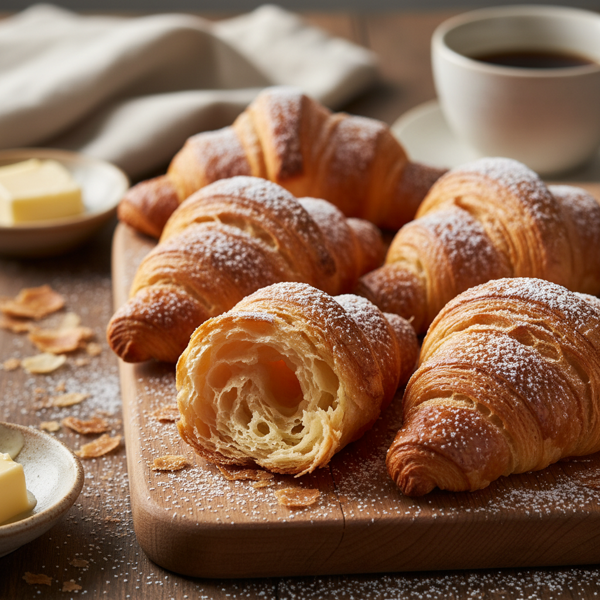
Experience the irresistible taste of Golden Flaky Croissants, a classic laminated dough recipe inspired by the principles of artisan baking. This dough creates perfectly layered pastries that are delightfully flaky and buttery, making them the ideal treat for breakfast or any time of day. Through meticulous folding and chilling, the dough incorporates butter in a way that allows for expansion and texture, resulting in a rich and flavorful croissant that will impress even the most discerning pastry lover. This recipe yields approximately 14 croissants and features long resting periods that contribute to its unique flavor and structure. For an even richer pastry, consider increasing the butter content to 10 ounces. Whether you're a bakery novice or a seasoned pro, following these detailed steps will help you achieve bakery-quality results at home.
N/A
Servings
N/A
Calories
9
Ingredients
Ingredients
all-purpose flour
4 cups (Unbleached, sifted (514 g))
sugar
2 tablespoons ((26 g))
salt
2 teaspoons ((scant or 10 g))
instant yeast
1 tablespoon ((scant or 8 g))
milk
3/4 cup ((room temperature, 170 g))
water
2/3 cup ((room temperature, 151 g))
butter
1 tablespoon ((softened, 12 g))
unsalted butter
8 ounces ((2 sticks, 228 g, kept cold))
egg
1 ((for egg wash, mixed with 1 tablespoon water, optional))
Instructions
1
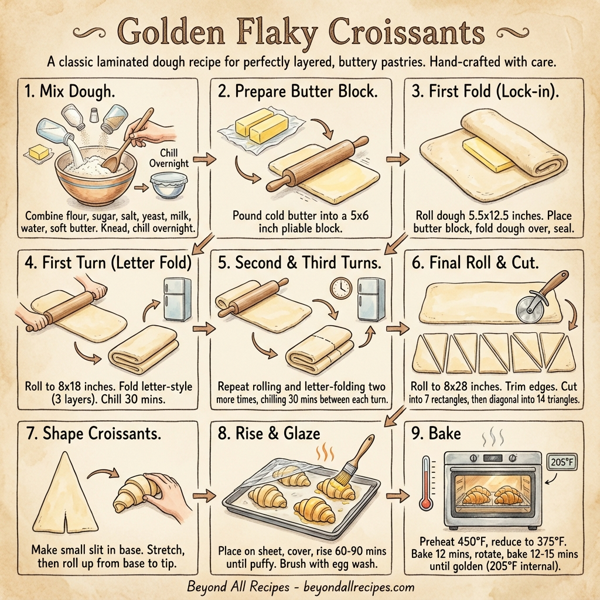
In a large mixing bowl, combine the all-purpose flour, sugar, salt, and instant yeast. Gradually add in the milk, water, and softened butter, mixing until a cohesive dough forms.
2
Transfer the dough to a greased bowl, cover it with plastic wrap or a clean kitchen towel, and refrigerate overnight to allow the flavors to develop.
3
Prepare the butter block by wrapping two sticks of cold, unsalted butter in plastic wrap. Using a rolling pin, pound the butter until it forms a rectangle approximately 5 by 6 inches, while keeping it cold yet pliable.
4
On a lightly floured surface, roll the chilled dough into a rectangle measuring 5.5 by 12.5 inches. Carefully brush off any excess flour, then place the butter block on one half of the dough. Fold the other half over the butter and press down to seal the edges.
5
Dust the surface with a little flour, then roll the dough into an 8 by 18-inch rectangle. Fold the dough letter-style to create three layers, shaping it into an 8 by 6-inch package. Wrap it in plastic wrap and refrigerate for 30 minutes.
6
After chilling, roll the dough out again into an 8 by 18-inch rectangle. Fold it into thirds once more, wrap it up, and chill again for another 30 minutes.
7
Repeat this rolling and folding process one more time, chilling the dough for the final 30 minutes.
8
After the last chill, roll the dough out into an 8 by 28-inch rectangle, trimming the edges to create a clean shape.
9
Cut the dough into 7 rectangles, each measuring 4 inches wide and 8 inches long. Then slice each rectangle diagonally to create 14 triangles, each with a base of 4 inches and a height of 8 inches.
10
For each triangle, make a 3/4-inch slit halfway along the base. Gently stretch the triangle from base to tip, then from base to tip to create a wider triangle. Start rolling from the base, carefully rolling up towards the tip to form the croissant shape.
11
Place the rolled croissants onto cookie sheets lined with parchment paper, making sure to lightly spray the parchment with oil.
12
Preheat the oven to 450°F, then reduce the temperature to 375°F once the croissants are in the oven.
13
Cover the shaped croissants with oiled plastic wrap and let them rise for 60 to 90 minutes, or until they have expanded by about 1.5 times.
14
For a glossy finish, lightly brush the tops of the croissants with an egg wash made from a beaten egg mixed with a tablespoon of water.
15
Bake the croissants in the upper part of the oven for 12 minutes, then rotate the pan and continue baking for another 12 to 15 minutes or until they are golden brown and have an internal temperature of 205°F.
Nutrition Information
Frequently Asked Questions
Frequently Asked Questions
What is the yield of this Golden Flaky Croissants recipe?
This recipe yields approximately 14 individual croissants.
How much flour do I need for this recipe?
The recipe requires 4 cups of unbleached, sifted all-purpose flour, which is approximately 514 grams.
What type of yeast is used for these croissants?
The recipe calls for 1 tablespoon (scant or 8 g) of instant yeast.
How long should the dough rest initially?
After mixing, the dough should be refrigerated overnight in a greased bowl to allow the flavors to develop.
What are the dimensions for the butter block?
The cold unsalted butter should be pounded into a rectangle measuring approximately 5 by 6 inches.
How many sticks of butter are used for the butter block?
The butter block uses two sticks of cold, unsalted butter, totaling 8 ounces or 228 grams.
What temperature should the milk and water be?
Both the milk (3/4 cup) and the water (2/3 cup) should be at room temperature.
How do I make the pastry even richer?
For an even richer croissant, you can consider increasing the butter content in the block to 10 ounces.
What are the dimensions for rolling the dough before adding the butter?
The chilled dough should be rolled into a rectangle measuring 5.5 by 12.5 inches before placing the butter block.
How is the butter block incorporated into the dough?
Place the butter block on one half of the dough, fold the other half over the butter, and press down to seal the edges.
What is the size of the dough during the rolling and folding stages?
During the folding process, the dough should be rolled into an 8 by 18-inch rectangle before being folded into thirds.
What does 'letter-style' folding mean?
It means folding the dough into thirds, similar to a business letter, to create three distinct layers.
How long should the dough chill between each fold?
The dough should be wrapped in plastic and refrigerated for 30 minutes between each rolling and folding session.
How many times should the rolling and folding process be repeated?
The rolling and folding process is repeated three times in total, with 30-minute chills in between.
What is the final size of the dough rectangle before cutting?
After the final chill, the dough is rolled out into an 8 by 28-inch rectangle.
What are the dimensions of the triangles used to shape the croissants?
Each triangle should have a base of 4 inches and a height of 8 inches.
Why do I need to make a slit at the base of each triangle?
A 3/4-inch slit at the base helps in stretching the dough and achieving the classic croissant shape when rolling.
How do I prepare the baking sheets?
Line the cookie sheets with parchment paper and lightly spray the parchment with oil.
How long do the shaped croissants need to rise?
Cover them with oiled plastic wrap and let them rise for 60 to 90 minutes until they expand by about 1.5 times.
How do I make the egg wash for the finish?
Beat one egg and mix it with one tablespoon of water, then lightly brush it over the tops of the croissants.
What temperature should the oven be for baking?
Preheat the oven to 450°F, then immediately reduce the temperature to 375°F once the croissants are placed inside.
Where in the oven should the croissants be baked?
They should be baked in the upper part of the oven for the best results.
When should I rotate the baking pan?
Rotate the pan after the first 12 minutes of baking to ensure even browning.
What is the total baking time?
The total baking time is typically 24 to 27 minutes (12 minutes initially, then another 12 to 15 minutes after rotating).
How do I know the croissants are fully cooked?
They should be golden brown and reach an internal temperature of 205°F.
What is laminated dough?
Laminated dough is a culinary technique of folding butter into dough multiple times to create many thin alternating layers of butter and dough.
How much salt is used in this recipe?
The recipe uses 2 teaspoons (scant or 10 g) of salt.
What is the purpose of the 1 tablespoon of softened butter in the initial dough?
It is mixed into the initial dough to provide basic fat content and structure before the lamination process begins.
Can beginners make this recipe?
Yes, while it involves meticulous steps, the instructions are designed to help both novices and pros achieve bakery-quality results.
What are the common tags associated with this recipe?
Common tags include croissants, laminated dough, puff pastry, baking, breakfast, and french pastry.