Golden Corn Yeast Rolls
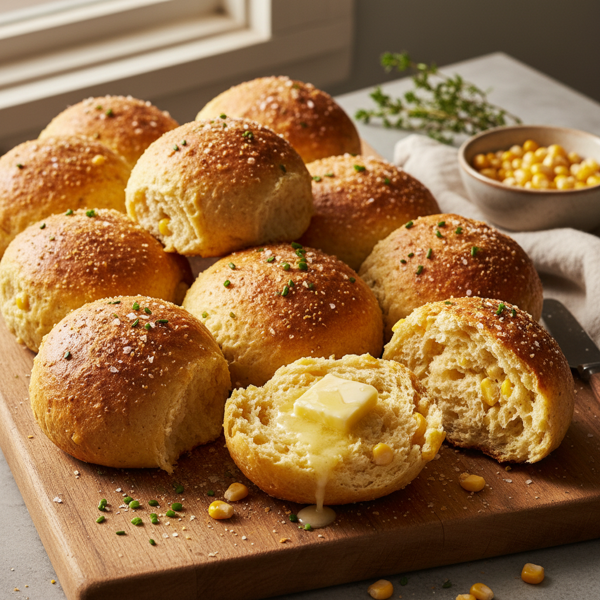
These delightful Golden Corn Yeast Rolls are a perfect addition to any meal, bringing a warm, inviting flavor to your table. Soft and fluffy with a hint of sweetness from the sugar and a rich, buttery undertone, these rolls are made with cornmeal, giving them a unique texture and taste. Ideal as a side for hearty dishes or enjoyed on their own, they can be prepared ahead of time and stored for later use, making them a convenient option for any gathering. Elevate your dining experience with these scrumptious rolls from the Cook Now, Serve Later cookbook.
N/A
Servings
N/A
Calories
9
Ingredients
Ingredients
active dry yeast
1/4 ounce (envelope)
lukewarm water
1/4 cup
sugar
1/4 cup plus 1 teaspoon
margarine
1/4 cup (melted and cooled)
buttermilk or milk
1 cup
egg
1
salt
1 teaspoon
cornmeal
3/4 cup plus 2 tablespoons
flour
3 cups
Instructions
1
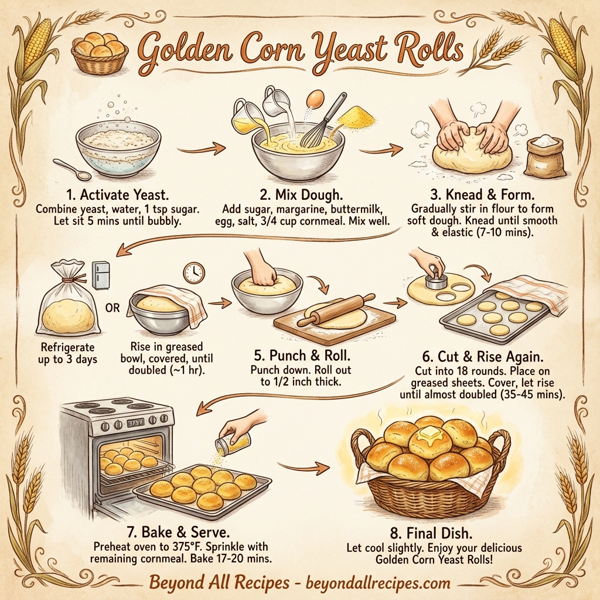
In a large bowl, combine the active dry yeast, lukewarm water, and 1 teaspoon of sugar. Allow the mixture to sit for about 5 minutes, or until it becomes bubbly.
2
Add the remaining 1/4 cup of sugar, melted margarine, buttermilk (or milk), egg, salt, and 3/4 cup of cornmeal to the yeast mixture. Mix well until combined.
3
Gradually stir in enough flour (starting with about 2 cups) to form a soft dough. The dough should be slightly tacky but not sticky.
4
On a lightly floured surface or using a stand mixer with a dough hook, knead the dough until it's smooth and elastic, about 7 to 10 minutes by hand, 5 minutes in a mixer, or 40 seconds in a food processor.
5
Add more flour as needed to prevent sticking while kneading.
6
If not baking immediately, transfer the dough to a 1-gallon food storage bag, pushing out all the air. Seal with a twist tie and refrigerate for up to 3 days.
7
When ready to bake, transfer the dough to a lightly greased bowl, turning it to coat with grease. Cover and let rise in a warm, draft-free area until doubled in size, approximately 1 hour.
8
After rising, punch down the dough, then roll it out to a thickness of 1/2 inch on a lightly floured surface.
9
Using a 3-inch round cutter, cut the dough into 18 rounds and place them about 2 inches apart on lightly greased baking sheets.
10
Cover the rolls with dry towels and allow them to rise again until almost doubled in size, about 35 to 45 minutes.
11
Preheat the oven to 375°F while the rolls are rising.
12
Before baking, lightly sprinkle the rolls with the remaining 2 tablespoons of cornmeal.
13
Bake for 17 to 20 minutes, or until the rolls are golden brown. Let cool slightly before serving.
Nutrition Information
Frequently Asked Questions
Frequently Asked Questions
What are Golden Corn Yeast Rolls?
Golden Corn Yeast Rolls are soft and fluffy bread rolls made with cornmeal, giving them a unique texture and a rich, buttery flavor with a hint of sweetness.
What ingredients are needed for these rolls?
The recipe requires active dry yeast, lukewarm water, sugar, margarine, buttermilk or milk, an egg, salt, cornmeal, and flour.
How much yeast is used in the recipe?
The recipe calls for one 1/4 ounce envelope of active dry yeast.
Can I use regular milk instead of buttermilk?
Yes, you can use either buttermilk or regular milk for this recipe.
How do I proof the yeast?
Combine the yeast with lukewarm water and 1 teaspoon of sugar, then let it sit for about 5 minutes until it becomes bubbly.
How much sugar is used in the total recipe?
The recipe uses 1/4 cup plus 1 teaspoon of sugar.
What should the consistency of the dough be?
The dough should be soft and slightly tacky, but not sticky.
How long should I knead the dough by hand?
If kneading by hand, it should take about 7 to 10 minutes until the dough is smooth and elastic.
Can I use a stand mixer for kneading?
Yes, you can use a stand mixer with a dough hook to knead the dough for about 5 minutes.
Is it possible to use a food processor for the dough?
Yes, a food processor can knead the dough in approximately 40 seconds.
Can I make this dough ahead of time?
Yes, you can refrigerate the dough for up to 3 days in a sealed food storage bag.
How do I store the dough in the refrigerator?
Transfer the dough to a 1-gallon food storage bag, push out all the air, and seal it with a twist tie.
What is the process for the first rise?
Place the dough in a lightly greased bowl, cover it, and let it rise in a warm area for about 1 hour or until doubled in size.
How thick should I roll out the dough?
The dough should be rolled out to a thickness of 1/2 inch on a lightly floured surface.
What size cutter should I use for the rolls?
The instructions suggest using a 3-inch round cutter.
How many rolls does this recipe produce?
This recipe makes 18 round corn yeast rolls.
How far apart should I place the rolls on the baking sheet?
Place the rounds about 2 inches apart on lightly greased baking sheets.
How long is the second rise?
The second rise takes about 35 to 45 minutes, or until the rolls are almost doubled in size.
What is the baking temperature for the rolls?
The rolls should be baked at 375 degrees Fahrenheit.
Do I put anything on top of the rolls before baking?
Yes, lightly sprinkle the rolls with the remaining 2 tablespoons of cornmeal before placing them in the oven.
How long do the rolls need to bake?
Bake the rolls for 17 to 20 minutes.
How do I know when the rolls are done?
The rolls are finished when they have turned golden brown.
What should I do after the rolls come out of the oven?
Let them cool slightly on the baking sheet before serving.
What type of flour is recommended?
The recipe specifies using 3 cups of flour to form the soft dough.
What is the total amount of cornmeal used?
The total amount is 3/4 cup plus 2 tablespoons of cornmeal.
Which cookbook is this recipe from?
These rolls are from the 'Cook Now, Serve Later' cookbook.
How do I prepare the margarine for the dough?
The 1/4 cup of margarine should be melted and then cooled before adding it to the mixture.
What are some common tags for this recipe?
Tags include bread, rolls, yeast, corn, sides, baking, easy recipes, and comfort food.
Should I cover the rolls during the second rise?
Yes, cover the rolls with dry towels during the second rise.
What should I do if the dough is too sticky during kneading?
You should add more flour as needed to prevent sticking while kneading.