Goa Jingha Curry: Spicy Goan Prawn Delight
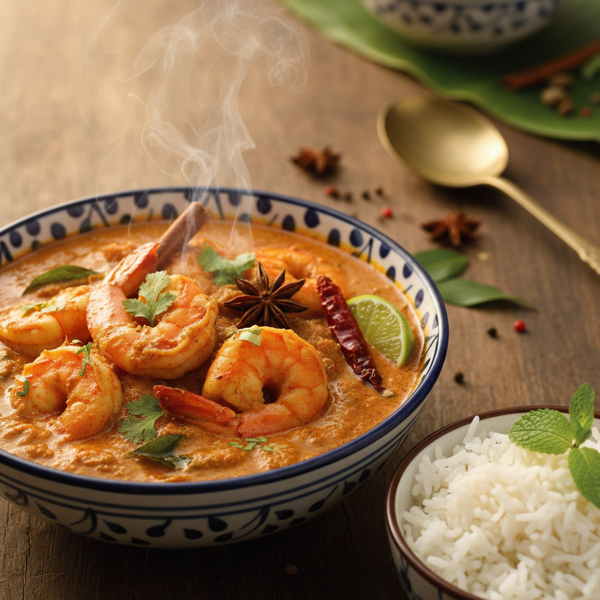
Experience the vibrant flavors of coastal India with this Goa Jingha Curry, a delightful prawn dish that combines the richness of coconut milk with tangy tamarind and an aromatic blend of spices. This moderately spicy curry is perfect for those who enjoy authentic Indian cuisine. The key ingredients include succulent shrimp simmered in a fragrant sauce made from fresh herbs and spices, like cumin, coriander, and turmeric. It’s a versatile dish that pairs wonderfully not only with seafood but also with chicken, beef, or lamb, adapting well to your tastes. Whether you prefer a smoother sauce or like the texture of whole spices, this recipe offers flexibility—perfectly suited for both casual home meals and impressing guests. Serve with warm naan or steamed rice to soak up every flavorful bite!
N/A
Servings
N/A
Calories
18
Ingredients
Ingredients
tamarind paste
1/2 cup (soaked in boiling water)
boiling water
1 cup (used for soaking tamarind)
fresh cracked black pepper
10 (for toasting)
dried red chilies
6 (seeded and toasted)
coriander seeds
1 tablespoon (for toasting)
cumin seeds
1 teaspoon (for toasting)
cinnamon stick
1 (for toasting)
vegetable oil
2 tablespoons (for cooking)
shrimp
1-3 lb (shelled and deveined)
salt
to taste (for seasoning)
black pepper
to taste (for seasoning)
onion
1 large (minced)
garlic
5 cloves (minced)
fresh ginger
1 1/2 tablespoons (finely grated)
turmeric
1 teaspoon (for cooking)
green fresh jalapeños
2 (seeded and chopped)
water
3 cups (for cooking)
unsweetened coconut milk
1 cup (for creaminess)
Instructions
1
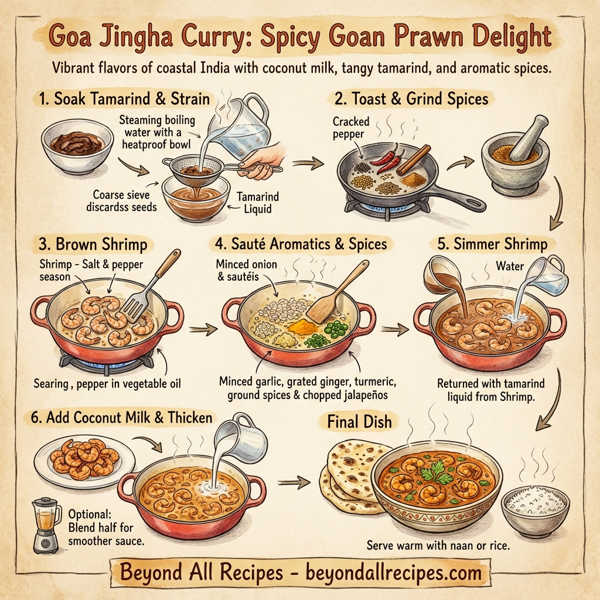
In a heatproof bowl, soak the tamarind paste in boiling water, covered, until softened (about 30 minutes). Strain the mixture through a coarse sieve to discard the seeds and set the tamarind liquid aside.
2
In a small skillet, toast the cracked black pepper, dried red chilies, coriander seeds, whole cumin seeds, and cinnamon stick over moderate heat for about 1 minute, or until fragrant. Allow the spices to cool, then grind them into a fine powder using a spice grinder.
3
In a large enameled cast-iron casserole, heat the vegetable oil over moderate heat. Season the shrimp with salt and pepper, and add half of them to the hot casserole. Cook until the shrimp are browned and opaque (about 4 minutes per side). Remove to a plate and repeat with the remaining shrimp.
4
Pour off all but 2 tablespoons of the fat from the casserole. Add the minced onion and sauté over moderately low heat until softened (about 6 minutes). Stir in the minced garlic, grated ginger, turmeric, ground spices, and chopped jalapeños, cooking until fragrant (about 3 minutes).
5
Add the strained tamarind liquid and 3 cups of water into the casserole. Return the shrimp to the pot, and bring the mixture to a boil. Once boiling, reduce the heat to low and simmer for 20 minutes.
6
Transfer the shrimp back to the plate and stir in the coconut milk. Allow the sauce to simmer for an additional 20 minutes, or until it is thickened and flavorful. If desired, at this stage, remove half of the sauce and blend it for a smoother consistency, then return the sauce to the pot.
7
Taste the sauce and adjust seasoning with salt and freshly ground black pepper. If using, return any additional cooked protein (like chicken, beef, or lamb) to the sauce to heat through before serving.
Nutrition Information
Frequently Asked Questions
Frequently Asked Questions
What is Goa Jingha Curry?
Goa Jingha Curry is a vibrant coastal Indian prawn dish that features succulent shrimp in a tangy, spicy, and creamy coconut-based sauce.
How long should I soak the tamarind paste?
The tamarind paste should be soaked in boiling water for about 30 minutes until it has softened.
What spices need to be toasted for this recipe?
You should toast fresh cracked black pepper, dried red chilies, coriander seeds, whole cumin seeds, and a cinnamon stick.
How long do I toast the whole spices?
Toast the spices over moderate heat for about 1 minute or until they become fragrant.
How do I prepare the shrimp for this curry?
The shrimp should be shelled and deveined, then seasoned with salt and pepper before being browned in the casserole.
Can I use proteins other than shrimp in this curry?
Yes, this versatile sauce pairs well with chicken, beef, or lamb as alternative proteins.
What is the recommended cooking vessel for this dish?
A large enameled cast-iron casserole is recommended for heating the oil and simmering the curry.
How long should the shrimp be cooked initially?
Cook the shrimp in batches for about 4 minutes per side until they are browned and opaque.
How do I prepare the tamarind mixture after soaking?
Strain the softened mixture through a coarse sieve to discard the seeds and keep the liquid.
What aromatics are used in the base of the sauce?
The base uses minced onion, minced garlic, finely grated fresh ginger, and chopped jalapeños.
How much water is added to the curry?
You will need 3 cups of water in addition to the strained tamarind liquid.
What type of coconut milk should be used?
Use 1 cup of unsweetened coconut milk to provide creaminess to the curry.
How can I achieve a smoother sauce consistency?
You can remove half of the sauce after simmering, blend it until smooth, and then return it to the pot.
What are the suggested side dishes for Goa Jingha Curry?
This curry is best served with warm naan or steamed rice to soak up the flavorful sauce.
How many jalapeños are required?
The recipe calls for 2 green fresh jalapeños, seeded and chopped.
What is the role of turmeric in this recipe?
Turmeric provides an earthy flavor and a signature vibrant yellow color to the curry.
How long does the final sauce simmer with coconut milk?
Allow the sauce to simmer for an additional 20 minutes once the coconut milk is added to thicken it.
How many dried red chilies should I use?
Use 6 dried red chilies, seeded and toasted, for a moderate level of spice.
Should the spices be ground before or after toasting?
The spices should be toasted whole first, allowed to cool, and then ground into a fine powder.
How do I sauté the onions?
Sauté the minced onion over moderately low heat for about 6 minutes until softened.
What should I do if the sauce is too thin?
Continue simmering the sauce without the shrimp for 20 minutes or blend a portion of the sauce to increase thickness.
How much ginger is needed for the recipe?
You will need 1.5 tablespoons of finely grated fresh ginger.
Is this recipe considered spicy?
Yes, it is described as a moderately spicy curry due to the red chilies and jalapeños.
When do I add the garlic and ginger?
Add the garlic and ginger after the onions have softened, and cook for about 3 minutes until fragrant.
How much shrimp is required?
The recipe suggests using between 1 to 3 pounds of shrimp.
What type of oil is best for cooking this curry?
Vegetable oil is recommended for sautéing and browning the shrimp.
Can I adjust the final seasoning?
Yes, taste the sauce at the end and adjust with salt and freshly ground black pepper to your preference.
What is the first step of the recipe?
The first step is soaking the tamarind paste in boiling water.
How do I handle the shrimp after browning them?
Remove the browned shrimp to a plate while you prepare the sauce, then return them to the pot later to simmer.
How long is the initial simmer after adding water and tamarind?
The mixture should be brought to a boil and then simmered on low heat for 20 minutes.