Glazed Miso Salmon with Sautéed Spring Veggies

This Glazed Miso Salmon with Sautéed Spring Veggies is the perfect balance of flavor and lightness for any weeknight meal or elegant dinner party. The rich umami taste from the white miso combined with the nuttiness of toasted sesame oil creates a delicious glaze that complements the tender salmon beautifully. A medley of asparagus and baby bok choy adds a vibrant touch and freshness to the dish. This recipe is quick and easy, taking under 30 minutes, yet it impresses with its complex flavors. Make a double batch of the miso glaze, and you’ll be set to enhance everything from grilled chicken to assorted vegetables or tofu. Enjoy a wholesome, flavorful dinner that everyone will love.
N/A
Servings
163
Calories
12
Ingredients
Ingredients
White miso
2 tablespoons (whisked)
Toasted sesame oil
2 teaspoons (whisked)
Rice wine vinegar
2 teaspoons (whisked)
Tamari soy sauce
2 tablespoons (whisked)
Mirin
1 tablespoon (whisked)
Fresh ginger
2 teaspoons (grated)
Olive oil
1 tablespoon (for greasing the pan)
Salmon fillets
4 (6 ounce) (skin removed)
Asparagus spears
12 (tough ends removed)
Baby bok choy
4 bunches (rinsed and cut lengthwise into quarters)
Scallions
2 (thinly sliced)
Toasted sesame seeds
2 tablespoons (for garnish)
Instructions
1
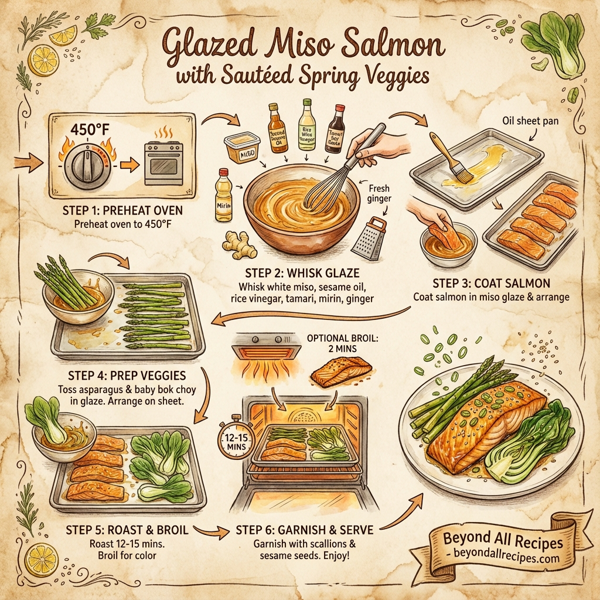
Preheat your oven to 450°F.
2
In a large bowl, whisk together the white miso, toasted sesame oil, rice wine vinegar, tamari soy sauce, mirin, and fresh ginger until well combined.
3
Coat a rimmed half sheet pan (18×13 inches) with olive oil.
4
Dunk each salmon fillet into the miso glaze, ensuring it's well coated, and arrange the fillets along one edge of the prepared baking sheet.
5
Toss the asparagus spears in the remaining miso glaze until they are evenly coated, then spread them out in one single layer in another corner of the baking sheet.
6
Take the baby bok choy, toss it with any remaining glaze, and pile it into the open space on the baking sheet—don’t worry about overcrowding as this will help them steam during roasting.
7
Place the baking sheet in the preheated oven and roast everything for 12 to 15 minutes, or until the salmon is firm to the touch. For an extra touch of color and crispiness on the salmon, broil it for an additional 2 minutes at the end.
8
Once done, remove from the oven and garnish with thinly sliced scallions and toasted sesame seeds before serving.
Nutrition Information
9
Fat
8
Carbs
10
Protein
Frequently Asked Questions
Frequently Asked Questions
What is Glazed Miso Salmon with Sautéed Spring Veggies?
It is a nutritious dish featuring salmon fillets glazed in a savory miso mixture and roasted alongside fresh asparagus and baby bok choy.
How long does this recipe take to prepare?
This recipe is designed to be quick and easy, typically taking under 30 minutes to complete.
What is the recommended oven temperature?
The oven should be preheated to 450 degrees Fahrenheit for roasting the salmon and vegetables.
What ingredients are in the miso glaze?
The glaze is made from white miso, toasted sesame oil, rice wine vinegar, tamari soy sauce, mirin, and grated fresh ginger.
Is this recipe gluten-free?
Yes, by using tamari soy sauce instead of regular soy sauce, the dish is naturally gluten-free.
How many calories are in one serving?
According to the recipe data, there are approximately 163 calories per serving.
What vegetables are included in this dish?
The recipe calls for 12 asparagus spears and 4 bunches of baby bok choy.
How should I prepare the baby bok choy?
Rinse the baby bok choy thoroughly and cut each bunch lengthwise into quarters before roasting.
What type of miso should I use?
The recipe specifies white miso, which provides a mild and slightly sweet umami flavor.
How do I know when the salmon is cooked?
The salmon is done when it feels firm to the touch, usually after 12 to 15 minutes in the oven.
Can I use frozen salmon for this recipe?
Yes, you can use frozen salmon fillets as long as they are fully thawed and patted dry before glazing.
What is the purpose of mirin in the glaze?
Mirin adds a delicate sweetness and a beautiful sheen to the miso glaze.
How do I prepare the asparagus?
Remove the tough, woody ends of the 12 asparagus spears before tossing them in the miso glaze.
Can I make the glaze in advance?
Yes, you can prepare a double batch of the glaze ahead of time to use on other proteins or vegetables.
How can I get extra color on the salmon?
For extra color and crispiness, you can broil the salmon for an additional 2 minutes after roasting.
Is the salmon skin removed in this recipe?
Yes, the recipe suggests using 4 salmon fillets with the skin removed.
What are the recommended garnishes?
The dish is best finished with a garnish of thinly sliced scallions and toasted sesame seeds.
What size baking sheet should I use?
A rimmed half sheet pan measuring approximately 18 by 13 inches is recommended.
Why is it okay to crowd the bok choy on the pan?
Piling the bok choy helps it steam during the roasting process, keeping it tender while it cooks.
What is the fat content per serving?
There are 9 grams of fat per serving in this recipe.
How many carbohydrates are in this dish?
Each serving contains approximately 8 grams of carbohydrates.
How much protein does this meal provide?
The recipe provides approximately 10 grams of protein per serving.
Can I substitute the asparagus with another vegetable?
Yes, other quick-cooking vegetables like broccoli florets or snap peas can be substituted if preferred.
How do I apply the glaze to the salmon?
Dunk each salmon fillet into the whisked miso glaze until it is well coated on all sides.
Is this recipe suitable for a dinner party?
Yes, its elegant presentation and complex flavor profile make it an excellent choice for entertaining.
What can I use if I do not have fresh ginger?
While fresh ginger is best, you can use a small amount of ground ginger as a substitute in the glaze.
Is olive oil used in the cooking process?
Olive oil is used primarily to grease the baking sheet to prevent the salmon and veggies from sticking.
What is the weight of each salmon fillet?
The recipe calls for 4 salmon fillets that are 6 ounces each.
Can I substitute rice wine vinegar?
If you do not have rice wine vinegar, apple cider vinegar or white wine vinegar can be used as a substitute.
Is this a good weeknight meal?
Yes, because it is quick, healthy, and requires only one pan, it is perfect for busy weeknights.