Glazed Brown Sugar Mustard Broiled Ham Steak
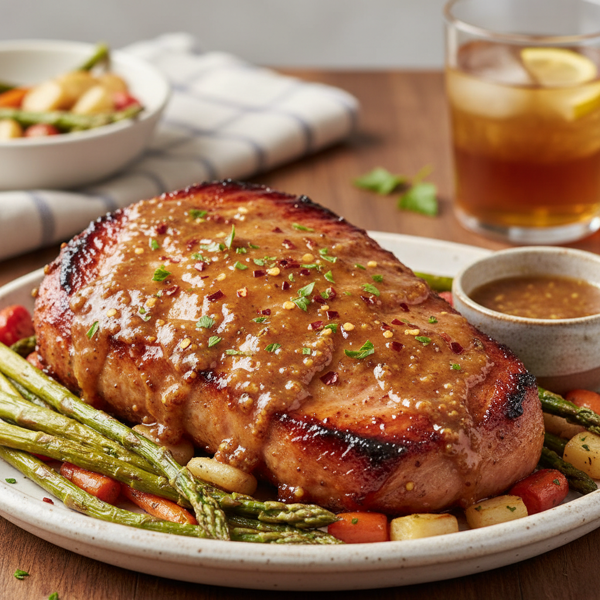
This Glazed Brown Sugar Mustard Broiled Ham Steak is perfect for any special occasion, especially on New Year's Day! The combination of sweet brown sugar and tangy mustard creates a delightful glaze that caramelizes beautifully under the broiler. Paired with traditional Hoppin' John and sautéed cabbage, this dish brings a comforting yet elegant touch to your holiday table. Using Hillshire Farms Brown Sugar Ham Steaks makes preparation simple and fuss-free, allowing you to enjoy quality time with family and friends while this delicious dish cooks to perfection. Each bite is savory, sweet, and satisfying—a true crowd-pleaser!
N/A
Servings
150
Calories
4
Ingredients

Ingredients
Center cut ready to eat ham steak
1 (Thick slice)
Brown sugar
1/4 cup (Packed)
Dry mustard
2 teaspoons
Vinegar
2 tablespoons
Instructions
1
Preheat the broiler in your oven to medium heat.
2
Place the ham steaks in a shallow pan, ensuring they are spread out for even cooking.
3
In a small bowl, combine the brown sugar, dry mustard, and vinegar, mixing well until you have a smooth paste.
4
Spread the mustard and brown sugar mixture generously over the ham steaks, coating them evenly.
5
Broil the ham steaks on one side for about 5-7 minutes, or until they are lightly browned and caramelized.
6
Carefully flip the ham steaks over, baste them with the pan drippings, and continue to broil for an additional 5-7 minutes until they are golden brown.
7
Once done, remove the pan from the oven and let the steaks rest for a couple of minutes before serving.
Nutrition Information
6g
Fat
10g
Carbs
10g
Protein
9g
Sugar
Frequently Asked Questions
Frequently Asked Questions
What is Glazed Brown Sugar Mustard Broiled Ham Steak?
It is a savory and sweet dish featuring ready-to-eat ham steaks coated in a tangy brown sugar and mustard glaze, broiled until caramelized.
What ingredients are needed for the ham steak glaze?
The glaze requires 1/4 cup of packed brown sugar, 2 teaspoons of dry mustard, and 2 tablespoons of vinegar.
How long does it take to broil the ham steak?
The ham steak should be broiled for approximately 5-7 minutes on each side, totaling 10-14 minutes.
What temperature should the broiler be set to?
The broiler should be preheated to medium heat for even cooking and caramelization.
Which type of ham is recommended for this recipe?
The recipe suggests using a thick-sliced, center cut ready-to-eat ham steak, specifically Hillshire Farms Brown Sugar Ham Steaks.
How many calories are in one serving of this ham steak?
Each serving contains 150 calories.
What side dishes pair well with this glazed ham?
It is traditionally paired with Hoppin' John and sautéed cabbage, making it an elegant holiday meal.
Is this recipe suitable for holidays?
Yes, it is specifically recommended for special occasions and New Year's Day.
How do you prepare the glaze paste?
In a small bowl, combine the brown sugar, dry mustard, and vinegar, mixing until the mixture is smooth.
Do I need to flip the ham while broiling?
Yes, you should carefully flip the ham steaks halfway through the cooking process and baste them with pan drippings.
How much protein is in this dish?
This ham steak recipe provides 10g of protein per serving.
What is the fat content of the Glazed Brown Sugar Mustard Ham Steak?
The dish contains 6g of fat per serving.
How many carbohydrates are in this recipe?
There are 10g of carbohydrates per serving.
Is there a lot of sugar in this recipe?
The recipe contains 9g of sugar per serving, primarily from the brown sugar glaze.
Should the ham steak be rested after cooking?
Yes, it is recommended to let the steaks rest for a couple of minutes before serving to ensure they stay juicy.
What kind of pan should I use for broiling?
A shallow pan is best to ensure the ham steaks are spread out for even heat distribution.
What gives the ham its caramelized finish?
The combination of brown sugar under the high heat of the broiler creates a beautiful caramelized glaze.
Is this recipe considered easy to make?
Yes, it is described as a simple and fuss-free recipe with only 4 ingredients and a short cooking time.
Can I use prepared mustard instead of dry mustard?
The recipe specifically calls for dry mustard to create the correct paste consistency, though prepared mustard can be used as a substitute in a pinch.
Is this recipe gluten-free?
While the primary ingredients are naturally gluten-free, you should check the label of your specific ham steak and dry mustard to ensure no additives contain gluten.
Can I use apple cider vinegar?
Yes, apple cider vinegar works very well in this recipe to provide the necessary tanginess for the glaze.
How many ingredients are required in total?
The recipe requires only 4 ingredients: ham steak, brown sugar, dry mustard, and vinegar.
How do I ensure the ham is golden brown?
Basting the ham with its own pan drippings after flipping helps it achieve a golden brown and flavorful exterior.
What is the flavor profile of this dish?
It is sweet and tangy with a savory ham base.
Can I prepare the glaze in advance?
Yes, the glaze can be mixed ahead of time and stored until you are ready to broil the ham.
Is this dish high in fiber?
No, this recipe does not contain a significant amount of fiber.
Does the recipe require salt?
No additional salt is added, as the ham steak itself provides sufficient sodium.
What if I don't have a broiler?
You can bake the ham at a high temperature (425°F), but the caramelization may not be as intense as using a broiler.
Is this dish suitable for a crowd?
Yes, it is described as a true crowd-pleaser that is easy to scale up by using more ham steaks.
What is the texture of the glaze?
The glaze starts as a smooth paste and becomes a sticky, caramelized coating once broiled.