Ginger-Infused Teriyaki Salmon Delight
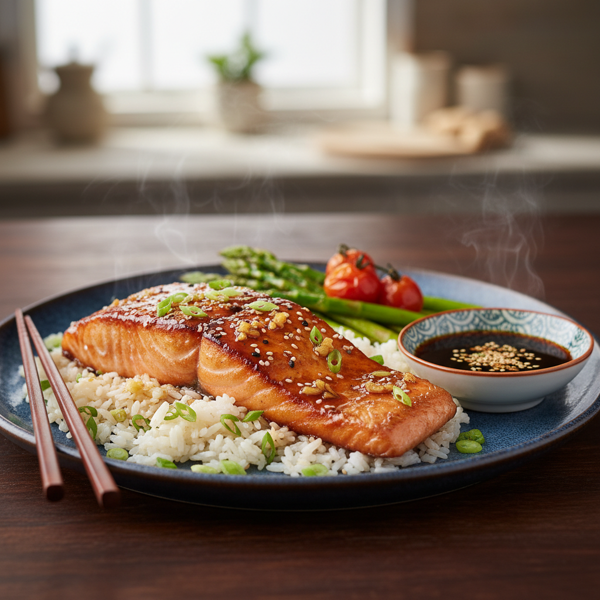
Indulge in the rich flavors of our Ginger-Infused Teriyaki Salmon Delight, a culinary masterpiece that marries the sweetness of teriyaki with the zesty brightness of ginger. This dish showcases succulent salmon fillets that are perfectly seared and glazed with a homemade teriyaki sauce, creating a meal that's both easy to prepare and sure to impress. Whether you're cooking for a weeknight dinner or a special occasion, this recipe is a family favorite, crafted with love and simplicity. Paired beautifully with fluffy white rice and vibrant stir-fried snow peas, it's a wholesome feast that’s both nourishing and delectable—perfect for any Asian-inspired meal.
N/A
Servings
N/A
Calories
9
Ingredients
Ingredients
dark soy sauce
1 tablespoon (none)
light soy sauce
1 tablespoon (none)
sugar
2 1/2 tablespoons (none)
peanut oil
2 tablespoons (none)
salmon fillets
8 ounces (skin on, cut into fillets)
chopped ginger
2 tablespoons (finely chopped)
rice wine or dry sherry
1 tablespoon (none)
scallions or green onions
2 tablespoons (thinly sliced)
lemon wedge
1 small (for squeezing)
Instructions
1
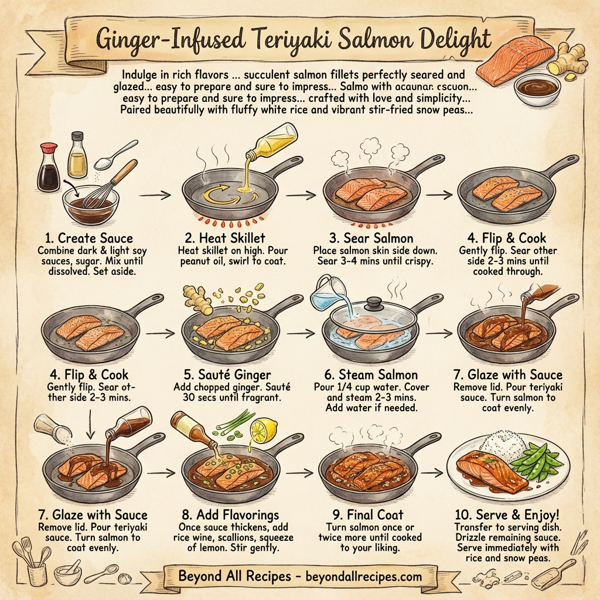
In a small bowl, combine the dark and light soy sauces with the sugar, mixing well until the sugar is dissolved. Set aside to create the teriyaki sauce.
2
Heat a large skillet or non-stick pan over high heat until very hot. Pour in the peanut oil and swirl to coat the bottom of the pan.
3
Carefully place the salmon fillets skin side down in the hot oil. Sear for 3-4 minutes until the skin is crispy.
4
Gently flip the salmon and sear the other side for an additional 2-3 minutes until it is cooked through.
5
Add the chopped ginger to the pan and sauté for about 30 seconds until fragrant, stirring occasionally.
6
Pour in 1/4 cup of water and cover the pan with a lid. Allow the salmon to steam for 2-3 minutes, checking occasionally. Add more water if necessary to keep the steaming process going.
7
Remove the lid and pour the teriyaki sauce over the salmon. As it reduces to a syrupy consistency, carefully turn the salmon in the sauce a couple of times to coat it evenly.
8
Once the sauce thickens into a glaze, add the rice wine (or dry sherry), sliced scallions, and a generous squeeze of lemon juice. Stir gently to incorporate.
9
Turn the salmon once or twice more in the sauce until cooked to your liking.
10
Transfer the glazed salmon to a serving dish, drizzle with any remaining sauce from the pan, and serve immediately with fluffy white rice and stir-fried snow peas.
Nutrition Information
Frequently Asked Questions
Frequently Asked Questions
What is Ginger-Infused Teriyaki Salmon Delight?
It is a flavorful dish featuring seared salmon fillets glazed with a homemade sauce made from soy sauce, ginger, and sugar.
What type of salmon is used in this recipe?
The recipe calls for 8 ounces of salmon fillets with the skin on for the best texture and flavor.
What are the main ingredients for the teriyaki sauce?
The homemade sauce consists of dark soy sauce, light soy sauce, and sugar.
Why does the recipe use both dark and light soy sauce?
Dark soy sauce provides a deep color and richness, while light soy sauce adds the necessary saltiness and savory depth.
How do I prepare the ginger for this recipe?
The ginger should be finely chopped to ensure it infuses the sauce evenly and provides a zesty brightness.
What is the first step in cooking the salmon?
The first step is to sear the salmon fillets skin side down in a very hot pan with peanut oil for 3-4 minutes.
How long should I sear the second side of the salmon?
After flipping the salmon, sear the other side for an additional 2-3 minutes until it is cooked through.
What role does peanut oil play in this recipe?
Peanut oil has a high smoke point, making it ideal for searing the salmon at high temperatures without burning.
Why is water added during the cooking process?
A small amount of water is added to the pan to steam the salmon for 2-3 minutes, ensuring it remains moist and tender.
When should I add the teriyaki sauce to the pan?
Add the sauce after the salmon has finished steaming and the lid is removed.
How do I know when the sauce is ready?
The sauce is ready when it reduces to a syrupy consistency and thickens into a glossy glaze over the salmon.
What can I substitute for rice wine?
If you do not have rice wine, dry sherry is an excellent substitute that provides a similar flavor profile.
What garnish is recommended for this dish?
The dish is finished with thinly sliced scallions (green onions) and a fresh squeeze of lemon juice.
What are the best side dishes for this salmon?
It is traditionally served with fluffy white rice and vibrant stir-fried snow peas.
Can I make this dish if I do not have a non-stick pan?
Yes, a large stainless steel skillet can be used, but ensure it is very hot and well-oiled to prevent sticking.
How much ginger is required for the recipe?
The recipe requires 2 tablespoons of finely chopped ginger.
Is the salmon skin meant to be eaten?
Yes, searing the salmon skin side down first makes it crispy and delicious.
What is the preparation time for the ingredients?
Preparation involves chopping ginger, slicing scallions, and mixing the sauce components, which takes only a few minutes.
Can I use frozen salmon fillets?
Yes, but ensure they are completely thawed and patted dry before searing to achieve a crispy skin.
How much sugar is in the teriyaki glaze?
The recipe uses 2 and a half tablespoons of sugar to balance the saltiness of the soy sauce.
Does this recipe contain any dairy?
No, this Ginger-Infused Teriyaki Salmon recipe is naturally dairy-free.
How do I prevent the ginger from burning?
Sauté the ginger for only about 30 seconds until fragrant before adding the water for steaming.
What if I do not have a lid for my skillet?
You can use a large baking sheet or aluminum foil to cover the pan during the steaming phase.
Is this recipe suitable for a quick weeknight dinner?
Absolutely, the cooking process is very fast, making it ideal for busy evenings.
How many salmon fillets does this recipe cover?
The recipe is designed for 8 ounces of salmon, which typically serves 1 to 2 people depending on portion size.
Can I use brown sugar instead of white sugar?
Yes, brown sugar can be used to add a deeper, molasses-like sweetness to the glaze.
What is the purpose of the lemon wedge?
The lemon wedge adds a final pop of acidity that cuts through the richness of the salmon and the sweetness of the glaze.
Is this dish considered healthy?
Yes, it is a nourishing meal high in protein and healthy fats from the salmon, paired with vegetables.
What is the texture of the final sauce?
The final sauce should be thick enough to coat the back of a spoon and cling to the salmon fillets.
Can I use olive oil instead of peanut oil?
While possible, olive oil has a lower smoke point than peanut oil, so extra care must be taken not to let it smoke during the sear.