Gentle Recovery Dog Meal
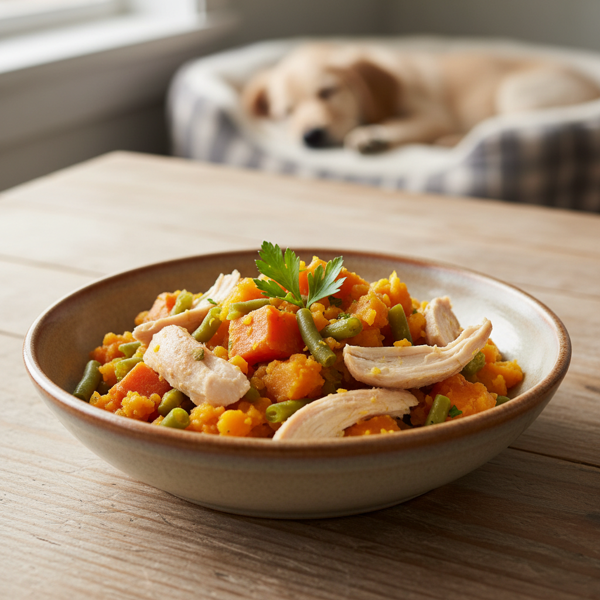
This gentle recovery meal is specially designed for dogs recovering from gastrointestinal distress, such as vomiting or diarrhea. After consulting with a veterinarian, we prepared this easy-to-digest recipe that provides essential nutrients without overwhelming your pet's stomach. Made with lean protein and simple carbohydrates, it helps restore health by providing easily digestible meals. Ideal for large dogs, this recipe yields four small, nutritious meals that can be fed in frequent intervals until normal bowel movements are achieved. Remember to introduce a small amount of kibble gradually as your dog recovers.
N/A
Servings
N/A
Calories
4
Ingredients
Ingredients
Chicken breast
1 (Chopped into small pieces)
Ground beef
1 lb (Crumble before cooking)
Rice
1 cup (Rinsed and cooked)
Water
4 1/2 cups (Used for cooking)
Instructions
1
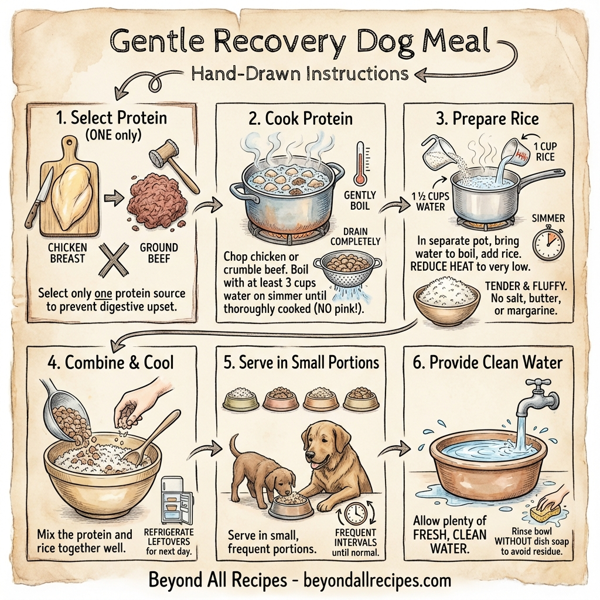
Select either chicken breast or ground beef, not both, for each meal preparation to prevent digestive upset.
2
For the chosen protein, chop the chicken breast into small, manageable pieces or crumble the ground beef. Place it in a pot with at least 3 cups of water and gently boil on a simmer until thoroughly cooked, ensuring there are no pink sections remaining. Drain the cooked protein completely before serving.
3
While the protein is cooking, prepare the rice. In a separate pot, bring 1 1/2 cups of water to a boil, then add the 1 cup of rice. Reduce heat to very low and simmer without salt, butter, or margarine for about 12 minutes, or until the rice is tender and fluffy, following the specific cooking instructions for the type of rice used.
4
Mix the protein with the cooked rice in a manner that allows for easy serving. Refrigerate any leftover blended food until the next day.
5
Serve in small portions, allowing plenty of fresh, clean water in a bowl that has been rinsed without dish soap to avoid any chemical residues.
Nutrition Information
Frequently Asked Questions
Frequently Asked Questions
What is the Gentle Recovery Dog Meal?
This is a specially designed meal for dogs recovering from gastrointestinal distress, such as vomiting or diarrhea.
When should I feed this meal to my dog?
It is ideal for dogs recovering from stomach issues, and should be fed after consulting with a veterinarian.
Can I use both chicken and beef in the same meal?
No, you should select either chicken breast or ground beef, but not both, to prevent digestive upset.
How should I prepare the chicken breast?
The chicken breast should be chopped into small, manageable pieces before cooking.
How should I prepare the ground beef?
The ground beef should be crumbled before it is added to the pot for cooking.
What is the cooking method for the protein?
Simmer the meat in at least 3 cups of water until thoroughly cooked with no pink remaining.
Should I drain the meat after boiling?
Yes, you must drain the cooked protein completely before serving it to your dog.
How much rice is used in this recipe?
The recipe calls for 1 cup of rice.
How much water is needed to cook the rice?
You should use 1 1/2 cups of water for the rice.
Can I add salt or butter to the rice?
No, the rice should be prepared without salt, butter, or margarine to keep it gentle for digestion.
How long does the rice need to cook?
The rice typically takes about 12 minutes on very low heat until it is tender and fluffy.
How do I combine the ingredients?
Mix the cooked protein with the prepared rice in a way that allows for easy serving.
How should leftovers be stored?
Refrigerate any leftover blended food until the next day.
What is the recommended serving size?
The meal should be served in small portions to avoid overwhelming your pet's stomach.
How frequently should I feed my dog during recovery?
Feed small portions at frequent intervals until normal bowel movements are achieved.
Is fresh water important during recovery?
Yes, allow your dog plenty of fresh, clean water at all times.
Why shouldn't I use dish soap on the water bowl?
Rinsing the bowl without soap helps avoid chemical residues that could irritate a sick dog.
How do I transition back to normal kibble?
Introduce a small amount of kibble gradually as your dog begins to recover.
What size dog is this recipe intended for?
This recipe is ideal for large dogs and yields four small meals.
How many meals does this recipe provide?
This recipe yields four small, nutritious meals.
What makes this meal easy to digest?
It uses lean proteins and simple carbohydrates that are gentle on the gastrointestinal system.
What are the main ingredients?
The main ingredients are chicken breast or ground beef, rice, and water.
Should I boil the protein on high heat?
No, the protein should be gently boiled on a simmer.
What if my dog doesn't have normal bowel movements?
Continue feeding frequent small meals of this recovery diet until normal movements return.
Can I use any type of rice?
Yes, but follow the specific cooking instructions for the type of rice you have chosen.
Does this meal provide essential nutrients?
Yes, it provides essential nutrients to help restore health without straining the stomach.
Is this meal suitable for dogs with vomiting?
Yes, it is specifically designed for dogs recovering from vomiting and other GI distress.
Why should I consult a vet first?
A vet can ensure there are no underlying conditions requiring different treatment.
Can I add vegetables to this recipe?
The standard recovery recipe focuses on simple protein and rice to minimize digestive work.
Is this a permanent meal replacement?
No, it is a temporary recovery meal meant for the duration of gastrointestinal distress.