Garlicky Dill Pickles Delight
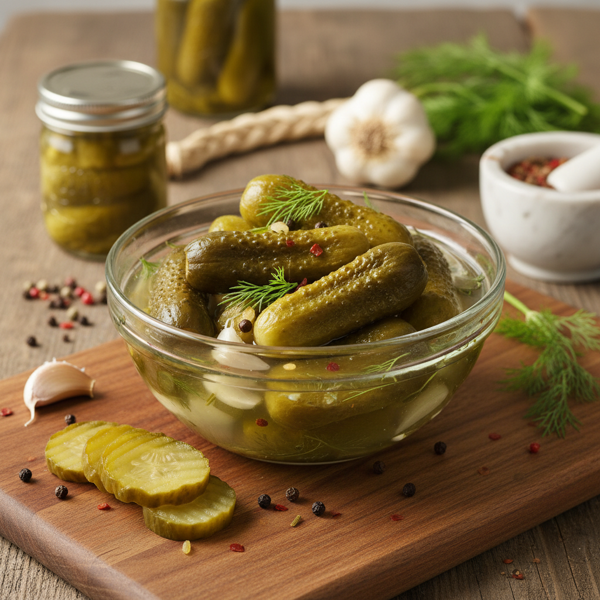
These Garlicky Dill Pickles Delight are a perfect blend of zesty flavors and crunchy textures, making them an ideal addition to sandwiches, charcuterie boards, or as a snack on their own. With a generous amount of garlic, a hint of heat, and aromatic dill, these pickles stand out from the crowd. This foolproof recipe yields 1 quart of pickles, but you can easily multiply the ingredients to create up to 7 quarts. Perfect for seasoned canners and newcomers alike, these pickles will add a burst of flavor to any meal.
N/A
Servings
N/A
Calories
8
Ingredients
Ingredients
Small pickling cucumbers
1 quart (washed and scrubbed)
Dill sprigs or dill seeds
2 sprigs or 2 tablespoons (fresh or whole)
Fresh hot pepper or dried hot pepper
1 fresh or 1/2 teaspoon dried (fresh pepper halved)
Garlic cloves
6 cloves (halved)
Bay leaf
1 leaf (whole)
Pickling salt
2 teaspoons (non-iodized)
White vinegar
1 cup (distilled)
Boiling water
as needed (to fill jars)
Instructions
1
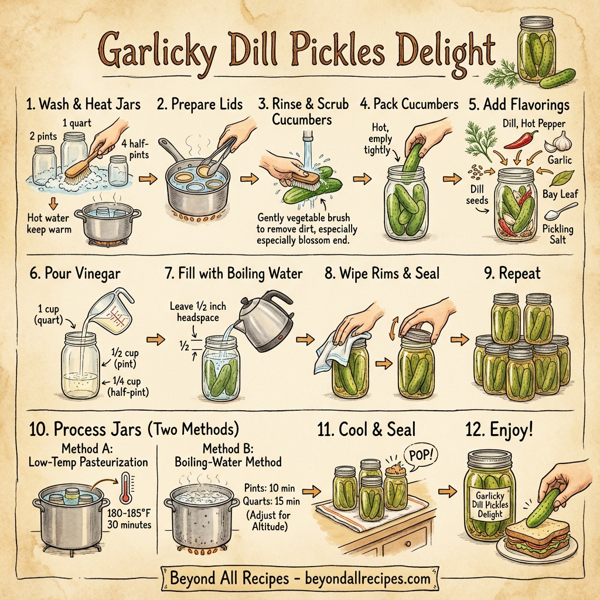
Start by washing your jars thoroughly; you can use 1 quart, 2 pint, or 4 half-pint jars depending on how many pickles you wish to make. Keep the jars hot until you're ready to fill them.
2
Prepare the lids according to the manufacturer’s instructions for a secure seal.
3
Rinse the cucumbers under cold water and use a gentle scrub to remove any dirt, especially from the blossom ends, as this can help the pickles maintain their crunchiness during storage.
4
Carefully pack your hot jars with the cleaned cucumbers, ensuring they fit snugly but aren’t overly forced.
5
Add in the dill sprigs or seeds, the halved hot pepper (or dried hot pepper), garlic cloves, bay leaf, and pickling salt to the jars. Adjust the amount of salt based on the jar size you are using.
6
Pour 1 cup of white vinegar into each quart jar (use 1/2 cup for pints and 1/4 cup for half pints) to infuse flavor throughout.
7
Fill the jars with boiling water, leaving about 1/2 inch of headspace at the top of each jar.
8
Wipe the rims of the jars with a clean, damp cloth to ensure a good seal before attaching the lids securely.
9
Repeat the filling process for any remaining jars.
10
To process the jars, you can choose between low-temperature pasteurization or the boiling-water method. For low-temperature pasteurization, place the jars in a canner half-filled with warm water (120 to 140 degrees). Then add hot water to cover the jars by an inch and maintain a temperature of 180 to 185 degrees for 30 minutes.
11
For the boiling-water method, process pint jars for 10 minutes (add 5 more minutes if at 1,000 to 6,000 feet; 10 minutes more for above 6,000 feet). Quarts should be processed for 15 minutes (again, with time adjustments for different altitudes).
12
Once processing is complete, remove jars and allow to cool undisturbed. You should hear the lids pop as they seal.
Nutrition Information
Frequently Asked Questions
Frequently Asked Questions
What are Garlicky Dill Pickles Delight?
They are a zesty and crunchy blend of pickles featuring garlic, dill, and a hint of heat, perfect for snacks or sandwiches.
How many garlic cloves are needed per quart?
Each quart jar requires 6 garlic cloves, which should be halved before being added.
What type of vinegar is used in this recipe?
The recipe calls for distilled white vinegar to ensure the proper flavor and preservation.
Can I use dill seeds instead of fresh sprigs?
Yes, you can substitute 2 fresh dill sprigs with 2 tablespoons of dill seeds per quart.
Why should I scrub the blossom ends of the cucumbers?
Scrubbing the blossom ends helps the pickles maintain their crunchiness during storage.
How many cucumbers does the base recipe require?
The base recipe is designed for 1 quart of small pickling cucumbers.
Can this recipe be scaled up?
Yes, you can easily multiply the ingredients to yield up to 7 quarts of pickles.
How much vinegar is required for a quart jar?
You should pour 1 cup of white vinegar into each quart jar.
How much vinegar is needed for pint jars?
If using pint jars, use 1/2 cup of white vinegar per jar.
How much vinegar is used for half-pint jars?
For half-pint jars, the recipe requires 1/4 cup of white vinegar per jar.
What kind of salt is best for pickling?
The recipe recommends using non-iodized pickling salt.
How much salt is used per quart?
Each quart jar requires 2 teaspoons of pickling salt.
How do I add heat to these pickles?
You can add 1 fresh halved hot pepper or 1/2 teaspoon of dried hot pepper to each jar.
What is the recommended headspace for the jars?
You should leave about 1/2 inch of headspace at the top of each jar.
Is a bay leaf included in the recipe?
Yes, the recipe calls for 1 whole bay leaf to be added to each jar.
How should the jars be prepared?
Wash the jars thoroughly and keep them hot until they are ready to be filled.
How should I prepare the jar lids?
Prepare the lids according to the manufacturer's instructions to ensure a secure seal.
Why must the jar rims be wiped before sealing?
Wiping the rims with a clean, damp cloth ensures there is no residue that could prevent a proper seal.
How long do I process pint jars in boiling water?
Process pint jars for 10 minutes in a boiling-water canner at sea level.
How long do quart jars need in a boiling-water canner?
Quart jars should be processed for 15 minutes at sea level.
What are the altitude adjustments for boiling-water processing?
Add 5 minutes for altitudes between 1,000 and 6,000 feet, and 10 minutes for altitudes above 6,000 feet.
What is the low-temperature pasteurization method?
It involves maintaining a water temperature of 180 to 185 degrees for 30 minutes.
What temperature should the water be when starting low-temp pasteurization?
Place jars in a canner half-filled with warm water between 120 and 140 degrees before raising the heat.
How do I know if the jars sealed correctly?
You should hear the lids pop as they cool, which indicates they have sealed.
How should the jars be cooled?
Allow the jars to cool undisturbed after removing them from the processing water.
What type of cucumbers should I use?
Small pickling cucumbers are ideal for this recipe.
Is this recipe suitable for beginners?
Yes, it is described as a foolproof recipe perfect for both seasoned canners and newcomers.
What serves as the final liquid to fill the jars?
After adding vinegar and spices, the jars are filled to the appropriate headspace with boiling water.
What are some serving suggestions for these pickles?
They are great for sandwiches, charcuterie boards, or as a standalone snack.
How many total ingredients are used in this recipe?
The recipe utilizes 8 main ingredients, including the cucumbers, vinegar, and various spices.