Garlic-Infused Mofongo with Crispy Pork
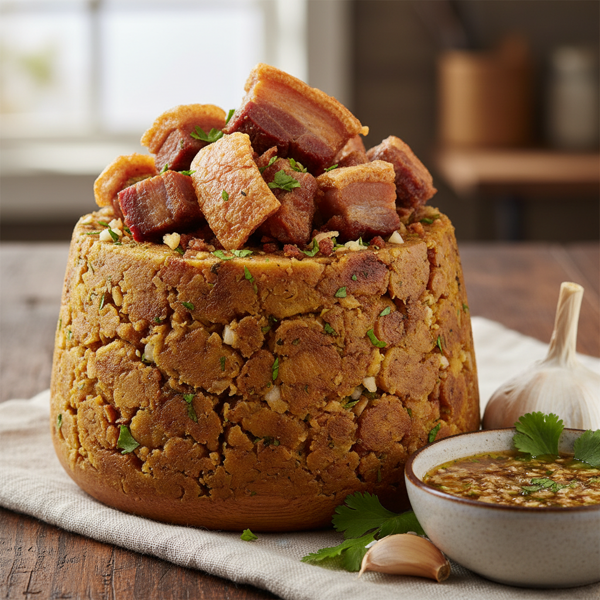
Garlic-Infused Mofongo is a traditional Puerto Rican dish made with twice-fried green plantains, which are mashed to perfection with aromatic garlic, rich olive oil, and crispy pork cracklings or savory bacon. This delightful combination creates a comforting side dish that perfectly complements a variety of meats, seafood, or can be enjoyed on its own. Each bite is a celebration of texture and flavor—crunchy on the outside, creamy on the inside, infused with the delightful essence of garlic. Serve it with your favorite protein or a flavorful broth for a complete meal experience.
N/A
Servings
N/A
Calories
5
Ingredients
Ingredients
green plantains
3 (Cut into wedges)
pork cracklings (chicharron) or bacon
1/2 cup (Chopped)
garlic cloves
4 (Peeled and crushed)
adobo seasoning
2 tablespoons (Mixed with garlic)
olive oil
1 cup (Use as needed)
Instructions
1
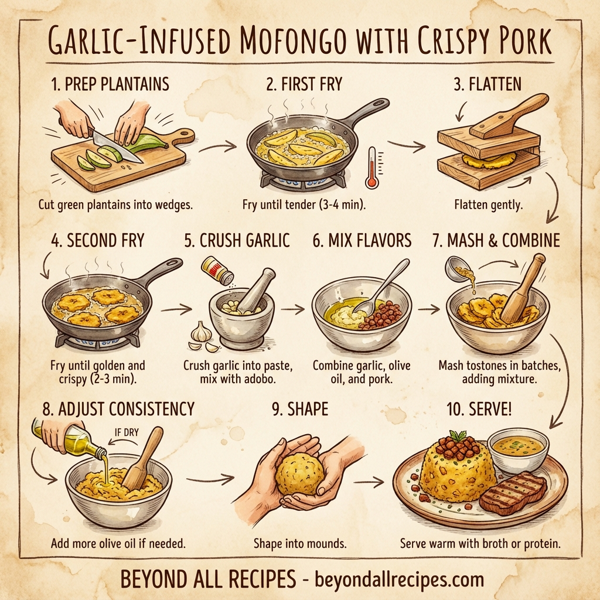
Start by preparing the tostones: Cut the green plantains into wedges.
2
Preheat a large skillet over medium heat and add enough oil to cover the bottom of the pan.
3
Carefully add the plantain wedges and fry until they are tender, about 3-4 minutes.
4
Remove them from the oil, then use a 'tostonera' (plantain press) or a second cutting board to flatten them gently.
5
Return the flattened plantains to the hot oil and fry again for an additional 2-3 minutes or until they turn light golden brown and crispy.
6
While the tostones are frying, take a mortar and pestle to crush the garlic cloves into a smooth paste.
7
Mix in the adobo seasoning to the garlic, creating a flavor-packed paste.
8
In a medium bowl, combine the garlic-adobo mixture with the olive oil and chicharron or bacon, stirring well to incorporate.
9
Once the tostones are crispy and golden, remove them from the oil and place them in a mixing bowl.
10
Using a fork or a pestle, mash the tostones in small batches, ensuring to preserve some texture.
11
Gradually add a portion of the garlic mixture into the mashing process, incorporating it thoroughly.
12
If the mixture feels too dry, drizzle in more olive oil until you reach your desired consistency.
13
Once combined, shape the mashed plantains into small balls or mounds.
14
Serve the mofongo immediately, either on its own as a side dish or alongside your choice of meats, soups, or seafood.
Nutrition Information
Frequently Asked Questions
Frequently Asked Questions
What is Garlic-Infused Mofongo?
Garlic-Infused Mofongo is a traditional Puerto Rican dish made with twice-fried green plantains mashed with garlic, olive oil, and crispy pork cracklings or bacon.
What are the primary ingredients in this mofongo recipe?
The primary ingredients include green plantains, pork cracklings (chicharron) or bacon, garlic cloves, adobo seasoning, and olive oil.
What kind of plantains should be used for mofongo?
This recipe specifically requires green plantains cut into wedges.
How many plantains are needed for this recipe?
You will need 3 green plantains for this version of Garlic-Infused Mofongo.
How is the garlic prepared for the mash?
Four garlic cloves should be peeled and crushed into a smooth paste using a mortar and pestle.
What seasoning is used to flavor the mofongo?
The recipe uses 2 tablespoons of adobo seasoning mixed directly with the garlic paste.
What is the role of pork in this dish?
Crispy pork cracklings (chicharron) or savory bacon are mixed into the mashed plantains to provide a crunchy texture and rich flavor.
How much olive oil is required?
The recipe calls for 1 cup of olive oil to be used as needed to achieve the desired consistency.
How long should the plantains be fried initially?
The plantain wedges should be fried for about 3-4 minutes until they are tender.
What is the second step in the frying process?
After the first fry, flatten the plantains and fry them again for 2-3 minutes until they are light golden brown and crispy.
What tool can I use to flatten the plantains?
You can use a 'tostonera' (plantain press) or a second cutting board to gently flatten the wedges.
How do I ensure the mofongo is not too dry?
If the mixture feels dry during mashing, drizzle in more olive oil until you reach your preferred consistency.
How should the final mofongo be shaped?
The mashed plantain mixture should be shaped into small balls or mounds before serving.
What is the recommended serving suggestion for mofongo?
Serve it immediately as a side dish or alongside meats, seafood, or a flavorful broth.
Can I use a fork if I don't have a pestle?
Yes, you can use a fork or a pestle to mash the tostones in small batches.
What is the texture of mofongo like?
Mofongo is crunchy on the outside and creamy on the inside, with added texture from the pork pieces.
Is mofongo considered a comfort food?
Yes, it is widely recognized as a comforting side dish in Puerto Rican cuisine.
What kind of oil should I use for frying?
The recipe suggests adding enough oil to cover the bottom of a large skillet, though the specific type for frying is typically a neutral high-heat oil.
Should the garlic and adobo be mixed before adding to the plantains?
Yes, the garlic should be crushed into a paste and mixed with adobo, olive oil, and pork before being added to the mashed plantains.
How much chicharron or bacon is needed?
The recipe requires 1/2 cup of chopped pork cracklings or bacon.
Is this recipe suitable for a main course?
While often served as a side, it can be enjoyed on its own or as a complete meal when paired with protein and broth.
What flavor profile does adobo seasoning add?
Adobo provides a savory, flavor-packed base that complements the aromatic garlic.
How many garlic cloves are used?
This recipe uses 4 cloves of garlic.
Should the plantains be completely smooth when mashed?
No, you should mash them in small batches while ensuring some texture is preserved.
What heat setting is used for frying?
The skillet should be preheated over medium heat.
Does the recipe specify how to cut the plantains?
Yes, the green plantains should be cut into wedges.
Can I serve this with seafood?
Absolutely, it perfectly complements a variety of seafood dishes.
Is the garlic flavor prominent in this dish?
Yes, the dish is specifically garlic-infused, celebrating the delightful essence of garlic.
What is the traditional name of the press used for plantains?
The traditional tool is called a 'tostonera'.
Is mofongo served hot or cold?
Mofongo should be served immediately while warm.