Garlic & Olive Biscuit-Style Focaccia
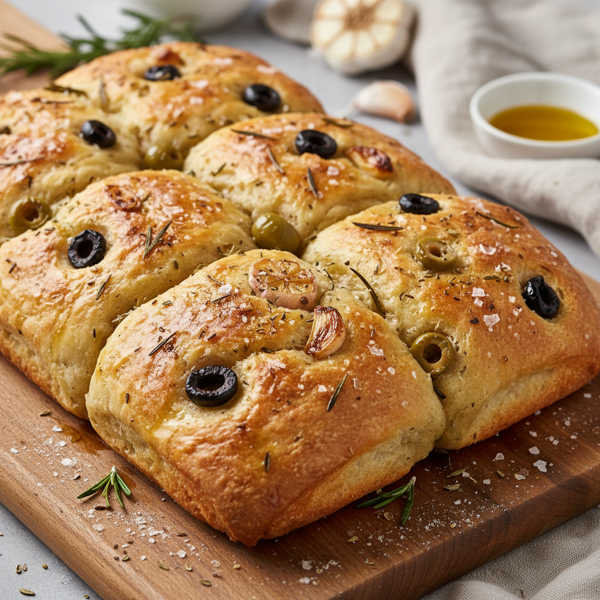
This delightful Garlic & Olive Biscuit-Style Focaccia is an irresistible twist on traditional focaccia, bringing you a light, fluffy texture reminiscent of freshly baked biscuits. Inspired by James Barber's 'Quick & Simple', this version is so easy, you'll wonder why you haven't made it before. While the recipe traditionally calls for black olives, feel free to omit them or substitute with your favorite olives. Perfect as a side for soups, salads, or simply enjoyed on its own with olive oil and balsamic vinegar for dipping, this focaccia will impress your family and friends with its aromatic flavor and soft, inviting crust.
N/A
Servings
N/A
Calories
8
Ingredients
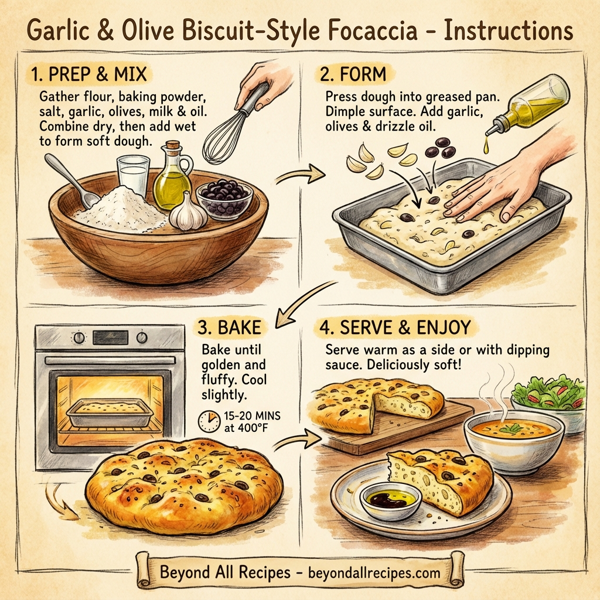
Ingredients
flour
2 cups (sifted)
salt
1 teaspoon (none)
baking powder
1 tablespoon (none)
olive oil
5-6 tablespoons (for mixing and drizzling)
water or milk
2/3-3/4 cup (room temperature)
garlic cloves
2 (chopped)
dried rosemary or fresh rosemary
1 teaspoon (crushed or chopped)
grated parmesan cheese
to taste (for topping)
Instructions
Nutrition Information
Frequently Asked Questions
Frequently Asked Questions
What makes this Garlic & Olive Focaccia biscuit-style?
The recipe uses baking powder instead of yeast and involves a specific liquid-to-flour ratio, resulting in a light, fluffy texture reminiscent of a biscuit rather than a chewy traditional focaccia.
Who inspired this recipe?
This recipe was inspired by James Barber's work in 'Quick & Simple'.
How much flour is required?
You will need 2 cups of flour, and it is recommended that you sift it first.
What type of leavening agent does this bread use?
It uses 1 tablespoon of baking powder for lift.
Should I use water or milk for the dough?
You can use either water or milk; using milk will result in a richer crumb, while water keeps it lighter.
What is the recommended amount of olive oil?
The recipe calls for 5-6 tablespoons of olive oil, used for both mixing into the dough and drizzling on top.
Can I omit the olives?
Yes, you can easily omit the olives or substitute them with your favorite variety if you prefer.
How should I prepare the garlic?
The recipe suggests using 2 garlic cloves, finely chopped.
Can I use fresh rosemary instead of dried?
Yes, you can use 1 teaspoon of either crushed dried rosemary or chopped fresh rosemary.
What cheese is best for the topping?
Grated Parmesan cheese is recommended to add a savory crust to the top.
What temperature should the liquid be when mixing?
The milk or water should be at room temperature for the best results.
Is this a quick recipe to make?
Yes, as a 'biscuit-style' bread without yeast, it does not require rising time, making it much faster than traditional bread.
What can I serve with this focaccia?
It is perfect for serving alongside soups, salads, or as a standalone snack for dipping in oil and vinegar.
Can I make this recipe vegan?
Yes, simply use water or a plant-based milk and omit the Parmesan cheese or use a vegan alternative.
Do I need to sift the flour?
Yes, sifting the flour helps achieve the light and fluffy texture that defines this specific style.
How much salt is in the recipe?
The recipe requires 1 teaspoon of salt.
Can I add more garlic?
While the recipe suggests 2 cloves, you can adjust the garlic to your personal taste.
Is this bread chewy like regular focaccia?
No, it is intended to have a softer, more inviting crust and a fluffier interior similar to a biscuit.
Can I use a different oil?
Olive oil is essential for the traditional flavor, but other neutral oils can be used if necessary.
How much liquid should I use exactly?
Use between 2/3 and 3/4 cup of liquid, depending on the consistency of your dough.
Is this recipe suitable for kids?
Yes, the soft texture and savory garlic-parmesan flavor make it very kid-friendly.
What is the best way to enjoy it fresh?
Serve it warm, dipped in a mixture of olive oil and balsamic vinegar.
Can I use whole wheat flour?
You can, but the texture will be significantly denser and less 'fluffy' than the white flour version.
Does the recipe require kneading?
Because it is biscuit-style, you should mix it until just combined to avoid making the bread tough.
Can I add other herbs?
Absolutely, herbs like thyme or oregano would complement the garlic and rosemary well.
How do I store leftovers?
Store in an airtight container at room temperature for up to two days, or freeze for longer storage.
What type of salt should I use?
Standard table salt or sea salt works fine for the dough.
Is this recipe high in protein?
This is a carbohydrate-based side dish; while it contains some protein from the flour and cheese, it is not considered a high-protein meal.
Can I bake this in a cast iron skillet?
Yes, a cast iron skillet is excellent for giving this focaccia a nice crispy bottom.
What is the main aromatic used?
Garlic and rosemary are the primary aromatics that give this bread its signature flavor.