Fresh Homemade Pasta Sheets
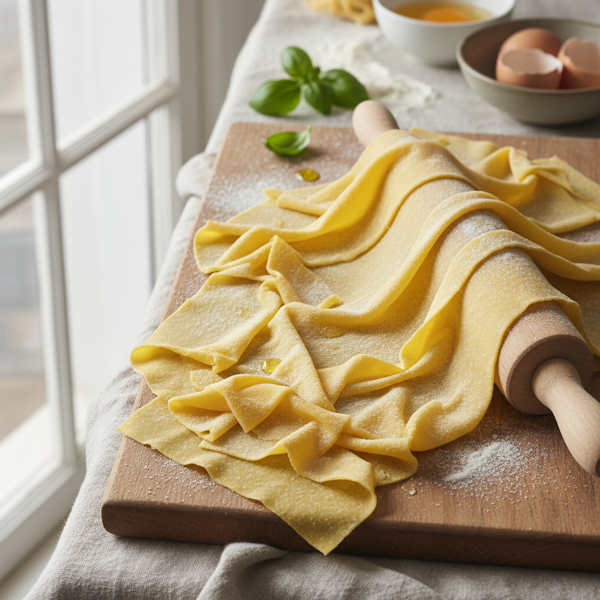
Transform your culinary experience with these fresh homemade pasta sheets! Perfect for creating a variety of dishes, including the delightful "Spinach and Cheese Ravioli with Fresh Tomato Sauce". Using just four simple ingredients, you can create a delicious, velvety base for your favorite pasta recipes. This versatile dough can be easily customized with herbs or spices for added flavor. Experience the joy of pasta-making right in your kitchen, and impress your family and friends with authentic Italian flavors!
N/A
Servings
93
Calories
4
Ingredients
Ingredients
All-purpose flour
3 cups (sifted)
Whole eggs
2 (beaten)
Extra virgin olive oil
1 teaspoon (none)
Salt
1/4 teaspoon (none)
Instructions
1
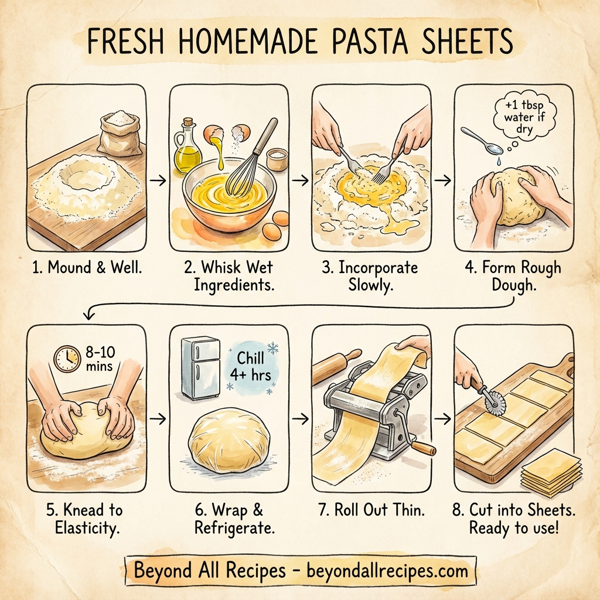
On a clean, spacious surface or a large mixing bowl, mound the sifted flour and create a well in the center.
2
In a separate bowl, beat the eggs until fully blended, then add the olive oil and salt. Mix well.
3
Pour the egg mixture into the well of flour, carefully incorporating the edges of the flour into the liquid gradually.
4
Using your hands, knead the mixture until it forms a cohesive dough. If the dough appears too dry, add 1 tablespoon of cold water as needed.
5
Continue kneading the dough on a floured surface for about 8-10 minutes until it becomes smooth and elastic.
6
Wrap the dough in plastic wrap and refrigerate it for at least 4 hours to relax the gluten, which makes it easier to roll out.
7
After chilling, divide the dough into smaller portions. Using a pasta machine or a rolling pin, roll each portion out to your desired thickness, typically to the thinnest setting for sheets.
8
Cut the rolled-out sheets into 6 equal pieces, ready to use in your favorite recipe.
Nutrition Information
1g
Fat
20g
Carbs
2.7g
Protein
1.3g
Fiber
Frequently Asked Questions
Frequently Asked Questions
What are the main ingredients for Fresh Homemade Pasta Sheets?
The main ingredients are 3 cups of sifted all-purpose flour, 2 beaten whole eggs, 1 teaspoon of extra virgin olive oil, and 1/4 teaspoon of salt.
How much all-purpose flour do I need for this pasta recipe?
You will need 3 cups of all-purpose flour, and it should be sifted before use.
How many eggs are required for the dough?
The recipe requires 2 whole eggs, which should be beaten before being added to the flour.
What type of oil is recommended for fresh pasta sheets?
Extra virgin olive oil is recommended, specifically 1 teaspoon.
How much salt is used in the pasta dough?
The recipe calls for 1/4 teaspoon of salt.
How long should I knead the pasta dough?
You should knead the dough on a floured surface for approximately 8-10 minutes until it becomes smooth and elastic.
Why does the pasta dough need to be refrigerated?
Refrigeration allows the gluten in the dough to relax, which makes the pasta much easier to roll out later.
How long should the dough chill in the refrigerator?
The dough should be refrigerated for at least 4 hours.
What should I do if my pasta dough is too dry?
If the dough appears too dry during the initial kneading, you can add 1 tablespoon of cold water as needed to help it form a cohesive dough.
How many calories are in a serving of these pasta sheets?
There are approximately 93 calories per serving.
What is the protein content of the homemade pasta?
Each serving contains about 2.7g of protein.
How many carbohydrates are in the fresh pasta sheets?
There are 20g of carbohydrates per serving.
Is there any fiber in this pasta recipe?
Yes, there is approximately 1.3g of fiber per serving.
What is the fat content per serving?
The pasta contains about 1g of fat per serving.
Can I use a rolling pin instead of a pasta machine?
Yes, you can use either a pasta machine or a rolling pin to roll out the dough to your desired thickness.
How many pieces should the finished dough sheets be cut into?
After rolling out the dough, you should cut the sheets into 6 equal pieces.
What dish is specifically suggested to make with these sheets?
The recipe suggests using these sheets for Spinach and Cheese Ravioli with Fresh Tomato Sauce.
Is this fresh pasta recipe vegetarian?
Yes, this recipe is tagged as vegetarian.
Can I add flavors to the dough?
Yes, the dough can be easily customized by adding herbs or spices for extra flavor.
What should the dough's texture be after kneading?
The dough should be smooth and elastic.
How do I start mixing the ingredients?
Mound the sifted flour and create a well in the center, then pour the mixture of eggs, oil, and salt into the well.
How should I wrap the dough for the refrigerator?
The dough should be wrapped tightly in plastic wrap before refrigerating.
What thickness should the pasta sheets be rolled to?
The recipe typically suggests rolling the sheets to the thinnest setting.
What type of surface is best for kneading the dough?
A clean, spacious, and floured surface is ideal for kneading the pasta dough.
Does the recipe contain any sugar?
No, there is no sugar listed in the ingredients or nutritional information for this recipe.
How many ingredients are in this recipe?
There are 4 simple ingredients: flour, eggs, olive oil, and salt.
What tags are associated with this recipe?
Tags include pasta, homemade, italian, fresh, noodles, dough, vegetarian, and cooking from scratch.
Is there any sodium in the recipe?
While salt is an ingredient, the specific nutritional value for sodium is not listed in the data provided.
Can these sheets be used for lasagna?
Yes, these versatile homemade pasta sheets are perfect for creating a variety of Italian dishes including lasagna.
What is the first step of the instructions?
The first step is to mound the sifted flour on a clean surface and create a well in the center.