Fresh Homemade Coconut Cream
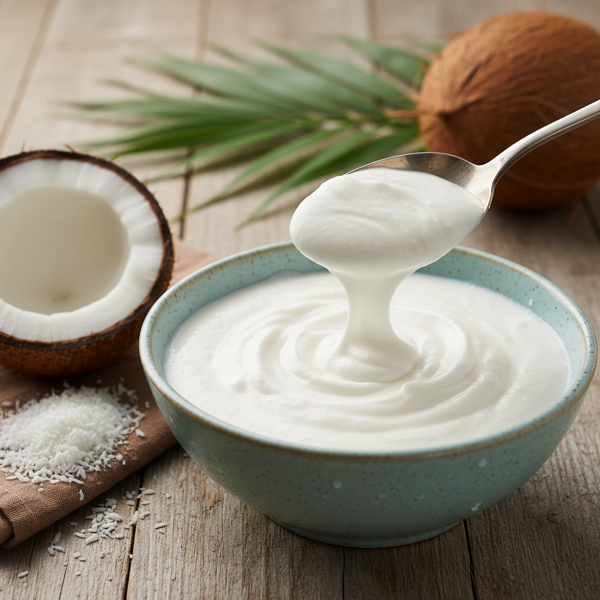
Create vibrant, creamy coconut goodness right in your own kitchen with this Fresh Homemade Coconut Cream recipe. Made from freshly grated coconut and its natural water, this creamy delight is versatile enough for a variety of culinary uses, from elevating savory dishes to enriching desserts and refreshing beverages. Ideal for adding a tropical flair to your recipes, this coconut cream will delight your senses while offering a wholesome alternative to store-bought options. Best used fresh, consume within five days for optimal flavor and freshness.
N/A
Servings
N/A
Calories
2
Ingredients
Ingredients
Coconut
1 (shell removed and flesh grated)
Reserved Coconut Water
as needed (plus enough cream to measure 1 quart)
Instructions
1
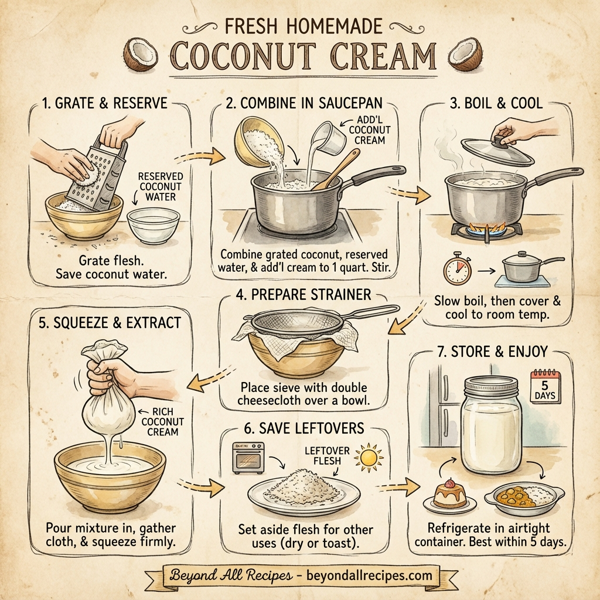
Begin by grating the flesh of the coconut after removing its shell, ensuring any coconut water is reserved separately.
2
In a heavy saucepan, combine the grated coconut with the reserved coconut water, plus enough additional coconut cream to reach a total volume of 1 quart. Stir well to combine.
3
Place the saucepan over medium heat and bring the mixture to a slow boil, stirring frequently to prevent sticking. Once boiling, cover the saucepan with a lid and reduce the heat to low, allowing it to cool down to room temperature with the lid on.
4
Once cooled, prepare to extract the coconut cream by placing a sieve or strainer over a large bowl. Line the sieve with a double layer of cheesecloth to catch the coconut solids.
5
Carefully pour the cooled coconut mixture into the lined strainer. Gather the edges of the cheesecloth, forming a pouch, and squeeze firmly to extract the rich coconut cream into the bowl below.
6
Set the leftover coconut flesh aside; it can be air-dried or toasted for use in other recipes.
7
Transfer the freshly made coconut cream to an airtight container and refrigerate. Enjoy your homemade coconut cream within five days for the best quality.
Nutrition Information
Frequently Asked Questions
Frequently Asked Questions
What is Fresh Homemade Coconut Cream?
Fresh Homemade Coconut Cream is a vibrant, creamy delight made from freshly grated coconut and its natural water, serving as a wholesome alternative to store-bought options.
How many ingredients are needed for this recipe?
The recipe requires 2 primary ingredients: one fresh coconut and its reserved coconut water.
How should I prepare the coconut flesh?
First, remove the shell of the coconut and then grate the flesh finely while reserving the coconut water separately.
What is the total liquid volume needed for the mixture?
You should combine the grated coconut with reserved water and enough additional liquid to reach a total volume of 1 quart.
What type of saucepan should be used?
A heavy saucepan is recommended for heating the coconut mixture to ensure even cooking and to help prevent sticking.
How should the coconut mixture be heated?
Place the saucepan over medium heat and bring the mixture to a slow boil, stirring frequently.
Why is stirring important during the boiling process?
Frequent stirring is necessary to prevent the coconut mixture from sticking to the bottom of the saucepan.
What do I do once the mixture reaches a slow boil?
Once it boils, cover the saucepan with a lid and reduce the heat to low before allowing it to cool.
How should the coconut mixture be cooled?
The mixture should be allowed to cool down to room temperature with the lid kept on the saucepan.
What equipment is required to extract the coconut cream?
You will need a large bowl, a sieve or strainer, and a double layer of cheesecloth.
How many layers of cheesecloth are recommended for straining?
The recipe suggests using a double layer of cheesecloth to effectively catch the coconut solids while extracting the cream.
How do I extract the rich cream from the solids?
Gather the edges of the cheesecloth to form a pouch and squeeze it firmly to extract the cream into the bowl below.
What can I do with the leftover coconut flesh?
The leftover coconut flesh can be air-dried or toasted for use in other culinary recipes.
Where should I store the finished coconut cream?
Transfer the freshly made coconut cream to an airtight container and store it in the refrigerator.
How long does homemade coconut cream stay fresh?
For the best quality and flavor, you should consume the homemade coconut cream within five days.
Can this coconut cream be used in savory dishes?
Yes, this versatile coconut cream is ideal for elevating a variety of savory dishes.
Is this recipe suitable for desserts?
Absolutely, it is perfect for enriching desserts with a tropical flavor.
Can I add this coconut cream to beverages?
Yes, it is a great addition to refreshing beverages and tropical drinks.
Is this recipe a good alternative to store-bought coconut cream?
Yes, it is a wholesome and fresh alternative to processed, store-bought coconut cream options.
Does this recipe provide a tropical flair?
Yes, it is specifically designed to add a tropical flair to your recipes while offering a fresh taste.
Should the coconut shell be removed?
Yes, the shell must be removed before you grate the flesh for the recipe.
What do I do with the reserved coconut water?
The reserved coconut water is combined with the grated flesh in the saucepan as part of the base mixture.
Does the recipe require a specific heat setting?
The mixture should be brought to a boil over medium heat and then reduced to low heat.
Is the cooling process done with the lid on or off?
The mixture should be cooled to room temperature with the lid on the saucepan.
How do I prepare the strainer for the cream?
Line a sieve or strainer with cheesecloth and place it over a large bowl to catch the liquid.
Can the leftover coconut be toasted?
Yes, the instructions state the leftover flesh can be toasted for use in other recipes.
What is the target measurement for the initial mixture?
The mixture of grated coconut, water, and added cream should measure exactly 1 quart.
Is this cream intended to be used fresh?
Yes, the recipe emphasizes using the cream fresh for optimal flavor.
Does the recipe include any sugar?
The recipe relies on the natural sweetness of the coconut and does not list additional sugar as an ingredient.
Is the final product considered versatile?
Yes, the description highlights its versatility for savory dishes, desserts, and beverages.