Fragrant Saffron-infused Basmati Rice
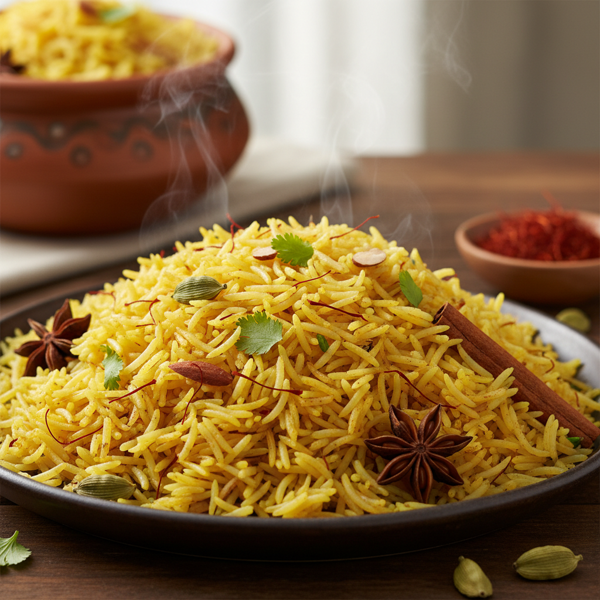
This Fragrant Saffron-infused Basmati Rice is a delightful and aromatic side dish that perfectly complements a variety of main courses without overwhelming their flavors. The infusion of high-quality saffron threads imparts a subtle warmth and rich golden hue to the fluffy basmati, while the sautéed onion and garlic bring a touch of sweetness and depth. Quick and easy to prepare, this dish is ideal for weeknight dinners and special occasions alike, making it a versatile addition to your culinary repertoire.
4
Servings
75
Calories
7
Ingredients
Ingredients
olive oil
1 1/2 tablespoons (none)
onion
1/4 cup (diced)
garlic
1/2 teaspoon (minced)
white rice
1 cup (rinsed)
chicken broth
1 1/2 cups (none)
saffron
1/2 teaspoon (threads)
parsley
1 1/2 teaspoons (chopped)
Instructions
1
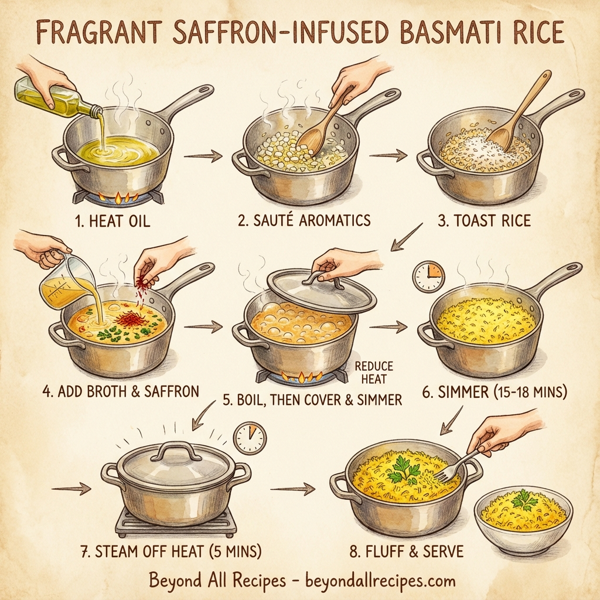
In a heavy-bottomed saucepan, heat the olive oil over medium heat.
2
Add the diced onion and minced garlic, and sauté until the onion turns translucent and soft, about 3-4 minutes.
3
Stir in the rinsed white rice, cooking for an additional 3 minutes while stirring frequently to lightly toast the grains.
4
Pour in the chicken broth, then sprinkle the saffron threads evenly over the surface. Add the chopped parsley and stir gently to combine.
5
Bring the mixture to a gentle boil, then cover the saucepan and reduce the heat to low.
6
Allow the rice to simmer for 15-18 minutes, or until all the liquid is absorbed and the rice is tender.
7
Remove the pot from heat and let it sit, covered, for another 5 minutes to steam.
8
Fluff the rice with a fork before serving, garnishing with extra parsley if desired.
Nutrition Information
1.5g
Fat
13.5g
Carbs
1.5g
Protein
0.25g
Fiber
Frequently Asked Questions
Frequently Asked Questions
What is Fragrant Saffron-infused Basmati Rice?
It is a delightful and aromatic side dish that features fluffy basmati rice infused with high-quality saffron threads, sautéed onion, and garlic for a rich golden hue and subtle warmth.
How long does it take to prepare this saffron rice?
The total cooking time includes about 4 minutes of sautéing, 3 minutes of toasting the rice, 15-18 minutes of simmering, and 5 minutes of steaming.
Is this recipe gluten-free?
Yes, this Fragrant Saffron-infused Basmati Rice recipe is naturally gluten-free.
Is this rice dish vegetarian?
While the recipe uses chicken broth, you can easily make it vegetarian by substituting the chicken broth with vegetable broth.
How many calories are in one serving?
There are approximately 75 calories per serving.
How many servings does this recipe yield?
This recipe is designed to provide 4 servings.
What type of rice is best for this recipe?
Basmati rice is recommended for this recipe because of its long grains and ability to become fluffy and aromatic.
Why should I rinse the rice before cooking?
Rinsing the rice helps remove excess surface starch, which ensures the grains stay separate and fluffy rather than becoming sticky.
How do I cook the onion and garlic?
Sauté the diced onion and minced garlic in olive oil over medium heat for 3-4 minutes until the onion is translucent and soft.
Why is the rice toasted in the pan?
Toasting the rice for about 3 minutes after sautéing the aromatics adds a subtle nutty flavor and helps the grains maintain their integrity.
What is the purpose of saffron in this dish?
Saffron threads impart a distinct floral aroma, a subtle warmth, and a beautiful rich golden color to the rice.
How much liquid is needed for 1 cup of rice?
The recipe calls for 1.5 cups of chicken broth for 1 cup of white rice.
Should the rice be boiled or simmered?
Bring the mixture to a gentle boil first, then cover and reduce the heat to low to simmer for 15-18 minutes.
Why do I need to let the rice sit covered after cooking?
Letting the pot sit off the heat for 5 minutes allows the rice to finish steaming, ensuring even moisture distribution and better texture.
How should I fluff the rice?
Use a fork to gently fluff the rice after the steaming period to separate the grains without mashing them.
Can I use butter instead of olive oil?
Yes, butter can be used for sautéing to add a richer, creamier flavor to the rice.
What can I use for garnish?
Fresh chopped parsley is used in the recipe and also makes an excellent final garnish for extra color.
Is this a quick recipe for weeknights?
Yes, with a relatively short cook time and simple steps, it is ideal for both weeknight dinners and special occasions.
What is the fat content of this dish?
Each serving contains approximately 1.5g of fat.
How many carbohydrates are in a serving?
There are about 13.5g of carbohydrates per serving.
Does this rice contain fiber?
Each serving provides approximately 0.25g of fiber.
What amount of protein does this dish provide?
This saffron rice dish provides about 1.5g of protein per serving.
How many ingredients are required in total?
The recipe requires 7 main ingredients: olive oil, onion, garlic, white rice, chicken broth, saffron, and parsley.
How should the garlic be prepared?
The garlic should be finely minced before being added to the saucepan.
How much saffron should I use?
The recipe suggests using 1/2 teaspoon of saffron threads.
Can I use water instead of broth?
You can use water, but using chicken or vegetable broth adds significantly more depth and flavor to the rice.
Is the onion preparation important?
Yes, dicing the onion small (1/4 cup) ensures it blends well with the rice grains and softens quickly.
What kind of pot should I use?
A heavy-bottomed saucepan is best to ensure even heat distribution and prevent the rice from burning at the bottom.
Can I add other spices to this recipe?
While this recipe focuses on saffron, you can customize it by adding spices like cumin or cardamom depending on your main course.
What should the heat setting be during simmering?
The heat should be reduced to low once the liquid reaches a boil to ensure the rice absorbs the broth slowly without drying out.