Fluffy Scottish Breakfast Baps
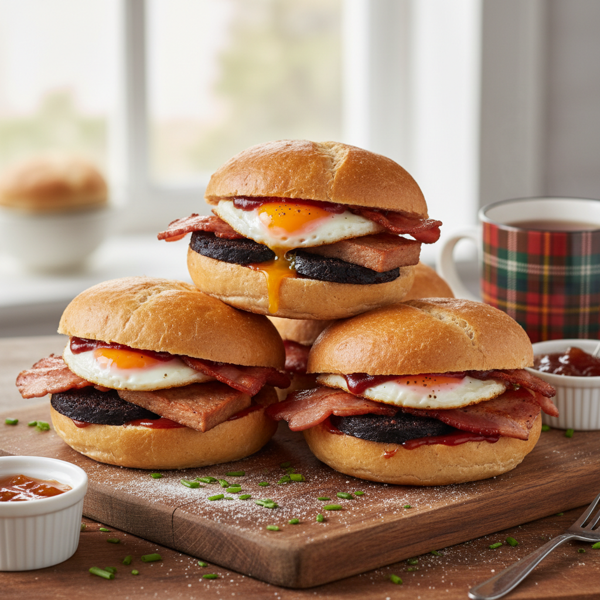
These Fluffy Scottish Breakfast Baps are a delightful addition to any morning meal. With a light and tender texture, they are perfect for slathering with butter or enjoyed alongside hearty Scottish dishes. Best served warm straight from the oven, these baps are sure to bring a touch of traditional Scottish comfort to your breakfast table.
N/A
Servings
N/A
Calories
7
Ingredients
Ingredients
yeast
14 g (2 envelopes)
sugar
2 teaspoons
warm water
2/3 cup (approximately 110°F)
warm milk
2/3 cup (approximately 110°F)
plain flour
3 1/3 cups (sifted)
salt
1 teaspoon
lard
60 g (cut into small cubes)
Instructions
1
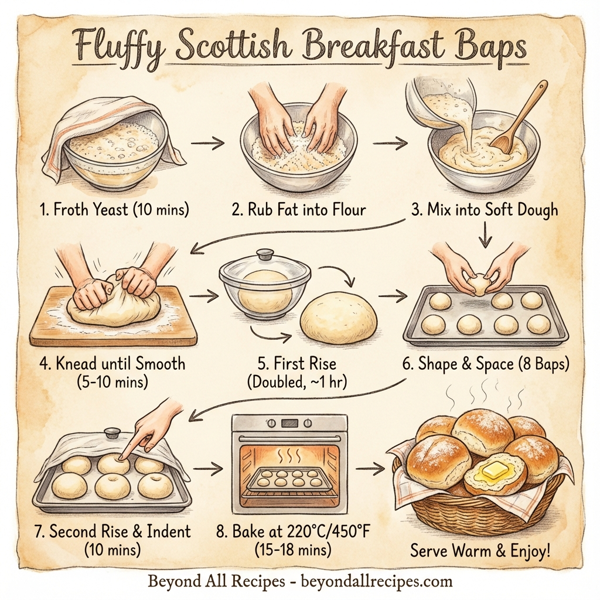
In a large bowl, combine the yeast and sugar with the warm water and warm milk. Stir gently and cover the bowl with a clean towel. Leave in a warm place for about 10 minutes, or until the mixture becomes frothy.
2
In another large mixing bowl, sift together the plain flour and salt. Add the lard and use your fingers to rub it into the flour until the mixture resembles breadcrumbs.
3
Pour the frothy yeast mixture into the flour mixture and stir well with a wooden spoon or spatula until a soft dough forms.
4
Turn the dough out onto a lightly floured surface and knead vigorously for about 5 to 10 minutes, until the dough is smooth and elastic.
5
Return the dough to a clean, lightly greased bowl and cover with a clean towel. Place in a warm, draft-free area and let it rise for about 1 hour or until it has doubled in size.
6
Punch down the risen dough and divide it into 8 equal portions. Shape each portion into a smooth ball and place them on a greased baking sheet, ensuring they are spaced about 5 cm apart.
7
Cover the shaped dough balls with a tea towel and let them rise for an additional 10 minutes, until they have puffed up nicely.
8
Using your finger, gently press an indent into the center of each dough ball.
9
Bake the baps in a preheated oven at 220°C (450°F) for approximately 15 to 18 minutes, or until they appear lightly browned and sound hollow when tapped on the bottom.
10
Remove from the oven and serve immediately while the baps are still hot and fresh.
Nutrition Information
Frequently Asked Questions
Frequently Asked Questions
What are Fluffy Scottish Breakfast Baps?
They are traditional Scottish morning rolls known for their light and tender texture, perfect for breakfast.
How many baps does this recipe make?
This recipe yields 8 equal portions.
What is the first step in preparing the yeast?
Combine the yeast and sugar with warm water and warm milk, then let it sit for 10 minutes until frothy.
What is the recommended temperature for the milk and water?
The liquids should be warm, approximately 110°F (43°C).
What type of flour should I use for Scottish baps?
This recipe calls for 3 1/3 cups of sifted plain flour.
How long should I knead the dough?
Knead the dough vigorously for about 5 to 10 minutes until it is smooth and elastic.
How long is the first rising period?
The dough should rise in a warm, draft-free area for about 1 hour or until it has doubled in size.
How long is the second rise after shaping?
The shaped dough balls should rise for an additional 10 minutes until they have puffed up nicely.
At what temperature should the baps be baked?
Bake them in a preheated oven at 220°C (450°F).
How long do the baps take to bake?
They take approximately 15 to 18 minutes to bake.
How can I tell if the baps are fully cooked?
They should appear lightly browned and sound hollow when tapped on the bottom.
What fat is used in this traditional recipe?
The recipe uses 60g of lard, cut into small cubes.
How do I incorporate the lard into the flour?
Use your fingers to rub the lard into the flour and salt mixture until it resembles breadcrumbs.
Why do I need to indent the center of the dough?
Gently pressing an indent into the center of each dough ball before baking helps achieve the traditional bap shape.
What should I do after the dough has doubled in size?
You should punch down the risen dough before dividing it into portions.
How far apart should the dough balls be placed on the baking sheet?
Ensure they are spaced about 5 cm apart on a greased baking sheet.
Can I serve these cold?
While they can be eaten cold, they are best served warm straight from the oven.
What are some suggested toppings for these baps?
They are delicious when slathered with butter or served with hearty Scottish dishes.
How much yeast is required?
The recipe requires 14 grams of yeast, which is equivalent to 2 envelopes.
What is the texture of a Scottish bap?
They are described as having a light, tender, and fluffy texture.
Is sugar necessary for the yeast mixture?
Yes, 2 teaspoons of sugar are added to the yeast and warm liquids to help it bloom.
Is this recipe considered difficult?
No, it is tagged as an easy recipe suitable for home bakers.
What tags define this recipe?
Tags include Scottish, breakfast, baps, rolls, yeast breads, traditional, baking, comfort food, and easy.
What should I cover the dough with while it rises?
Cover the dough with a clean towel or tea towel to keep it warm and protected.
Do I need to grease the baking sheet?
Yes, the instructions specify using a greased baking sheet.
Should I sift the dry ingredients?
Yes, the recipe recommends sifting together the plain flour and salt.
What is the liquid ratio for this recipe?
It uses a total of 1 1/3 cups of liquid, split equally between warm water and warm milk.
How do I start the mixing process?
Stir the frothy yeast mixture into the flour and lard mixture with a wooden spoon or spatula until a soft dough forms.
Are these baps a type of bread roll?
Yes, they are a traditional type of yeast bread roll common in Scotland.
What is the best way to enjoy a fresh bap?
The best way is to serve it immediately while it is still hot and fresh from the oven.