Fluffy Long Grain White Rice
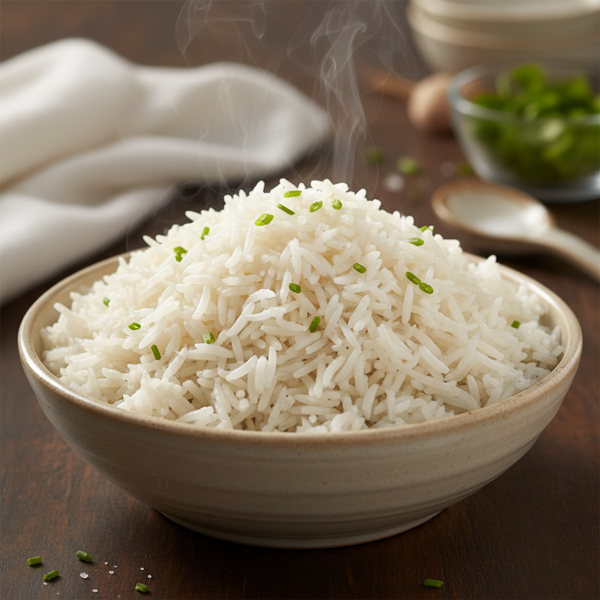
Say goodbye to the fear of cooking rice with this foolproof fluffy long grain white rice recipe! Using real rice yields a much tastier and healthier side dish compared to instant rice options. This recipe is simple yet effective, resulting in perfectly fluffy rice that pairs beautifully with a variety of dishes, from stir-fries to curries. Impress your friends and family with your newfound cooking skills as they savor the taste and texture of homemade rice. Try it with different seasonings or as a base for delicious meals, and enjoy the satisfaction of cooking like a pro!
4
Servings
N/A
Calories
5
Ingredients
Ingredients
long grain rice
1 cup (rinsed)
water
2 cups (measured)
salt
1 teaspoon (to taste)
butter
1 teaspoon (optional, for flavor)
white vinegar
1/2 teaspoon (optional, for separation)
Instructions
1
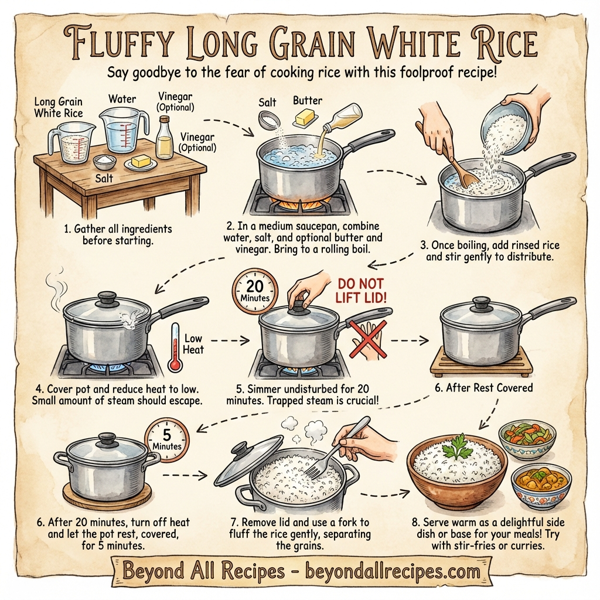
Gather all ingredients before starting.
2
In a medium saucepan with a tight-fitting lid, combine the water, salt, and optional butter and vinegar, then bring to a rolling boil over medium-high heat. The butter adds richness, while the vinegar helps keep the rice grains separate without affecting the flavor.
3
Once boiling, add the rinsed rice and stir gently to distribute it evenly in the pot.
4
Cover the pot with the lid and reduce the heat to low. To ensure the temperature is right, you should see a small amount of steam escaping from the lid; if there's a lot of steam, lower the heat.
5
Allow the rice to simmer undisturbed for 20 minutes. This step is crucial—DO NOT lift the lid during this time, as the trapped steam is essential for the rice to cook properly.
6
After 20 minutes, turn off the heat and let the pot rest, covered, for an additional 5 minutes.
7
Remove the lid and use a fork to fluff the rice gently, separating the grains.
8
Serve warm as a delightful side dish or as a base for your favorite meals!
Nutrition Information
Frequently Asked Questions
Frequently Asked Questions
What is the correct ratio of water to rice for this recipe?
The correct ratio for this fluffy long grain white rice recipe is 2 cups of water for every 1 cup of rice.
How many servings does this recipe produce?
This recipe is designed to yield approximately 4 servings.
What specific type of rice should I use?
You should use long grain white rice for the best results and the fluffiest texture.
Why is it recommended to rinse the rice before cooking?
Rinsing the rice helps remove excess surface starch, which prevents the rice from becoming overly sticky or gummy.
What is the purpose of adding butter to the cooking water?
The butter adds a layer of richness and enhances the overall flavor of the rice.
Why should I add white vinegar to the rice?
A small amount of white vinegar helps keep the individual rice grains separate without altering the final flavor.
Is the butter mandatory for this recipe?
No, the butter is optional and can be omitted if you prefer a lower-fat version.
Can I skip the white vinegar?
Yes, the vinegar is optional, though it is recommended for achieving maximum grain separation.
How long does the rice need to simmer?
The rice should simmer undisturbed on low heat for exactly 20 minutes.
Can I check the rice by lifting the lid while it cooks?
No, you must not lift the lid during the 20-minute simmering process as the trapped steam is essential for proper cooking.
What should I do if I see too much steam escaping from the lid?
If a lot of steam is escaping, it means the heat is too high and should be lowered immediately.
Why do I need to let the rice rest after the heat is turned off?
Resting the rice allows the moisture to redistribute evenly, ensuring every grain is perfectly tender.
How long should the rice rest before serving?
The rice should rest, covered, for at least 5 minutes after the cooking time is complete.
What is the best way to fluff the rice?
Use a fork to gently fluff the rice, which helps separate the grains without mashing them.
Is this homemade rice healthier than instant rice?
Yes, using real long grain rice is generally considered a tastier and healthier alternative to processed instant rice options.
What cuisine style does this rice recipe belong to?
This recipe is categorized under Chinese cuisine but works well with many different styles of food.
Can this rice be used as a base for stir-fries?
Absolutely, its fluffy texture makes it an excellent base for stir-fries, curries, and other saucy dishes.
How much salt should I add to the water?
The recipe calls for 1 teaspoon of salt, though you can adjust this to your personal taste.
Do I add the rice to cold water or boiling water?
The rice should be added once the water, salt, butter, and vinegar have reached a rolling boil.
What kind of pot is best for cooking this rice?
A medium saucepan with a tight-fitting lid is recommended to ensure steam does not escape.
Can I double this recipe?
Yes, you can double the recipe as long as you maintain the 2:1 ratio of water to rice and use a sufficiently large pot.
What does the recipe mean by 'fluffy' rice?
Fluffy rice refers to grains that are tender, light, and separate from one another rather than clumped or mushy.
How do I know the simmering temperature is correct?
You should see only a small, steady amount of steam escaping from the edge of the lid.
Is this recipe suitable for beginners?
Yes, this is a foolproof, simple recipe designed to help anyone cook rice like a pro.
What happens if I forget to rinse the rice?
If you don't rinse the rice, it may turn out stickier due to the extra starch remaining on the grains.
Can I add other seasonings to this rice?
Yes, the recipe serves as a great base that you can customize with your favorite seasonings or herbs.
Is this rice recipe naturally gluten-free?
Yes, long grain white rice is naturally gluten-free, making it suitable for those with gluten sensitivities.
Should the rice be served warm or cold?
It is best served warm immediately after the resting and fluffing process.
What is the role of steam in this recipe?
The trapped steam provides the heat and moisture necessary to hydrate the rice grains evenly without burning the bottom.
Does the vinegar make the rice taste sour?
No, the small amount of vinegar used is just enough to help with grain separation without impacting the flavor.