Fluffy Kitchenaid Pull-Apart Dinner Rolls (Small Batch)

These Fluffy Kitchenaid Pull-Apart Dinner Rolls are the perfect accompaniment to any meal, offering a warm, tender texture that melts in your mouth. With this small batch recipe, you can easily make six delightful rolls, ideal for family dinners or cozy gatherings. Made with simple ingredients like bread flour, butter, and sugar, these rolls are quick to prepare and require minimal fuss. Whether you slather them with butter or serve them warm alongside your favorite dishes, these rolls are sure to impress your guests and elevate your dining experience. Get ready to enjoy the aroma of fresh-baked bread wafting through your kitchen!
6
Servings
240
Calories
8
Ingredients
Ingredients
warm water
1 cup (heated to 100-110°F)
yeast
2 1/2 teaspoons (active dry yeast)
sugar
1/8 cup (granulated)
unsalted butter
2 1/2 tablespoons (melted)
egg
1 (beaten)
salt
3/4 teaspoon (fine salt)
bread flour
3 cups (plus extra as needed)
additional butter
1-2 tablespoons (melted for brushing)
Instructions
1
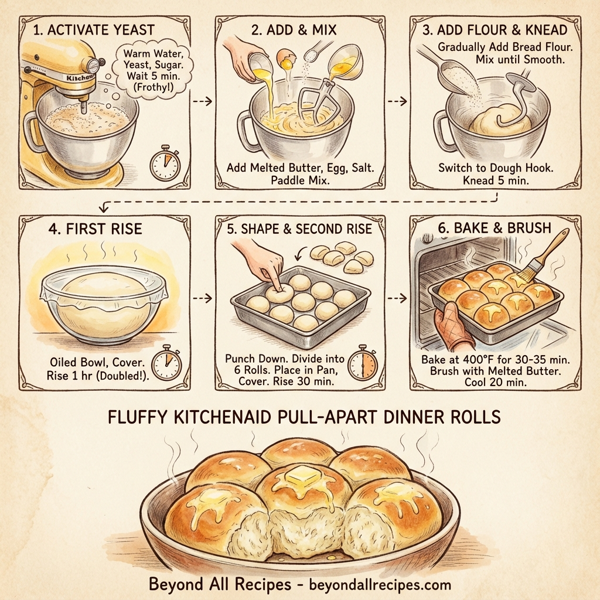
In the bowl of your Kitchenaid mixer, combine the warm water (100-110°F), yeast, and sugar. Allow the mixture to sit for about 5 minutes or until it becomes frothy, indicating that the yeast is active.
2
Once the yeast is activated, add the melted unsalted butter, beaten egg, and salt to the mixture. Use the paddle attachment to mix until well combined.
3
Gradually add the bread flour, one cup at a time, mixing until a smooth dough forms. You may need to adjust the flour amount slightly based on humidity and other factors.
4
Switch to the dough hook attachment and knead the dough for an additional 5 minutes until it is soft and elastic.
5
Transfer the dough to a lightly oiled bowl, turning the dough to coat it in oil to prevent sticking. Cover the bowl with plastic wrap and allow the dough to rise in a warm place for about 1 hour, or until it has doubled in size.
6
Once risen, punch down the dough to release air bubbles. Divide the dough into 6 equal pieces and shape each piece into a ball.
7
Place the dough balls into a greased 9-inch round or square baking pan, spacing them evenly. Cover the pan with plastic wrap and let the rolls rise for another 30 minutes.
8
Preheat your oven to 400°F. Bake the rolls for 30-35 minutes or until they are golden brown on top.
9
After baking, remove the rolls from the oven and brush the tops with additional melted butter for extra flavor. Allow the rolls to cool in the pan for 20 minutes before carefully removing them.
Nutrition Information
10g
Fat
36g
Carbs
3g
Protein
Frequently Asked Questions
Frequently Asked Questions
What is the yield of this Fluffy Kitchenaid Pull-Apart Dinner Rolls recipe?
This small batch recipe makes exactly 6 delightful dinner rolls.
What is the recommended temperature for the water when proofing the yeast?
The water should be warm, specifically between 100-110°F, to properly activate the yeast.
How long should I let the yeast mixture sit to become frothy?
Allow the yeast, warm water, and sugar mixture to sit for about 5 minutes until it becomes frothy.
Which Kitchenaid attachments are required for this recipe?
You will need the paddle attachment for initial mixing and the dough hook attachment for kneading.
What type of flour is best for these dinner rolls?
The recipe calls for bread flour, which provides the necessary structure for fluffy rolls.
How long does the dough need to be kneaded with the dough hook?
Knead the dough for approximately 5 minutes until it becomes soft and elastic.
How long is the first rise period?
The dough should rise in a warm place for about 1 hour, or until it has doubled in size.
How many pieces should the dough be divided into?
Once the first rise is complete, punch down the dough and divide it into 6 equal pieces.
What size baking pan is recommended?
You should use a greased 9-inch round or square baking pan.
Is there a second rise required for these rolls?
Yes, after shaping the rolls into balls and placing them in the pan, let them rise for another 30 minutes.
What oven temperature is needed to bake the rolls?
Preheat your oven to 400°F before baking the rolls.
How long do the dinner rolls need to bake?
Bake the rolls for 30 to 35 minutes until they are golden brown on top.
What should I do immediately after taking the rolls out of the oven?
Brush the tops with additional melted butter for extra flavor and a soft crust.
How long should the rolls cool before serving?
Allow the rolls to cool in the pan for 20 minutes before carefully removing them.
What are the nutritional facts for one dinner roll?
Each roll contains approximately 240 calories, 10g of fat, 36g of carbohydrates, and 3g of protein.
Does this recipe use active dry yeast or instant yeast?
The recipe specifically lists active dry yeast.
Should the butter used in the dough be salted or unsalted?
The recipe calls for 2 1/2 tablespoons of melted unsalted butter.
Is an egg required for this dough recipe?
Yes, one beaten egg is included in the mixture to enrich the dough.
How much sugar is in this recipe?
The recipe uses 1/8 cup of granulated sugar.
What is the purpose of punching down the dough?
Punching down the dough after the first rise helps release air bubbles before shaping.
Can I use all-purpose flour instead of bread flour?
While bread flour is recommended for the best texture, you may need to adjust the amount of flour slightly based on humidity if substituting.
How do I prevent the dough from sticking to the bowl during the rise?
Transfer the dough to a lightly oiled bowl and turn it to coat the surface in oil.
What should the dough look like after adding the flour?
The dough should form a smooth, soft, and elastic ball that isn't overly sticky.
Is this a good recipe for a large party?
This is a small batch recipe designed for family dinners or cozy gatherings, making 6 rolls total.
How much salt is needed for the dough?
The recipe calls for 3/4 teaspoon of fine salt.
Do I need to cover the rolls during the second rise?
Yes, cover the pan with plastic wrap during the 30-minute second rise.
What kind of sugar should I use?
The recipe specifies granulated sugar.
Can I brush the rolls with anything other than butter?
While the recipe recommends melted butter for flavor, you could technically use other fats, though butter provides the classic taste.
What is the total amount of bread flour used?
You will need 3 cups of bread flour, plus extra as needed for adjustments.
Why is the water temperature important for the yeast?
Water that is too hot can kill the yeast, while water that is too cold will not activate it properly.