Fluffy Homemade Buns
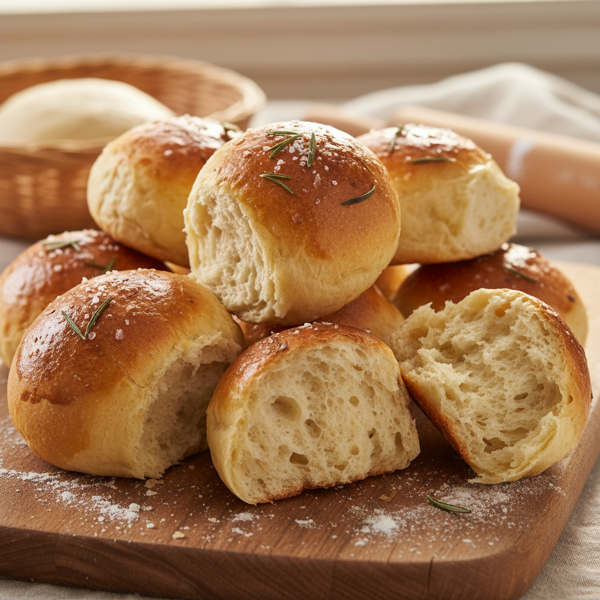
Elevate your baking skills with these fluffy homemade buns, inspired by a cherished family recipe passed down through generations. These delicious buns are incredibly easy to prepare, making them perfect for novice and experienced bakers alike. With just the right balance of ingredients and a little bit of elbow grease for kneading, you’ll end up with light, airy buns that are perfect for burgers, sandwiches, or simply enjoying with butter. Utilizing all-purpose flour, but easily adaptable with whole wheat flour, these rolls are versatile enough to accompany any meal. Once you make them, you’ll understand why they have been a family favorite and a staple at dinner tables everywhere!
24
Servings
150
Calories
8
Ingredients
Ingredients
Hot Water
3 cups (Tap hot, not boiling)
White Sugar
1/3 cup (Granulated)
Table Salt
2 teaspoons (Regular table salt)
Vegetable Shortening
1/3 cup (Melted)
White Vinegar
2 teaspoons (Regular)
Instant Yeast
2 tablespoons (Dry)
All-Purpose Flour
8 1/2 cups (Sifted)
Margarine
2 tablespoons (Optional, for brushing)
Instructions
1
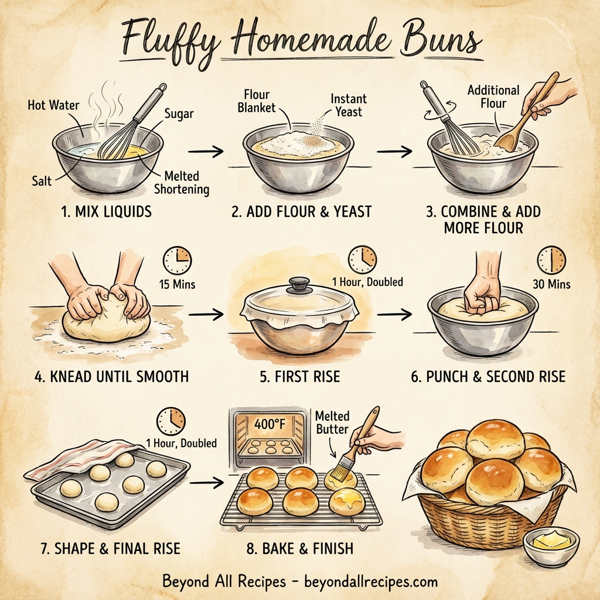
Start by heating tap water until it's hot but not boiling (too hot will kill the yeast). In a large metal bowl, combine the hot water, sugar, salt, and melted vegetable shortening. Stir until the shortening has fully dissolved or is in small lumps.
2
Now, sprinkle four cups of flour evenly over the liquid mixture. This creates a protective 'blanket' over the yeast, which is crucial for proper activation. Sprinkle the instant yeast on top.
3
Using a whisk, quickly mix the yeast and flour into the liquid. Once combined, switch to a sturdy wooden spoon and incorporate an additional 2 cups of flour.
4
As you continue, keep in mind that the amount of flour needed may vary, typically adding between 1 and 2 ½ cups more, depending on conditions like humidity and altitude. The dough should be pliable and not sticky when it's ready to knead.
5
Knead the dough on a floured surface for about 15 minutes, adding flour as necessary until the exterior is smooth. This kneading process is vital for achieving that fluffy texture.
6
While kneading, wash and dry the large metal bowl with hot water (quickly, to keep it warm). Place the dough in the bowl and cover it with a clean tea towel, allowing it to rise in a warm place for about 1 hour until doubled in size.
7
After the first rise, punch down the dough and let it rise again for another 30 minutes.
8
Once the dough has risen, shape it into balls according to your desired size. For lunch-sized buns, aim for the size of a small clementine. Arrange the shaped buns on a greased cookie sheet.
9
Preheat your oven to 400°F (200°C). Cover the buns and let them rise again for 1 hour, until they've doubled in size.
10
Bake the buns in the preheated oven for about 12-15 minutes, or until they develop a lovely golden color. If you desire a soft exterior, rub a small amount of melted butter or margarine over the top of the buns right after they come out of the oven.
Nutrition Information
3.75g
Fat
25g
Carbs
3.75g
Protein
Frequently Asked Questions
Frequently Asked Questions
What are Fluffy Homemade Buns?
These are light, airy rolls inspired by a cherished family recipe, perfect for burgers, sandwiches, or as a dinner side.
Is this recipe suitable for beginner bakers?
Yes, these buns are described as incredibly easy to prepare, making them ideal for both novice and experienced bakers.
What temperature should the water be for this recipe?
You should use tap water that is hot but not boiling, as water that is too hot will kill the yeast.
Can I use whole wheat flour for these buns?
Yes, while the recipe calls for all-purpose flour, it is easily adaptable to include whole wheat flour.
Why is flour sprinkled over the liquid before the yeast?
Sprinkling four cups of flour over the liquid creates a protective blanket for the yeast, which is crucial for proper activation.
How long should I knead the dough?
The dough should be kneaded on a floured surface for about 15 minutes until the exterior is smooth.
Why is the kneading process so long?
Kneading for 15 minutes is vital for developing the structure needed to achieve a fluffy texture.
How many cups of flour are typically required?
The recipe starts with 4 cups, then adds 2 more, and finally requires between 1 and 2.5 additional cups, totaling approximately 7 to 8.5 cups.
Why does the amount of flour vary in the instructions?
The amount of flour needed can change based on environmental conditions such as humidity and altitude.
What type of yeast is used in this recipe?
This recipe specifically uses 2 tablespoons of instant yeast.
Does the dough need to rise more than once?
Yes, the dough rises three times: once for an hour, once for 30 minutes after being punched down, and once for an hour after being shaped.
What does it mean to punch down the dough?
After the first rise, you gently press the air out of the dough before letting it rise a second time.
How large should I shape the buns?
For lunch-sized buns, you should shape the dough into balls roughly the size of a small clementine.
At what temperature should the oven be set?
The oven should be preheated to 400°F (200°C).
How long do the buns need to bake?
The buns bake for approximately 12 to 15 minutes.
How can I achieve a soft exterior on the buns?
Rub a small amount of melted butter or margarine over the tops of the buns immediately after they come out of the oven.
How many servings does this recipe provide?
This recipe makes 24 individual buns.
What is the calorie count per bun?
Each bun contains approximately 150 calories.
How much fat is in one bun?
Each serving contains 3.75g of fat.
How many carbohydrates are in each bun?
There are 25g of carbohydrates per bun.
What is the protein content per serving?
Each bun provides 3.75g of protein.
Is vegetable shortening necessary?
Yes, 1/3 cup of melted vegetable shortening is used in the base mixture for texture and flavor.
Why is white vinegar included in the ingredients?
White vinegar is used as a dough conditioner to help improve the rise and texture of the bread.
Should I sift the flour?
Yes, the ingredients list specifies using sifted all-purpose flour.
What kind of sugar is best?
The recipe calls for 1/3 cup of granulated white sugar.
Can I use a metal bowl for mixing?
Yes, the instructions specifically suggest using a large metal bowl, which can be warmed with hot water to help the rise.
How do I know when the buns are finished baking?
The buns are done when they have developed a lovely golden color.
What is the total time for the rising process?
The total rising time is approximately 2 hours and 30 minutes across three stages.
What can I serve these buns with?
They are versatile enough for burgers, sandwiches, or simply enjoyed warm with butter.
Does this recipe contain cholesterol?
The recipe data indicates null for cholesterol, though this may depend on whether you use margarine for brushing.