Fluffy Gluten-Free Challah Bread
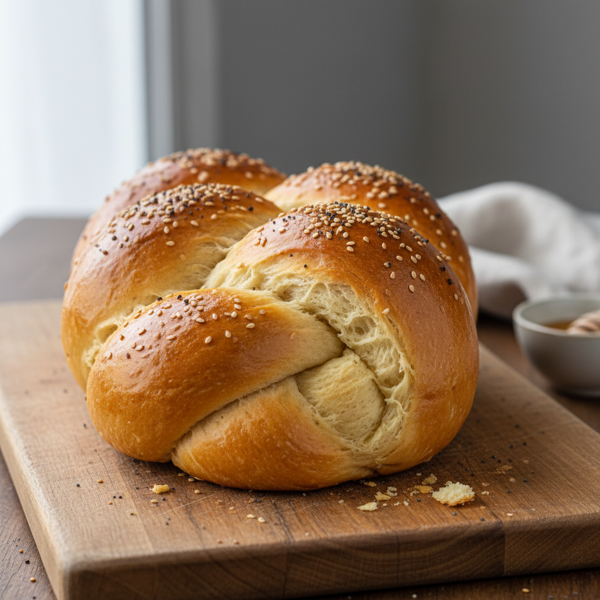
Embark on a delicious journey with this Fluffy Gluten-Free Challah Bread, a delightful twist on a traditional favorite! After countless attempts at creating a gluten-free bread that rivals its wheat counterpart, I've perfected this recipe to yield a loaf that not only rises beautifully but also has the lightness, texture, and flavor you'd expect from real bread. Whether enjoyed as slices adorned with your favorite jam, crafted into elegant sandwiches, or shaped into delightful rolls for a festive gathering, this bread is a game-changer. Say goodbye to dense, crumbly gluten-free options and hello to a loaf that's irresistibly fluffy and delicious. This recipe is not just about food; it's about transforming the gluten-free experience into something truly enjoyable! For more culinary delights, visit my blog at www.glutenfreegirls.blogspot.com.
N/A
Servings
N/A
Calories
13
Ingredients
Ingredients
rice flour
2 cups (measured)
tapioca flour
1 3/4 cups (measured)
sugar
1/4 cup (measured)
sugar
2 teaspoons (for yeast activation)
xanthan gum
3 teaspoons (measured)
salt
1/2 teaspoon (measured)
water
2/3 cup (lukewarm, for yeast activation)
water
1 cup (lukewarm, combined with butter)
yeast
1 1/2 tablespoons (active dry yeast)
butter
4 tablespoons (melted)
apple cider vinegar
1 teaspoon (measured)
eggs
4 (large, beaten, at room temperature)
sesame seeds
to taste (optional topping)
Instructions
1
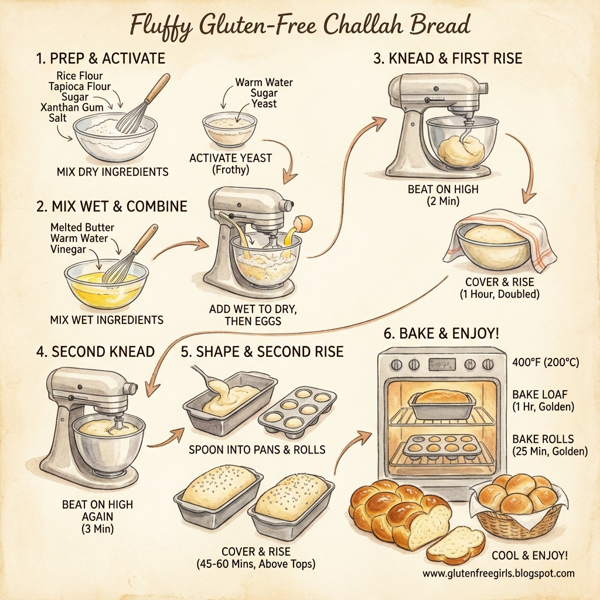
Preheat your oven to 400°F (200°C).
2
In a large mixing bowl, using a stand mixer, combine the rice flour, tapioca flour, 1/4 cup sugar, xanthan gum, and salt. Mix until thoroughly combined.
3
In a small bowl, dissolve the 2 teaspoons of sugar in the 2/3 cup of lukewarm water. Sprinkle in the yeast and let it sit for about 5-10 minutes until it becomes frothy.
4
In another separate bowl, whisk together the melted butter, 1 cup of lukewarm water, and apple cider vinegar.
5
With the mixer on low speed, gradually add the butter and water mixture to the dry ingredients and mix until combined. Then, beat in the eggs one at a time until the mixture is smooth and slightly warm to touch.
6
Pour the yeast mixture into the dough and beat on high speed for 2 minutes, ensuring everything is well incorporated.
7
Cover the bowl with greased plastic wrap and a towel and allow the dough to rise in a warm place for about 1 hour, or until it has doubled in size.
8
Once the dough has risen, return it to the mixer and beat on high for an additional 3 minutes.
9
Spoon the dough into a greased and floured loaf pan, filling it about 2/3 full. You can also divide the remaining dough into greased muffin tins for rolls (about 18 rolls total).
10
If desired, sprinkle the tops with sesame seeds. Cover again and let the dough rise until it is slightly above the tops of the pans, roughly 45-60 minutes.
11
Bake the loaf for approximately 1 hour or until golden brown, and bake the rolls for about 25 minutes, or until lightly golden.
12
Allow to cool before slicing. Enjoy your beautiful, fluffy gluten-free Challah bread!
Nutrition Information
Frequently Asked Questions
Frequently Asked Questions
Is this Challah bread recipe gluten-free?
Yes, this recipe is specifically designed to be gluten-free using rice flour and tapioca flour.
What flours are used in this gluten-free Challah?
The recipe uses a combination of 2 cups of rice flour and 1 3/4 cups of tapioca flour.
How much xanthan gum is required?
You will need 3 teaspoons of xanthan gum to provide structure to the gluten-free dough.
What is the recommended oven temperature?
Preheat your oven to 400°F (200°C) before baking.
How many eggs are used in this recipe?
The recipe calls for 4 large eggs, beaten and at room temperature.
What type of yeast should I use?
The recipe uses 1 1/2 tablespoons of active dry yeast.
Why is there sugar in the yeast mixture?
Two teaspoons of sugar are dissolved in lukewarm water to help activate the yeast and make it frothy.
How long should the first rise take?
The dough should rise in a warm place for about 1 hour, or until it has doubled in size.
Do I need to beat the dough again after it rises?
Yes, after the first rise, return the dough to the mixer and beat on high for an additional 3 minutes.
Can I make rolls instead of a loaf?
Yes, you can divide the dough into greased muffin tins to make approximately 18 rolls.
How long does a full loaf take to bake?
A full loaf typically takes approximately 1 hour to bake until golden brown.
How long do the rolls take to bake?
The rolls bake much faster, taking about 25 minutes or until lightly golden.
What is the role of apple cider vinegar in this bread?
Apple cider vinegar helps with the rise and texture of the gluten-free bread.
Should the water be hot or cold for the yeast?
The water should be lukewarm to ensure the yeast activates without being killed by high heat.
How much butter is included in the recipe?
The recipe requires 4 tablespoons of melted butter.
Can I add toppings to the bread?
Yes, you can sprinkle sesame seeds on top of the dough before the second rise if desired.
How full should I fill the loaf pan?
You should spoon the dough into the pan until it is about 2/3 full.
What equipment is best for mixing this dough?
A stand mixer is highly recommended for thoroughly combining the ingredients and beating the dough.
How long is the second rise?
The second rise takes roughly 45-60 minutes, or until the dough is slightly above the tops of the pans.
Is it necessary to grease the loaf pan?
Yes, you should grease and flour the loaf pan to prevent the bread from sticking.
What should the texture of the finished bread be?
This recipe is designed to be fluffy, light, and not dense or crumbly like many other gluten-free breads.
Can I use this bread for sandwiches?
Absolutely, the texture makes it perfect for elegant sandwiches or slices with jam.
How much total sugar is in the recipe?
The recipe uses 1/4 cup of sugar in the dry mix plus 2 teaspoons for the yeast activation.
How much salt is needed?
The recipe calls for 1/2 teaspoon of salt.
What is the total amount of water used?
The total water is 1 2/3 cups (2/3 cup for yeast and 1 cup for the wet mixture).
Should I slice the bread immediately after baking?
No, it is best to allow the bread to cool completely before slicing to ensure the structure sets.
What is the source of this recipe?
This recipe was created by Gluten Free Girls and can be found at www.glutenfreegirls.blogspot.com.
How many rolls does one batch make?
One batch can make approximately 18 rolls if you use muffin tins.
What speed should I use for the final mixing stage?
The final mix after the first rise should be done on high speed for 3 minutes.
Does this bread rise well?
Yes, despite being gluten-free, this recipe is perfected to ensure the loaf rises beautifully.