Flemish Beer Braised Beef Stew
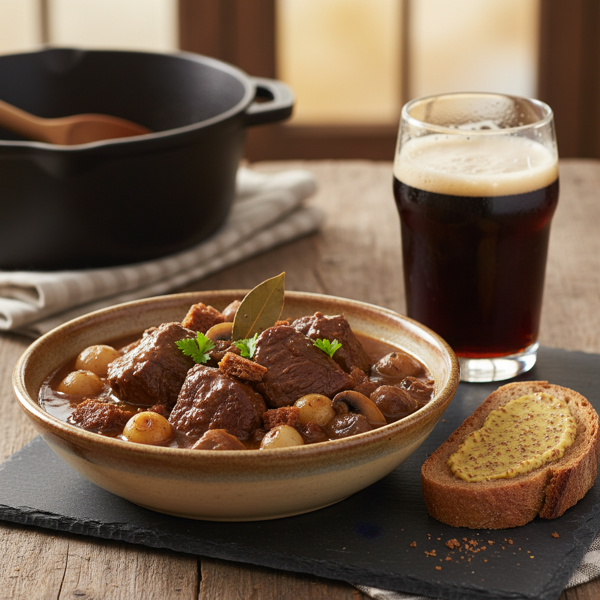
Experience the rich flavors of Belgium with this Flemish Beer Braised Beef Stew, a comforting dish that marries tender beef with the sweet and savory notes of caramelized onions and dark ale. Simmered slowly to perfection, this stew develops an incredible depth of flavor that can only be achieved through patience. The use of dark Belgian-style beer not only tenderizes the beef but also adds a unique complexity to the dish. Perfect for a cozy dinner or a gathering with friends, this stew is sure to delight and can be made ahead for even better flavor. Serve it hot with boiled carrots and potatoes, and don’t forget to garnish with fresh parsley for a touch of color.
N/A
Servings
N/A
Calories
12
Ingredients
Ingredients
Unsalted Butter
4 tablespoons (Melted)
Beef (Flatiron or Chuck Roast)
3 lbs (Cut into 1/3-inch-thick slices)
Salt
to taste (Used for seasoning meat and sauce)
Freshly Ground Black Pepper
to taste (Used for seasoning meat and sauce)
Onions
3 cups (Thickly sliced)
All-Purpose Flour
1/2 cup (Used to coat onions)
Dark Beer
3 (12 ounce) cans (Any dark Belgian-style ale)
Dried Thyme
1/2 teaspoon (Used for flavoring)
Bay Leaves
2 leaves (Used for flavoring)
Chopped Parsley
for garnish (Freshly chopped)
Boiled Carrots
for serving (Cooked until tender)
Boiled Potatoes
for serving (Cooked until tender)
Instructions
1
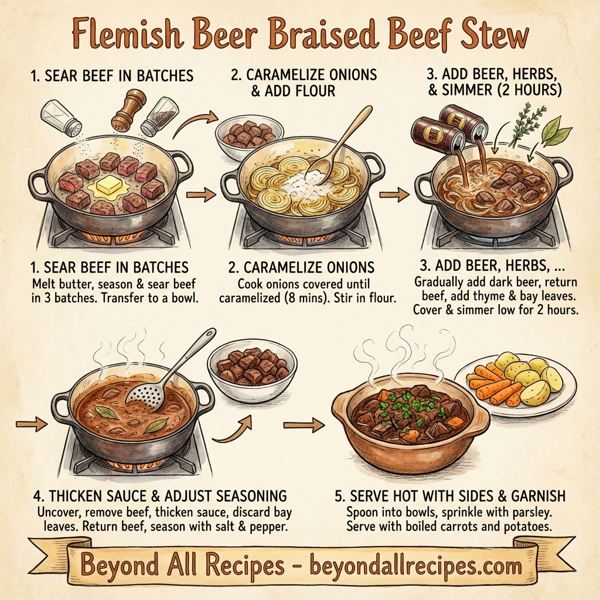
In an enameled cast-iron casserole, melt 2 tablespoons of unsalted butter over moderate heat. Season the 3 lbs of beef with salt and freshly ground black pepper, then add one-third of the beef to the casserole. Cook for approximately 3 minutes per side, or until the meat is lightly browned. Transfer the browned beef to a bowl. Repeat this step with the remaining beef in 2 additional batches, using the remaining 2 tablespoons of butter.
2
Once all the beef is seared, add the 3 cups of thickly sliced onions to the casserole. Cover and cook over low heat, stirring occasionally, until the onions are soft and caramelized, about 8 minutes. Then, stir in 1/2 cup of all-purpose flour, ensuring the onions are well-coated.
3
Gradually pour in the 3 (12 ounce) cans of dark beer, stirring continually to combine. Once the mixture is well blended, return the seared beef along with any accumulated juices back into the casserole. Add 1/2 teaspoon of dried thyme and 2 bay leaves. Cover the casserole and let it simmer over low heat, stirring occasionally, for about 2 hours or until the beef is fork-tender.
4
After 2 hours, uncover the casserole and carefully transfer the beef to a bowl. Increase the heat to moderate and let the sauce simmer until it thickens slightly. Discard the bay leaves once the desired consistency is reached. Return the beef to the sauce, adjusting the seasoning with additional salt and pepper to taste.
5
To serve, spoon the stew into bowls and sprinkle with chopped parsley. Accompany with boiled carrots and potatoes for a hearty meal.
Nutrition Information
Frequently Asked Questions
Frequently Asked Questions
What is Flemish Beer Braised Beef Stew?
Also known as Carbonnade Flamande, it is a traditional Belgian comfort dish made by slow-cooking beef with caramelized onions and dark Belgian-style ale.
What are the best cuts of beef for this recipe?
The recipe recommends using 3 lbs of beef, specifically flatiron or chuck roast, cut into 1/3-inch-thick slices.
Which type of beer should be used for Flemish stew?
Use three 12-ounce cans of dark Belgian-style ale. This type of beer adds a unique complexity and helps tenderize the meat.
How long does it take to cook the stew?
The stew needs to simmer over low heat for approximately 2 hours, or until the beef becomes fork-tender.
What is the secret to a flavorful sauce in this recipe?
The depth of flavor comes from browning the beef in batches and slowly caramelizing the onions for about 8 minutes before adding the beer.
How do you thicken the beef stew sauce?
The sauce is thickened by stirring 1/2 cup of all-purpose flour into the onions and later simmering the sauce without a lid once the beef is cooked.
What should I serve with Flemish Beer Braised Beef Stew?
It is traditionally served hot with boiled carrots and potatoes, garnished with freshly chopped parsley.
Why is the beef browned in batches?
Browning the beef in three separate batches ensures the meat sears properly to develop flavor rather than steaming in its own juices.
Can I make this stew in advance?
Yes, this stew can be made ahead of time as the flavors continue to develop and improve after sitting.
What herbs are used to season the stew?
The stew is seasoned with 1/2 teaspoon of dried thyme and 2 bay leaves, which are discarded before serving.
Is it necessary to use unsalted butter?
The recipe calls for 4 tablespoons of unsalted butter to allow better control over the final saltiness of the dish.
How should the onions be prepared?
You should use 3 cups of onions that have been thickly sliced for the best texture in the stew.
What type of cookware is best for this recipe?
An enameled cast-iron casserole is recommended for even heating and slow simmering.
How do you know when the onions are ready?
The onions are ready when they are soft and caramelized, which typically takes about 8 minutes of cooking over low heat.
Do I need to season the beef before cooking?
Yes, you should season the sliced beef with salt and freshly ground black pepper before browning it in the butter.
What is the purpose of the beer besides flavor?
The acidity and properties of the dark beer help to tenderize the muscle fibers in the beef during the long simmering process.
Can I use fresh thyme instead of dried?
While the recipe specifies 1/2 teaspoon of dried thyme, you can substitute fresh thyme, generally using three times the amount of fresh compared to dried.
Is this a hearty meal?
Yes, the combination of protein-rich beef and starchy sides like potatoes makes it a very hearty and filling meal.
Should the casserole be covered while simmering?
The casserole should be covered for the initial 2-hour simmer, then uncovered at the end to allow the sauce to thicken.
How much beer is required in total?
The recipe requires 36 ounces of beer in total, which corresponds to 3 standard 12-ounce cans.
What is the preparation for the garnish?
The garnish consists of fresh parsley that has been finely chopped and sprinkled over the stew just before serving.
How do I adjust the seasoning at the end?
Once the beef is returned to the thickened sauce, you should taste it and add more salt or pepper as needed.
Can I use light beer instead of dark beer?
It is not recommended, as dark Belgian-style ale provides the specific sweetness and depth required for a traditional Flemish stew.
What is the texture of the beef after cooking?
If cooked correctly for the full 2 hours, the beef should be fork-tender and easy to break apart.
How thick should the beef slices be?
The beef should be sliced into 1/3-inch-thick pieces to ensure they cook through and tenderize evenly.
How often should I stir the stew?
The recipe suggests stirring occasionally during both the onion caramelization phase and the 2-hour simmering phase.
Is this recipe considered a slow-cooked dish?
Yes, it is classified as a slow-cooked dish due to the 2-hour simmering process required to develop the flavors and tenderize the meat.
Do I need to remove the beef while thickening the sauce?
Yes, the instructions say to transfer the beef to a bowl after 2 hours so you can increase the heat and thicken the sauce without overcooking the meat.
What category of food does this fall into?
This dish is categorized as a beef stew and is a staple of Belgian and Flemish home cooking.
Is flour the only ingredient used for thickening?
The flour combined with the natural reduction of the sauce during the final simmering step provides the thickness.