Flavorful Triangular Rice Balls (Onigiri)
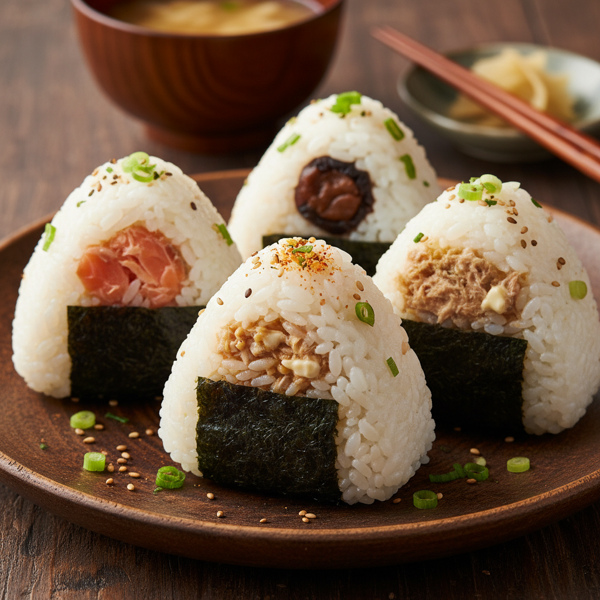
Onigiri, also known as Japanese rice balls, are a cherished staple in traditional Japanese lunches, notably bento boxes. These delightful, palm-shaped morsels transform plain medium grain rice into a flavorful experience, perfect for easy snacking or accompaniment with dishes like ramen. With your creativity as your guide, you can explore a myriad of flavor options by incorporating various fillings and seasonings! Leftover rice is ideal for this dish, allowing you to minimize waste. Mastering the art of shaping onigiri may take a few tries, but soon you’ll achieve perfectly formed triangles that evoke nostalgia for travel and adventure through Japan's iconic train stations.
N/A
Servings
300
Calories
8
Ingredients

Ingredients
Medium grain rice (Korean or Japanese)
1 cup (Cooked and cooled)
Water
As needed (For cooking rice)
Salt
To taste (For seasoning and hand preparation)
Sushi nori (seaweed)
2 strips (Cut 1 inch by 5 inch)
Chinese five spice powder
1 dash (Optional seasoning)
Umeboshi (Japanese pickled plums)
1 piece (Optional filling)
Toasted sesame seeds
1 tsp (Optional garnish)
Canned tuna or smoked salmon
1 tbsp (Optional filling)
Instructions
1
Begin by cooking the medium grain rice as per package instructions. Once cooked, cool it until it’s warm but not hot enough to burn your hands.
2
Wash your hands thoroughly to ensure cleanliness.
3
Rinse your hands in water to retain moisture and then lightly rub your palms with salt. This adds flavor and serves as a sterilizing agent.
4
Take a small handful of rice and mold it into a ball using the palm of your left hand as the base. Use your right hand's palm and fingers to shape the rice into triangular sides.
5
Rotate the rice ball, shifting the side that was against your left palm to one of the sides shaped by your right hand, and continue shaping until the triangle is pronounced and aesthetically pleasing.
6
Repeat the process, ensuring you rinse and salt your hands each time to maintain the texture and ease of handling.
7
Once your basic rice triangle is formed, you can customize it with various optional ingredients. For instance, wrapping a strip of sushi nori around the onigiri adds flavor and presentation.
8
For seasoned options, mix a dash of Chinese five spice powder with the salt and sprinkle over the rice ball. Be cautious not to overdo the spice, as it can turn bitter.
9
For added flavor, consider sprinkling toasted sesame seeds on top or using a prepackaged Japanese rice dressing.
10
To incorporate fillings like umeboshi or canned fish, press a small indent into one flat side of the onigiri and fill it before sealing the shape, optionally wrapping the outside with nori (avoiding the umeboshi seed).
Nutrition Information
8g
Fat
45g
Carbs
8g
Protein
Frequently Asked Questions
Frequently Asked Questions
What are Onigiri?
Onigiri are traditional Japanese rice balls, typically palm-shaped and often found in bento boxes, made from flavored medium grain rice.
What type of rice is best for making Onigiri?
Medium grain rice, specifically Japanese or Korean varieties, is ideal for its sticky texture which helps the rice balls hold their shape.
Can I use leftover rice for this recipe?
Yes, leftover rice is ideal for making Onigiri as it helps minimize waste while still tasting delicious.
How do I prevent the rice from sticking to my hands?
You should rinse your hands in water to keep them moist and then lightly rub your palms with salt before handling the rice.
Why is salt used on the hands during preparation?
Salt is used to add flavor to the exterior of the rice ball and acts as a sterilizing agent for hygiene.
What is the traditional shape of Onigiri?
While they can be various shapes, the traditional and most iconic shape for Onigiri is a triangle.
How many calories are in this Onigiri recipe?
This recipe contains approximately 300 calories per serving.
Is there a vegan option for this recipe?
Yes, by using fillings like umeboshi (pickled plum) instead of fish, the recipe is vegan-friendly.
What is Umeboshi?
Umeboshi are Japanese pickled plums, a traditional salty and tangy filling used in rice balls.
How do I incorporate fillings like tuna or salmon?
Press a small indent into one flat side of the shaped onigiri, place the filling inside, and then seal the rice over it.
What size should the nori strips be?
The sushi nori (seaweed) should be cut into strips approximately 1 inch by 5 inches.
What is the protein content of these rice balls?
Each serving provides about 8 grams of protein.
How much fat is in this recipe?
There are 8 grams of fat in this Onigiri recipe.
What is the carbohydrate count per serving?
The recipe contains 45 grams of carbohydrates per serving.
Can I use Chinese five spice powder with Onigiri?
Yes, you can mix a dash of Chinese five spice powder with the salt for a seasoned variation, but be careful not to use too much as it can become bitter.
How do you shape the rice into a triangle?
Use the palm of your left hand as a base and use your right hand's palm and fingers to mold the rice into triangular sides, rotating as you go.
Should the rice be hot when shaping?
The rice should be warm enough to handle comfortably but not hot enough to burn your hands.
Are toasted sesame seeds used in this recipe?
Yes, 1 teaspoon of toasted sesame seeds can be used as an optional garnish for added flavor.
What dishes do Onigiri accompany well?
They are perfect as a snack or as an accompaniment to hot dishes like ramen.
What are common fillings for Onigiri?
Common fillings include umeboshi, canned tuna, or smoked salmon.
How many ingredients are listed in this recipe?
There are 8 total ingredients, including optional seasonings and fillings.
What is the purpose of the nori strip?
The nori strip adds flavor, enhances presentation, and provides a dry place to hold the rice ball without getting your hands sticky.
Is this a good lunch option?
Yes, Onigiri are a staple of Japanese lunches and are especially popular in bento boxes.
How much water is needed?
Water is used as needed both for cooking the rice and for keeping your hands moist during the shaping process.
Can I use Japanese rice dressing?
Yes, prepackaged Japanese rice dressing can be used for added flavor instead of or in addition to salt.
Is the recipe easy for beginners?
Mastering the triangular shape may take a few tries, but it becomes easier with practice.
What should I do if the rice is sticking too much?
Ensure you rinse and salt your hands each time you form a new rice ball to maintain the proper texture.
Can I eat the umeboshi seed?
No, you should avoid the umeboshi seed when wrapping or eating the onigiri.
Is salt necessary for this recipe?
Salt is highly recommended for both seasoning the rice and for hygiene purposes during manual shaping.
How much tuna or salmon should I use as a filling?
Approximately 1 tablespoon of canned tuna or smoked salmon is sufficient for one rice ball.