Flavor-Packed Thai Peanut Vegetable Curry
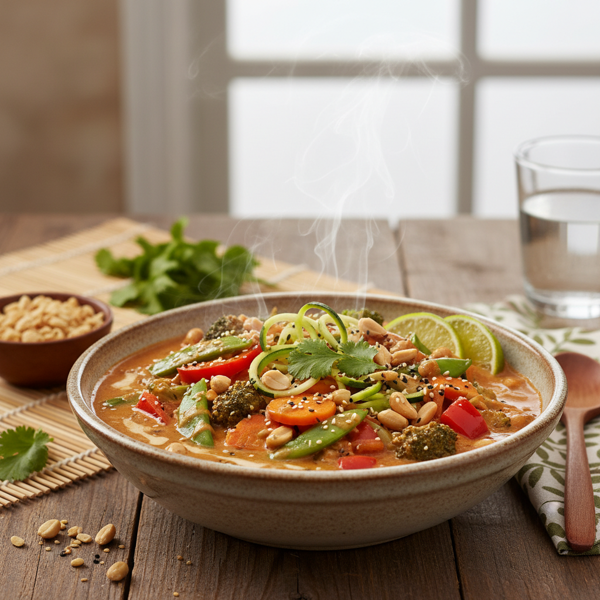
Indulge in this vibrant and nourishing Thai Peanut Vegetable Curry, a fantastic fusion of flavors that brings together an array of colorful vegetables in a creamy, spicy sauce. This vegan-friendly dish is easily customizable; feel free to throw in any seasonal veggies you have on hand. While this version is entirely plant-based, you could elevate it with grilled shrimp, chicken, or beef for a protein boost. Pair it with your choice of brown rice, jasmine rice, or a variety of noodles such as rice noodles, mung bean noodles, or even traditional pasta for a satisfying meal that’s sure to impress.
N/A
Servings
N/A
Calories
10
Ingredients
Ingredients
grapeseed oil
2 teaspoons (divided)
red bell pepper
1 (seeded and cut into strips)
yellow bell pepper
1 (seeded and cut into strips)
green bell pepper
1 (seeded and cut into strips)
red onion
1 (cut into strips)
garlic cloves
3 (minced)
red curry paste
2 tablespoons (none)
peanut butter
1 tablespoon (none)
coconut milk
12 ounces (canned)
frozen green peas
1 cup (none)
Instructions
1
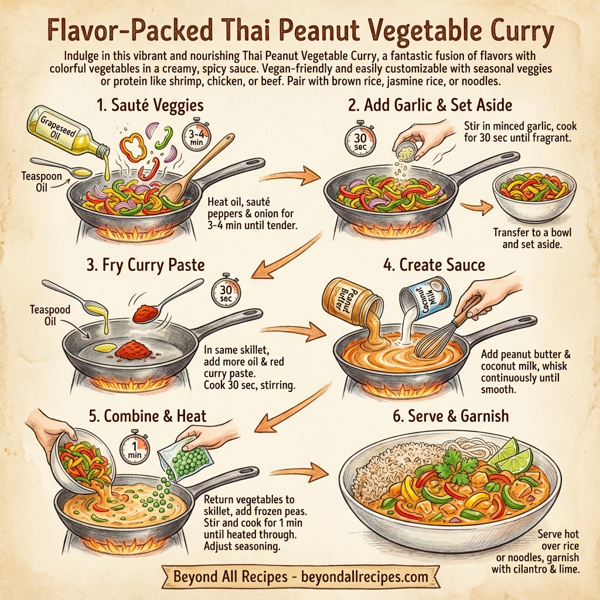
Heat a large skillet over medium-high heat. Add 1 teaspoon of grapeseed oil, followed by the sliced red, yellow, and green bell peppers along with the red onion. Sauté the mix for about 3 to 4 minutes until the vegetables are slightly tender.
2
Stir in the minced garlic and sauté for an additional 30 seconds until fragrant. Transfer the sautéed vegetables to a bowl and set aside.
3
In the same skillet, add another teaspoon of grapeseed oil and the red curry paste. Cook the paste for about 30 seconds, stirring frequently to release its flavors.
4
Next, add the peanut butter and pour in the coconut milk, whisking continuously until the mixture is smooth and well combined.
5
Return the sautéed vegetables to the skillet along with the frozen peas. Stir everything together and cook for another minute until heated through. Taste and adjust seasoning if necessary.
6
Serve hot over your choice of rice or noodles, garnished with fresh cilantro or lime wedges if desired.
Nutrition Information
Frequently Asked Questions
Frequently Asked Questions
What is the Flavor-Packed Thai Peanut Vegetable Curry?
It is a vibrant and nourishing vegan-friendly dish that combines colorful vegetables in a creamy, spicy sauce made with coconut milk and peanut butter.
Is this recipe vegan?
Yes, the base recipe is entirely plant-based and vegan-friendly.
Is the Thai Peanut Vegetable Curry gluten-free?
Yes, according to the recipe tags, this dish is gluten-free. Ensure your red curry paste and peanut butter are certified gluten-free.
What vegetables are needed for this curry?
You will need red, yellow, and green bell peppers, a red onion, and frozen green peas.
Can I add protein to this dish?
Absolutely. You can elevate the meal by adding grilled shrimp, chicken, or beef for an extra protein boost.
What kind of oil should I use for sautéing?
The recipe calls for 2 teaspoons of grapeseed oil, divided for different stages of cooking.
How should I cut the bell peppers?
The peppers should be seeded and cut into thin strips.
How long do I sauté the vegetables?
Sauté the bell peppers and red onion for about 3 to 4 minutes until they are slightly tender.
When do I add the garlic?
Stir in the minced garlic after the initial vegetables have softened and sauté for an additional 30 seconds.
Why do I cook the red curry paste separately?
Cooking the paste in oil for 30 seconds helps release its flavors and aromatics before adding the liquid ingredients.
How much red curry paste is required?
The recipe requires 2 tablespoons of red curry paste.
What type of peanut butter should I use?
The recipe calls for 1 tablespoon of peanut butter. While not specified, smooth peanut butter usually blends best into the sauce.
How much coconut milk is used in the sauce?
Use 12 ounces of canned coconut milk for a creamy sauce consistency.
How do I ensure the curry sauce is smooth?
Whisk the peanut butter and coconut milk continuously in the skillet until the mixture is well combined.
Do I need to thaw the frozen peas?
No, you can add 1 cup of frozen green peas directly to the skillet near the end of the cooking process.
How long does the final simmer take?
Once everything is combined, cook for about one more minute until the entire dish is heated through.
What can I serve this curry with?
This curry pairs beautifully with brown rice, jasmine rice, rice noodles, mung bean noodles, or even traditional pasta.
Are there any recommended garnishes?
Garnishing with fresh cilantro or lime wedges adds a bright, fresh finish to the dish.
Can I customize the vegetables in this recipe?
Yes, this dish is highly customizable; feel free to add any seasonal vegetables you have available.
How many garlic cloves are in the recipe?
The recipe uses 3 minced garlic cloves.
Is this a spicy dish?
Yes, it is categorized as spicy due to the use of red curry paste.
Is this a healthy meal option?
Yes, it is tagged as a healthy recipe as it is packed with vegetables and uses plant-based ingredients.
How many ingredients are needed in total?
There are 10 main ingredients required for this recipe.
Can I use a different type of onion?
While red onion is recommended for its flavor profile, you can substitute with yellow or white onion if necessary.
What is the heat level for cooking?
The recipe suggests using medium-high heat for the skillet.
Is this recipe considered a quick meal?
Yes, it is specifically tagged as a 'quick meal' and an 'easy' recipe, making it perfect for busy nights.
Can I use light coconut milk?
While the recipe specifies canned coconut milk, you can use light coconut milk, though the sauce will be less creamy.
How should I store leftovers?
Store leftovers in an airtight container in the refrigerator for up to 3-4 days.
Can I use a different oil if I don't have grapeseed oil?
Yes, any neutral oil with a high smoke point, such as canola, vegetable, or avocado oil, will work.
What makes this curry 'Thai-style'?
The use of red curry paste, coconut milk, lime, and cilantro are classic components of Thai-inspired curry dishes.