Flaky Roti Canai with Savory Fillings

Roti Canai is a beloved Malaysian flatbread known for its flaky texture and versatility. Traditionally enjoyed with various Indian curries, this recipe elevates the classic dish by incorporating optional fillings such as bananas, butter, and eggs, allowing for a custom twist. Perfectly golden and crispy on the outside, while soft and layered on the inside, Roti Canai is excellent for dipping in rich dhal or sambar. Serve it alongside your favorite fish or chicken curry for a delightful meal that captures the essence of Southeast Asian cuisine.
N/A
Servings
225
Calories
5
Ingredients
Ingredients
Plain Flour
600 g (Sifted)
Salt
1 tablespoon (Mixed with flour)
Warm Water
1 cup (Gradually added)
Sugar
To taste (Optional)
Ghee
As needed (For brushing and frying)
Instructions
1
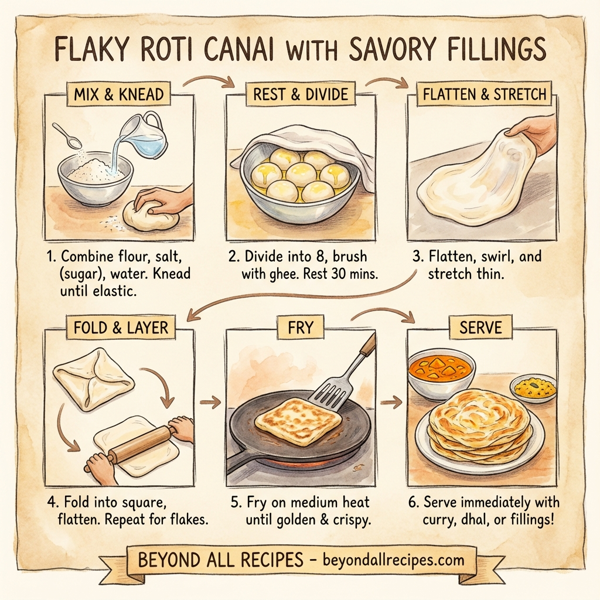
In a large mixing bowl, combine the plain flour and salt. Sift them together to ensure an even distribution.
2
If you prefer a slightly sweet dough, add sugar to your liking and mix well.
3
Gradually pour in the warm water while mixing with your hands. Knead the mixture until it forms a smooth dough that doesn't stick to your hands.
4
Continue kneading the dough for about 10 minutes until it becomes elastic and stretchy.
5
Divide the dough into 8 equal portions and place them back into the bowl. Brush each dough ball with melted ghee, cover with a damp cloth, and let them rest for 30 minutes.
6
After resting, take one portion of the dough and spread a thin layer of ghee on top. Gently flatten the dough with your hands.
7
Carefully lift the edges of the flattened dough and swirl it in a circular motion to stretch it out until it is thin and translucent.
8
Fold the stretched dough into a square shape, then flatten it again with your hands or a rolling pin. This will create layers in the dough.
9
Repeat the swirling and folding process for a lighter, flakier texture. Each portion can be folded and stretched multiple times for the best results.
10
Heat a flat pan or iron griddle over medium heat. Fry each flattened dough piece for 2-3 minutes on each side, or until golden brown and crispy.
11
Remove from heat and serve immediately with dhal, curry, or your choice of savory fillings.
Nutrition Information
6g
Fat
35g
Carbs
5g
Protein
Frequently Asked Questions
Frequently Asked Questions
What is Roti Canai?
Roti Canai is a popular Malaysian flatbread known for its unique flaky texture and soft, layered interior.
What are the main ingredients for Roti Canai?
The main ingredients include plain flour, salt, warm water, sugar (optional), and ghee.
How much flour do I need for this recipe?
You will need 600 grams of sifted plain flour.
Why is warm water used in the dough?
Warm water is added gradually to help form a smooth, manageable dough that is easier to knead.
How long should I knead the Roti Canai dough?
You should knead the dough for about 10 minutes until it becomes elastic and stretchy.
What should I do if the dough is too sticky?
Continue kneading the mixture until it forms a smooth dough that no longer sticks to your hands.
How many portions does this recipe make?
This recipe is designed to be divided into 8 equal dough portions.
Why do I need to brush the dough with ghee?
Brushing each dough ball with melted ghee helps keep it moist and contributes to the flakiness of the bread.
How long must the dough rest?
The dough balls should rest for at least 30 minutes while covered with a damp cloth.
How do I achieve the thin, translucent layers?
Gently flatten the dough and swirl it in a circular motion to stretch it out until it is thin and translucent.
What shape should the dough be folded into?
The stretched dough should be folded into a square shape to create internal layers.
What is the best way to fry Roti Canai?
Heat a flat pan or iron griddle over medium heat and fry each piece for 2-3 minutes per side.
How do I know when the Roti Canai is finished cooking?
It is ready when both sides are golden brown and the exterior is crispy.
Can I add fillings to my Roti Canai?
Yes, you can incorporate savory or sweet fillings such as bananas, butter, or eggs.
What are common side dishes for Roti Canai?
It is traditionally served with dhal, sambar, fish curry, or chicken curry.
Is this Roti Canai recipe vegetarian?
Yes, the base ingredients of flour, salt, water, sugar, and ghee make it a vegetarian-friendly flatbread.
How many calories are in one serving?
Each serving contains approximately 225 calories.
What is the fat content of this recipe?
There are 6 grams of fat per serving.
How much protein is in a serving of Roti Canai?
Each serving provides 5 grams of protein.
What are the total carbohydrates per serving?
There are 35 grams of carbohydrates per serving.
Can I make the dough sweet?
Yes, you can add sugar to the dough mixture to your liking for a slightly sweet taste.
Why do I need to sift the flour?
Sifting the flour with salt ensures an even distribution and a smoother dough texture.
What does stretching and swirling the dough do?
This technique stretches the gluten and incorporates air, resulting in a lighter and flakier texture.
Do I need a rolling pin for this recipe?
A rolling pin is optional; you can use your hands or a rolling pin to flatten the folded dough.
What is the purpose of the damp cloth during resting?
The damp cloth prevents the surface of the dough balls from drying out and forming a crust.
Is Roti Canai considered street food?
Yes, it is a quintessential Southeast Asian street food and comfort food.
How much salt is used in the recipe?
The recipe calls for one tablespoon of salt.
Can I repeat the stretching and folding process?
Yes, repeating the process multiple times for each portion will result in a flakier texture.
When should I serve the Roti Canai?
It is best served immediately while hot to maintain its crispy and soft texture.
What makes Roti Canai different from other flatbreads?
Its unique preparation method involving stretching the dough until translucent creates many thin, oily layers that separate when cooked.