Festive Red Bean Sticky Rice (Sekihan)
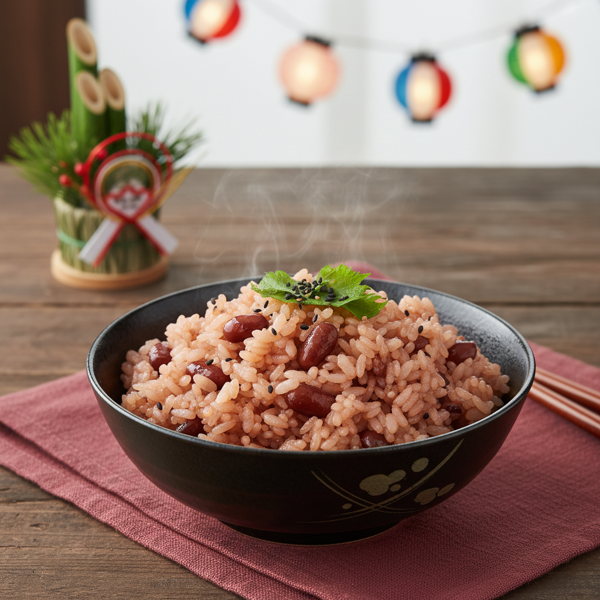
Sekihan, a traditional Japanese dish, is a beautiful and flavorful combination of sweet glutinous rice and adzuki beans. Known for its vibrant red hue, which symbolizes happiness and good fortune in Japanese culture, this dish is often served during celebrations and special occasions. The recipe involves soaking the glutinous rice to enhance its stickiness, making it perfect for forming into delightful bites. Each serving is not only visually appealing but packed with the earthy flavors of adzuki beans, complemented by the nutty aroma of roasted sesame seeds. This dish can be garnished with fresh shiso or watercress to elevate its presentation, making it a wonderful centerpiece for any meal.
4-6 servings
Servings
92
Calories
5
Ingredients

Ingredients
adzuki beans
1/2 cup (small red beans; rinsed and cooked)
sweet glutinous rice
3 cups (well rinsed, soaked for 1/2 to 1 hour, drained)
water
3 1/2 cups (for cooking rice and beans)
black dry-roasted sesame seeds
1 tablespoon (for garnish)
shiso or watercress
to taste (for garnish, if desired)
Instructions
1
In a medium saucepan, combine the adzuki beans and water. Bring to a boil over medium heat.
2
Once boiling, reduce the heat to low and let it simmer for 45 minutes to 1 hour, or until the beans are soft but still hold their shape. Be careful not to overcook them.
3
Remove the saucepan from heat and let the beans cool to room temperature. Once cooled, drain the beans and reserve about 3 tablespoons of the bean cooking liquid.
4
In a large mixing bowl, combine the drained beans, soaked and drained sweet glutinous rice, and 3.5 cups of water. Add the reserved cooking liquid from the beans to help enhance flavor.
5
Cook the mixture in a rice steamer according to your appliance instructions or, if you don’t have a rice cooker, in a pot on the stove. Note: Use the water-to-rice ratio mentioned, as the soaked glutinous rice requires less water than regular rice.
6
Once cooked, transfer the rice and beans to a decorative shallow dish or lacquered tray, and spread them evenly.
7
Sprinkle black dry-roasted sesame seeds over the top for added flavor and crunch. Optionally, garnish the dish with fresh shiso leaves or watercress for a pop of color.
8
Serve warm and enjoy this delightful dish with family and friends!
Nutrition Information
0.67g
Fat
18.33g
Carbs
2.33g
Protein
Frequently Asked Questions
Frequently Asked Questions
What is Sekihan?
Sekihan is a traditional Japanese dish made of sweet glutinous rice and adzuki beans, known for its vibrant red color.
What does the red color of Sekihan symbolize?
The red hue in Sekihan symbolizes happiness and good fortune in Japanese culture.
When is this dish typically served?
Sekihan is often served during celebrations and special occasions.
What are the main ingredients for Sekihan?
The main ingredients include adzuki beans, sweet glutinous rice, water, black roasted sesame seeds, and shiso or watercress for garnish.
How long should I simmer the adzuki beans?
The adzuki beans should be simmered for 45 minutes to 1 hour, or until they are soft but still hold their shape.
Do I need to soak the rice?
Yes, the sweet glutinous rice should be well rinsed and soaked for 30 minutes to 1 hour before draining.
Why is the bean cooking liquid reserved?
A few tablespoons of the cooking liquid are reserved to help enhance the flavor and color of the dish.
Can I cook Sekihan in a rice cooker?
Yes, you can cook the mixture in a rice steamer according to your appliance instructions.
Is Sekihan vegan-friendly?
Yes, this recipe is vegan as it contains no animal products.
Is this recipe gluten-free?
Yes, Sekihan is a gluten-free dish.
How many calories are in one serving?
There are approximately 92 calories per serving.
How many servings does this recipe make?
This recipe yields 4 to 6 servings.
What is the fat content per serving?
Each serving contains about 0.67g of fat.
How much protein is in Sekihan?
There is approximately 2.33g of protein per serving.
How much carbohydrates are in this dish?
Each serving contains about 18.33g of carbohydrates.
What kind of sesame seeds should I use?
The recipe calls for one tablespoon of black dry-roasted sesame seeds for garnish.
What garnishes can I use for presentation?
You can use fresh shiso leaves or watercress for a pop of color and flavor.
How should I serve Sekihan?
It is best served warm, spread evenly in a decorative shallow dish or lacquered tray.
What happens if I overcook the adzuki beans?
Overcooking the beans can cause them to lose their shape; they should be soft but intact.
How much water is needed to cook the rice and beans?
You will need 3 1/2 cups of water for cooking the rice and bean mixture.
Can I cook this on the stove if I don't have a rice cooker?
Yes, you can cook it in a pot on the stove using the mentioned water-to-rice ratio.
What kind of beans are adzuki beans?
Adzuki beans are small red beans frequently used in Japanese cuisine.
How much sweet glutinous rice is required?
The recipe requires 3 cups of sweet glutinous rice.
What temperature should the beans be before mixing with rice?
The beans should be allowed to cool to room temperature after simmering.
What is the preparation for the shiso or watercress?
They should be used fresh and added to taste as a garnish.
Is there any sugar in this recipe?
According to the nutritional data, there is no added sugar in this version of the recipe.
What is the aroma of the dish?
The dish features the earthy flavors of adzuki beans and a nutty aroma from roasted sesame seeds.
How much adzuki beans do I need?
You need 1/2 cup of adzuki beans.
Why does glutinous rice require less water than regular rice?
Soaked glutinous rice absorbs water during the soaking process, requiring less additional liquid during cooking.
How should I prepare the sesame seeds?
The sesame seeds should be black and dry-roasted before being sprinkled over the top.