Festive Easter Citrus Bread

Celebrate the joy of Easter with this delightful Festive Easter Citrus Bread made effortlessly in your bread machine. Infused with the bright flavors of lemon and orange zest, this sweet bread is perfect for your holiday brunch or as a special treat to share with family and friends. The addition of anise seeds offers a unique flavor profile that elevates this traditional recipe, making it a memorable centerpiece for your holiday table. Follow the simple instructions and let your bread machine do the hard work for you!
1
Servings
300
Calories
15
Ingredients
Ingredients
warm milk
1/2 cup (Warm to about 110°F (43°C))
warm water
1/2 cup (Warm to about 110°F (43°C))
fresh lemon juice
1 teaspoon (Freshly squeezed)
lemon zest
1/4 lemon, grated (Zest of a fresh lemon)
fresh orange juice
1 teaspoon (Freshly squeezed)
orange zest
1/4 orange, grated (Zest of a fresh orange)
vanilla extract
1/4 teaspoon (optional) (Pure vanilla extract)
large eggs
2 (At room temperature)
egg yolk
1 whole (At room temperature)
room temperature butter
1/2 cup (Softened)
granulated sugar
1/3 cup (Regular white sugar)
salt
1 teaspoon (Regular table salt)
active dry yeast
1 1/2 teaspoons (Instant or active dry yeast)
flour
3 1/2 cups (All-purpose flour, sifted)
anise seed
1 teaspoon (Whole anise seeds)
Instructions
1
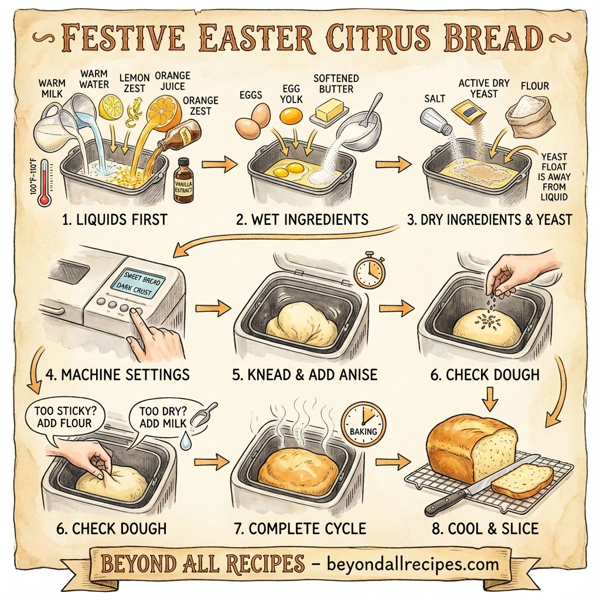
Add the warm milk and warm water to the bread machine pan, making sure they are between 100°F (37°C) and 110°F (43°C).
2
Mix in the lemon juice, lemon zest, orange juice, orange zest, and vanilla extract if using.
3
Crack in the large eggs and the egg yolk, followed by the softened butter and granulated sugar.
4
Sprinkle salt over the mixture, followed by the active dry yeast. Finally, add the flour on top, ensuring the yeast does not touch the liquid directly.
5
Select the sweet bread setting on your bread machine and set the crust preference to dark.
6
Start the machine and wait for the first kneading cycle to complete.
7
After the first kneading cycle, add the anise seeds into the dough.
8
Monitor the dough; if it's too sticky, add a little more flour, or if it's too dry, add a drop of milk to help form a soft ball of dough.
9
Allow the bread machine to complete its cycle, including rising and baking.
10
Once finished, remove the bread from the pan and let it cool on a wire rack before slicing.
Nutrition Information
15
Fat
40
Carbs
5
Protein
Frequently Asked Questions
Frequently Asked Questions
What is Festive Easter Citrus Bread?
It is a sweet, yeast-based bread flavored with lemon, orange, and anise seeds, traditionally served during Easter celebrations.
Can I make this bread in a bread machine?
Yes, this recipe is specifically designed to be made effortlessly using the sweet bread setting of a bread machine.
What temperature should the milk and water be?
The milk and water should be warmed to between 100°F (37°C) and 110°F (43°C) to properly activate the yeast.
Which bread machine setting should I use?
You should select the 'Sweet Bread' setting on your bread machine for this recipe.
What crust setting is recommended for this bread?
The recipe recommends setting the bread machine crust preference to 'dark'.
When should I add the anise seeds to the dough?
Add the anise seeds into the dough after the first kneading cycle has completed.
What should I do if the dough is too sticky during kneading?
If the dough appears too sticky, add a small amount of additional flour until it forms a soft, cohesive ball.
What should I do if the dough is too dry?
If the dough looks too dry, add a tiny drop of milk to help the ingredients bind together properly.
How many eggs does this recipe require?
The recipe requires two large eggs plus one additional egg yolk, all at room temperature.
What type of flour is best for Festive Easter Citrus Bread?
The recipe calls for 3 1/2 cups of sifted all-purpose flour.
Is vanilla extract required for this recipe?
No, the 1/4 teaspoon of vanilla extract is optional, though it adds a nice depth of flavor.
How much anise seed is included in the bread?
The recipe uses 1 teaspoon of whole anise seeds for a unique holiday flavor.
What is the calorie count for this bread?
There are approximately 300 calories per serving of this Festive Easter Citrus Bread.
How much fat is in a serving of this bread?
Each serving contains approximately 15 grams of fat.
How many carbohydrates are in a serving?
There are 40 grams of carbohydrates per serving.
What is the protein content of the bread?
The bread provides 5 grams of protein per serving.
Does the recipe use fresh citrus juice?
Yes, it uses 1 teaspoon each of freshly squeezed lemon juice and orange juice.
How do I prepare the citrus zest?
Grate the zest of 1/4 of a fresh lemon and 1/4 of a fresh orange to include in the dough.
Should the butter be melted before adding to the machine?
No, the recipe calls for 1/2 cup of softened, room-temperature butter.
How much sugar is used in this sweet bread?
The recipe uses 1/3 cup of granulated white sugar.
What type of yeast can I use?
You can use either active dry yeast or instant yeast; the recipe specifies 1 1/2 teaspoons.
What is the best way to cool the bread?
Once finished, remove the bread from the pan immediately and let it cool completely on a wire rack.
How do I ensure the yeast activates correctly?
Keep the yeast from touching the liquid directly when loading the machine by placing it on top of the flour.
Can I use bottled juices instead of fresh?
While fresh juice is recommended for the best flavor, bottled juice can be used as a substitute.
Is there a specific order to add ingredients?
Yes, start with warm liquids and juices, then eggs, butter, sugar, salt, yeast, and finally flour.
How many total ingredients are in this recipe?
There are 15 ingredients in total, including the optional vanilla extract.
What kind of salt should I use?
Regular table salt is used in this recipe.
Is this bread suitable for a holiday brunch?
Yes, its festive citrus and anise flavor profile makes it a perfect centerpiece for holiday meals.
Can I omit the anise seeds if I don't like the flavor?
Yes, you can omit the anise seeds; however, they provide the traditional flavor characteristic of this Easter bread.
How long does the bread machine take to finish?
The time varies by machine, but it will complete a full cycle of kneading, rising, and baking based on the Sweet Bread setting.