Fermented Teff and Barley Injera
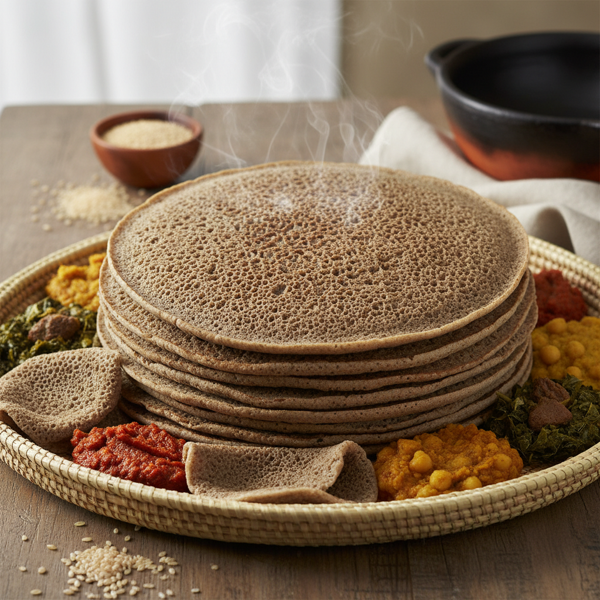
Injera, a staple of Ethiopian cuisine, is traditionally made using teff flour, known for its rich, nutty flavor and impressive nutritional profile. This version also incorporates barley flour, enhancing the texture and depth of flavor. Injera serves as a delicious base for various stews and dishes, thanks to its slightly tangy taste that develops during the fermentation process. The combination of gluten-free teff and the nutty profile of barley creates a uniquely delightful flatbread that is both versatile and healthful.
N/A
Servings
N/A
Calories
5
Ingredients
Ingredients
Teff Flour
4 lbs (none)
Barley Flour
1 lb (none)
Dried Yeast
1 teaspoon (mixed with warm water)
Self-Rising Flour
1 cup (none)
Water
as required (warm and cold)
Instructions
1
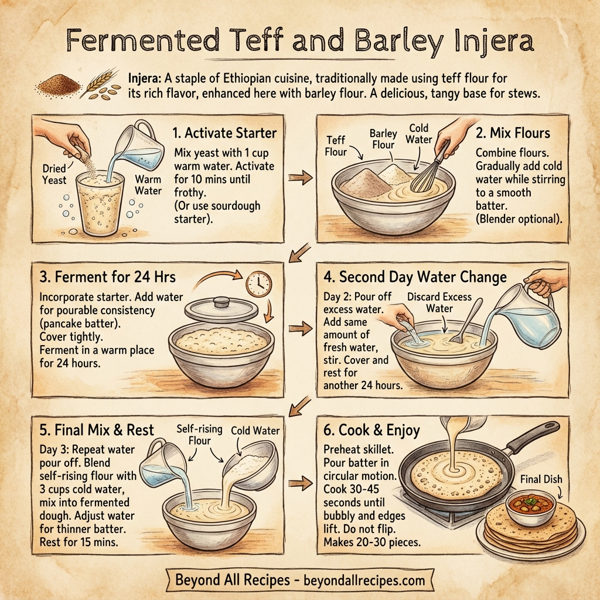
Prepare the starter by mixing the dried yeast with one cup of warm water. Allow it to activate until it becomes frothy, approximately 10 minutes. Alternatively, you can use an established sourdough starter.
2
In a large mixing container, combine the teff flour and barley flour. Gradually add cold water while stirring until a smooth batter forms. You can also use a blender for this step for a more even consistency.
3
Incorporate the prepared yeast starter into the flour mixture, stirring thoroughly. Add more water to achieve a pourable consistency, similar to pancake batter. Cover the container tightly and let it sit in a warm place to ferment for 24 hours.
4
On the second day, carefully pour off and discard any excess water that has collected on the surface. Add the same amount of fresh water to the dough mixture and stir to combine. Cover the container tightly again and let it rest for another 24 hours.
5
On the third day, repeat the process of pouring off excess water. Blend the self-rising flour with three cups of cold water until smooth, then mix it into the fermented dough, adjusting with additional water as necessary to achieve a thinner batter.
6
Allow the combined batter to rest outside for about 15 minutes to rise. While it rests, preheat a flat pancake pan or skillet over medium heat.
7
Once heated, pour a small amount of batter in a circular motion onto the skillet, creating a thin layer. Cook for 30-45 seconds until bubbles form and the edges lift slightly. Do not flip—injera is cooked only on one side.
8
Repeat this process until all the batter is used, resulting in approximately 20-30 pieces of injera, depending on your skillet size. For milder sourness, feel free to make and cook the injera on the second day instead of the third.
Nutrition Information
Frequently Asked Questions
Frequently Asked Questions
What is Fermented Teff and Barley Injera?
Injera is a traditional Ethiopian flatbread made from teff flour; this version incorporates barley flour for added texture and a rich, nutty flavor profile.
What are the primary flours used in this recipe?
The recipe uses 4 lbs of teff flour and 1 lb of barley flour.
How do you prepare the yeast starter?
Mix one teaspoon of dried yeast with one cup of warm water and allow it to activate for approximately 10 minutes until frothy.
Can I use a sourdough starter instead of yeast?
Yes, you can use an established sourdough starter as an alternative to the yeast mixture.
How should I mix the teff and barley flours?
Combine the flours in a large container and gradually add cold water while stirring until a smooth batter forms.
Can I use a blender for the initial batter?
Yes, using a blender is recommended for achieving a more even and smooth consistency for the flour and water mixture.
What is the desired consistency after adding the yeast?
After adding the yeast starter, the batter should be pourable, similar to the consistency of pancake batter.
How long does the first stage of fermentation take?
The batter should be covered tightly and left to ferment in a warm place for 24 hours.
What should I do on the second day of fermentation?
Discard any excess water that has collected on the surface, add the same amount of fresh water, and stir to combine.
How long does the dough rest after the second day's adjustments?
The dough should rest for an additional 24 hours after the second day's water replacement.
What is the first step on the third day of the process?
On the third day, repeat the process of pouring off and discarding any excess water from the surface of the dough.
How much self-rising flour is used in this recipe?
The recipe calls for one cup of self-rising flour.
How do I prepare the self-rising flour mixture?
Blend the self-rising flour with three cups of cold water until smooth before mixing it into the fermented dough.
How do I adjust the final batter's thickness?
Add additional water as necessary to achieve a thinner consistency before the final rest period.
How long should the final combined batter rest?
The batter should rest outside for about 15 minutes to allow it to rise before cooking.
What kind of pan is best for cooking Injera?
A flat pancake pan or a skillet preheated over medium heat is ideal for cooking Injera.
What is the technique for pouring Injera batter?
Pour a small amount of batter onto the skillet in a circular motion to create a thin, even layer.
How long does it take to cook one piece of Injera?
Each piece typically takes between 30 to 45 seconds to cook.
Do you need to flip Injera?
No, Injera is cooked only on one side and should never be flipped.
How do I know when the Injera is done cooking?
The Injera is ready when bubbles form across the surface and the edges lift slightly from the pan.
How many pieces of Injera does this recipe make?
This recipe yields approximately 20 to 30 pieces of Injera, depending on the size of your skillet.
Can I make the Injera taste less sour?
Yes, for a milder sourness, you can cook the Injera on the second day instead of waiting until the third day.
Is teff flour gluten-free?
Yes, teff flour is naturally gluten-free and is known for its impressive nutritional profile.
What flavor does the barley flour add?
Barley flour enhances the flatbread with a nutty profile and a deeper flavor.
Why is Injera used as a base for stews?
Its slightly tangy taste and unique texture make it an excellent base for various savory Ethiopian stews and dishes.
What temperature should the water be for activating yeast?
The yeast should be mixed with warm water to activate properly.
What temperature water is used for the flour mixtures?
Cold water is used when mixing the teff, barley, and self-rising flours into the batter.
Is the fermentation process necessary?
Yes, fermentation is essential for developing the characteristic tangy flavor and spongy texture of authentic Injera.
How many ingredients are in this recipe?
There are five main ingredients: Teff Flour, Barley Flour, Dried Yeast, Self-Rising Flour, and Water.
What type of cuisine does Injera belong to?
Injera is a staple flatbread of Ethiopian cuisine.