Fermented Rice and Raisin Wine
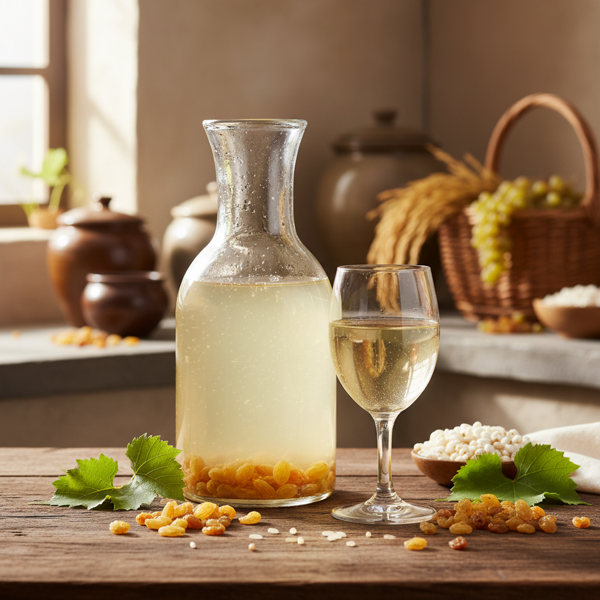
Experience the vibrant and robust flavors of homemade fermented rice and raisin wine, a delightful addition to any festive occasion. This easy-to-make beverage combines traditional techniques with accessible ingredients to produce a smooth, sweet, and slightly tangy drink that pairs perfectly with a wide variety of dishes. Ideal for celebrations where store-bought alcoholic options may be limited, such as in regions with drinking restrictions. Enjoy the satisfaction of creating this affordable and unique homemade wine.
N/A
Servings
420
Calories
6
Ingredients
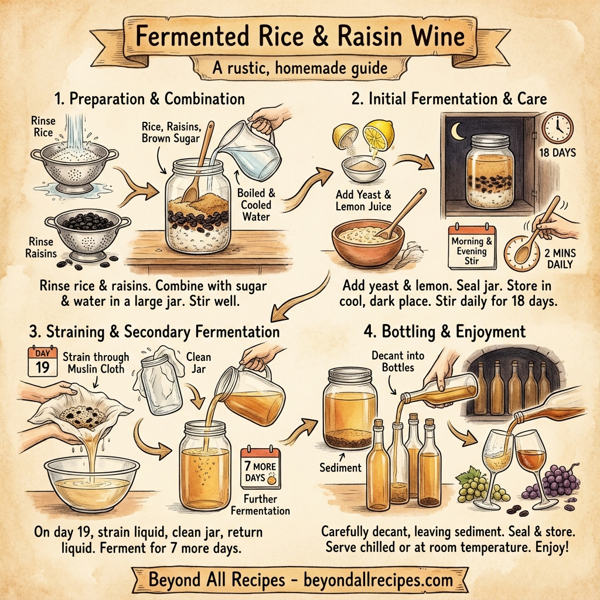
Ingredients
White raw rice
1/2 cup (Rinsed)
Black raisins
1/2 cup (Rinsed, with seeds)
Brown sugar
1 kg (None)
Instant yeast
1 teaspoon (None)
Lemon juice
2 tablespoons (Fresh)
Water
2 liters (Boiled and cooled)
Instructions
1
Rinse the white raw rice thoroughly under cold water to remove any excess starch, and set aside.
2
Do the same for the black raisins, ensuring they are clean and free from dust.
3
In a clean, large glass or ceramic jar, combine the washed rice, raisins, and brown sugar.
4
Pour in boiled and cooled water and stir the mixture thoroughly with a wooden spoon until the sugar is mostly dissolved.
5
Add instant yeast and fresh lemon juice into the mixture and stir again to ensure even distribution throughout the liquid.
6
Seal the jar with its lid and set it in a cool, dark place.
7
For the next 18 days, gently stir the contents for about 2 minutes each morning and evening to maintain an even fermentation process.
8
On the 19th day, open the jar and strain the mixture through a muslin cloth into a clean bowl to separate the liquid from the solids.
9
Wash and thoroughly dry the jar, then return the strained liquid to the jar and reseal it.
10
Allow the wine to ferment further for another 7 days, observing its color change and flavor development.
11
After the fermentation period, carefully decant the wine into clean, sterilized bottles, taking care to leave any sediment behind.
12
Seal the bottles and store them in a cool, dark place until ready to serve.
13
Enjoy your homemade rice and raisin wine, either chilled or at room temperature, as a delightful beverage for any celebration.
Nutrition Information
0.2g
Fat
105g
Carbs
0.8g
Protein
Frequently Asked Questions
Frequently Asked Questions
What is Fermented Rice and Raisin Wine?
It is a homemade alcoholic beverage with a smooth, sweet, and slightly tangy flavor profile, created using traditional fermentation techniques.
What type of rice is used in this recipe?
The recipe calls for 1/2 cup of white raw rice that has been thoroughly rinsed.
What kind of raisins should I use?
You should use 1/2 cup of black raisins, ensuring they are rinsed and still contain their seeds.
How much sugar is required for this wine?
The recipe requires 1 kg of brown sugar to achieve its sweet flavor and facilitate fermentation.
What type of yeast is best for this rice wine?
One teaspoon of instant yeast is used to start the fermentation process.
How much water do I need to add?
You need 2 liters of water that has been boiled and then allowed to cool.
Why is lemon juice added to the mixture?
Two tablespoons of fresh lemon juice are added to provide acidity and balance the sweetness of the wine.
How many ingredients are in this recipe?
There are 6 primary ingredients: white raw rice, black raisins, brown sugar, instant yeast, lemon juice, and water.
What is the first step in making this wine?
The first step is to thoroughly rinse the white raw rice and black raisins to remove any starch or dust.
What type of container should be used for fermentation?
A clean, large glass or ceramic jar is recommended for the fermentation process.
How often should the mixture be stirred initially?
The mixture should be stirred for about 2 minutes every morning and evening for the first 18 days.
What tool should be used for stirring?
A wooden spoon is recommended for stirring the wine mixture.
How long is the initial fermentation period?
The initial fermentation period lasts for 18 days while keeping the jar in a cool, dark place.
When should the wine be strained?
The wine should be opened and strained through a muslin cloth on the 19th day.
What happens after the first straining?
The liquid is returned to the cleaned jar and allowed to ferment further for another 7 days.
Why is it important to store the wine in a cool, dark place?
A cool, dark place ensures a stable temperature and prevents light from interfering with the chemical reactions during fermentation.
How do I bottle the wine properly?
Carefully decant the wine into sterilized bottles, making sure to leave any sediment at the bottom of the jar.
What is the total time required to make this wine?
The entire process takes approximately 25 to 26 days from start to bottling.
How should the finished wine be served?
It can be served either chilled or at room temperature depending on your preference.
What is the calorie count for this beverage?
The estimated calorie content is 420 calories per specified serving.
Does this wine contain fat or protein?
It contains a very low amount of fat (0.2g) and a small amount of protein (0.8g).
How many carbohydrates are in the wine?
The wine contains approximately 105g of carbohydrates.
Is this wine suitable for festive occasions?
Yes, it is specifically described as a vibrant and robust beverage ideal for celebrations and festive gatherings.
Is this an affordable wine to make?
Yes, the recipe highlights that it is an economical and affordable alternative to store-bought options.
What kind of flavor can I expect?
Expect a smooth, sweet, and slightly tangy flavor profile.
Is the water preparation important?
Yes, the water must be boiled and then cooled to ensure it is clean and won't kill the yeast.
Can I use a different type of sugar?
The recipe specifies brown sugar, which contributes to the specific color and deep flavor of the wine.
What is the purpose of the muslin cloth?
The muslin cloth is used to efficiently separate the solids (rice and raisins) from the liquid wine.
How do I know the fermentation is working?
During the second week, you will observe color changes and flavor development as the fermentation progresses.
Can this wine be stored for a long time?
Once bottled and sealed, it should be stored in a cool, dark place until you are ready to serve it.