Ethiopian Injera Flatbread
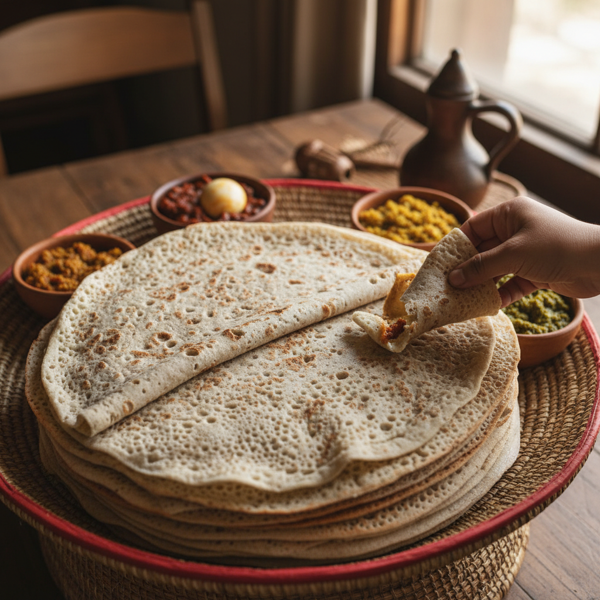
Ethiopian Injera is a unique, soft, and spongy flatbread that serves as both a staple and utensil in Ethiopian cuisine. Traditionally made with teff flour, this versatile bread can also be crafted using whole wheat or buckwheat flour for those seeking easier alternatives. Injera's distinctive sourdough-like quality comes from fermentation, but this recipe uses baking soda and club soda to achieve its signature bubbly texture. When ready, this flatbread provides the perfect vehicle for scooping up rich stews, spicy lentils, or sautéed vegetables, making each bite a flavorful experience. Ideal for family gatherings or special occasions, Injera brings people together as a hand-held dish to be enjoyed in true Ethiopian style.
N/A
Servings
N/A
Calories
4
Ingredients
Ingredients
Whole wheat flour
2 cups (finely milled (such as chapati flour))
Unbleached white flour
1 cup (none)
Baking soda
1/2 teaspoon (none)
Club soda
3 cups (plus more to thin if needed)
Instructions
1
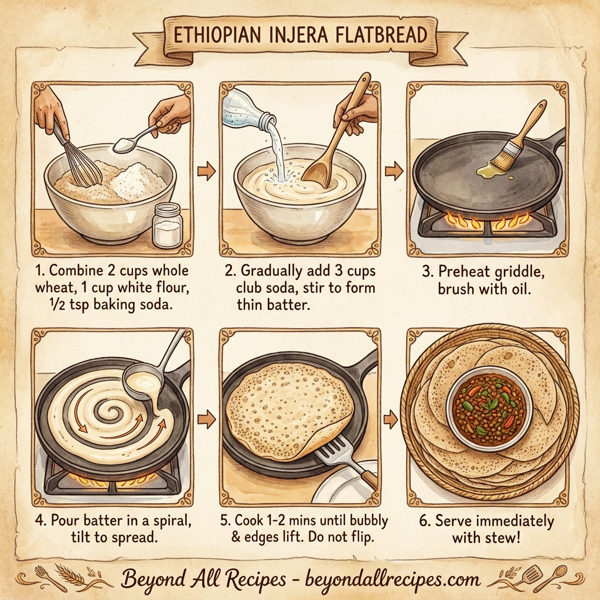
In a large mixing bowl, combine 2 cups of whole wheat flour, 1 cup of unbleached white flour, and 1/2 teaspoon of baking soda, mixing well to blend dry ingredients evenly.
2
Gradually add 3 cups of club soda to the flour mixture, stirring continuously to form a smooth, thin batter. If the batter is too thick, add a small amount of additional club soda until the desired consistency is achieved.
3
Preheat a large well-seasoned or non-stick griddle over medium heat until hot. Lightly brush the surface with oil or ghee to prevent sticking.
4
Using a ladle or large cup, pour the batter in a spiral starting from the outer edge of the griddle, moving inward to fill the center. Quickly tilt the griddle back and forth to spread the batter evenly and fill any holes, mimicking the process of making crepes.
5
Cook the injera for 1-2 minutes, or until the surface is bubbly and spongy, and the edges slightly lift. Do not flip over. Carefully slide the injera off the griddle onto a large plate.
6
Repeat the pouring and cooking process until all the batter is used, stacking the cooked injera in a circular pattern around the outside of the plate, allowing the centers to overlap slightly.
7
Serve immediately with your choice of meat or vegetable stew, ensuring each guest has a piece of injera to scoop up their delicious meal.
Nutrition Information
Frequently Asked Questions
Frequently Asked Questions
What is Ethiopian Injera?
Ethiopian Injera is a unique, soft, and spongy flatbread that serves as both a staple and utensil in Ethiopian cuisine.
What are the main ingredients in this Injera recipe?
The main ingredients are 2 cups of whole wheat flour, 1 cup of unbleached white flour, 1/2 teaspoon of baking soda, and 3 cups of club soda.
How is this version of Injera different from the traditional version?
While traditional Injera uses fermented teff flour, this recipe uses baking soda and club soda to achieve the signature bubbly texture without the long fermentation process.
What kind of flour should I use for the best results?
The recipe recommends finely milled whole wheat flour, such as chapati flour, along with unbleached white flour.
Can I make this recipe gluten-free?
Yes, although this specific recipe uses wheat, you can use traditional teff flour or buckwheat flour for a gluten-free alternative.
What is the purpose of the baking soda in this recipe?
Baking soda helps create the sourdough-like quality and the essential bubbly texture of the flatbread.
How do I prepare the Injera batter?
In a large mixing bowl, combine the dry ingredients and gradually add club soda while stirring continuously until a smooth, thin consistency is achieved.
What should I do if my Injera batter is too thick?
If the batter is too thick, simply add a small amount of additional club soda until you reach the desired consistency.
What temperature should the griddle be?
The griddle should be preheated over medium heat until it is hot before you begin cooking.
How do I prevent the Injera from sticking to the griddle?
Lightly brush the surface of a well-seasoned or non-stick griddle with oil or ghee before pouring the batter.
How do I pour the batter onto the griddle?
Pour the batter in a spiral starting from the outer edge of the griddle and moving inward toward the center.
How do I ensure the batter spreads evenly?
After pouring, quickly tilt the griddle back and forth to fill any holes and spread the batter, much like making a crepe.
How long does it take to cook one piece of Injera?
It takes approximately 1 to 2 minutes to cook, or until the surface becomes bubbly and spongy.
Do I need to flip the Injera while cooking?
No, do not flip the Injera. It is only cooked on one side until the surface is set and the edges lift.
How can I tell when the Injera is ready to be removed?
The Injera is ready when the surface is bubbly and the edges slightly lift from the griddle.
What is the best way to stack cooked Injera?
Stack the cooked pieces in a circular pattern around the outside of a large plate, allowing the centers to overlap slightly.
How should Injera be served?
Serve it immediately with your choice of meat or vegetable stews, ensuring guests have enough to scoop up their meal.
What kind of dishes pair well with Injera?
It is perfect for scooping up rich stews, spicy lentils, or sauteed vegetables.
Is Injera suitable for vegetarians?
Yes, this recipe is entirely plant-based and is tagged as vegetarian-friendly.
What is the texture of traditional Injera?
Injera is known for being soft, spongy, and full of tiny holes often referred to as 'eyes'.
Can I use buckwheat flour instead of wheat?
Yes, the recipe mentions that buckwheat flour is a versatile alternative for crafting this flatbread.
Why is club soda used in the batter?
The carbonation in club soda helps create the bubbly, aerated texture that is characteristic of traditional fermented Injera.
Is Injera a handheld food?
Yes, it is traditionally enjoyed as a hand-held dish, used to scoop up food rather than using silverware.
How many ingredients are in this recipe?
This simplified recipe requires only 4 ingredients: whole wheat flour, unbleached white flour, baking soda, and club soda.
Is this recipe good for special occasions?
Yes, Injera is ideal for family gatherings or special occasions as it brings people together to share a meal.
Can I use a regular frying pan if I do not have a griddle?
Yes, a large non-stick frying pan can work as long as it is well-seasoned or lightly oiled.
What is the specific ratio of flours used?
The recipe uses a 2:1 ratio of whole wheat flour to unbleached white flour.
Can children help with this recipe?
While cooking on a hot griddle requires adult supervision, children can help mix the dry ingredients and stir the batter.
Is this recipe considered a quick version of Injera?
Yes, by using baking soda and club soda instead of a multi-day fermentation, this version is much faster to prepare.
Why is Injera called both a staple and a utensil?
It is a staple because it is the primary starch of the meal, and a utensil because pieces are torn off to pick up other foods.