Ethiopian Berbere Spice Paste
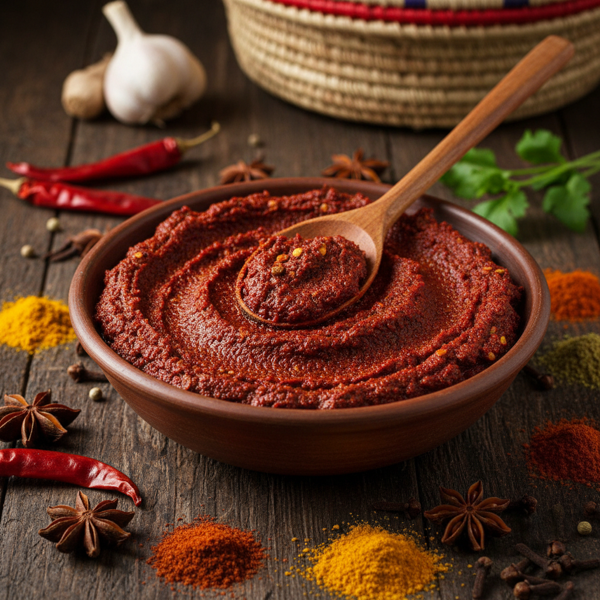
Ethiopian Berbere Spice Paste is a fragrant and complex blend of spices that adds depth and vibrancy to a variety of dishes. This mildly spiced paste features a harmonious combination of toasty aromatics such as ginger, cardamom, and coriander, beautifully rounded with the warmth of paprika and cayenne. Perfect for enriching stews, sauces, and marinades, Berbere's versatility lies in its ability to elevate both vegetarian and meat-based recipes. Its rich flavor profile becomes even more pronounced when roasted, making it an essential base for a robust tomato sauce or a flavorful accompaniment to grilled meats. Customize the heat level by adjusting the cayenne, and discover the magic of this Ethiopian treasure in your kitchen!
N/A
Servings
N/A
Calories
17
Ingredients
Ingredients
Ground Ginger
1 teaspoon (none)
Ground Cardamom
1/2 teaspoon (none)
Ground Coriander
1/2 teaspoon (none)
Fenugreek Seeds
1/2 teaspoon (none)
Ground Nutmeg
1/4 teaspoon (none)
Ground Cloves
1/8 teaspoon (none)
Ground Cinnamon
1/8 teaspoon (none)
Ground Allspice
1/8 teaspoon (none)
Finely Chopped Onions
2 tablespoons (finely chopped)
Finely Chopped Garlic
1 tablespoon (finely chopped)
Salt
2 tablespoons (none)
Dry Red Wine
3 tablespoons (none)
Paprika
2 cups (none)
Cayenne Pepper
2 tablespoons (none)
Fresh Ground Black Pepper
1/2 teaspoon (none)
Water
1 1/2 cups (none)
Vegetable Oil
1-2 tablespoons (for preserving)
Instructions
1
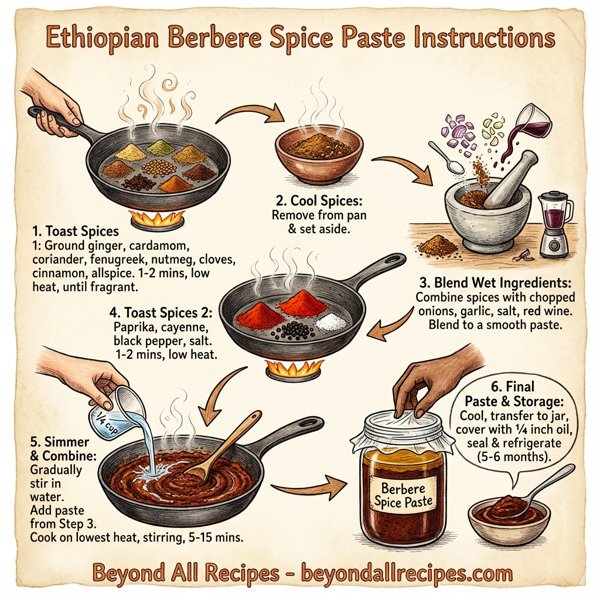
In a heavy frying pan, toast the ground ginger, ground cardamom, ground coriander, fenugreek seeds, ground nutmeg, ground cloves, ground cinnamon, and ground allspice over low heat for about 1-2 minutes, stirring constantly until fragrant.
2
Remove the toasted spices from the pan and set aside to cool slightly.
3
Combine the toasted spices with finely chopped onions, finely chopped garlic, 1 tablespoon of salt, and dry red wine in a mortar and pestle or a small blender. Blend until you achieve a smooth paste.
4
In the same frying pan, mix together the paprika, cayenne pepper, fresh ground black pepper, and the remaining 1 tablespoon of salt. Toast this mixture over low heat for another 1-2 minutes.
5
Gradually stir in the water, adding it 1/4 cup at a time, until fully incorporated, and then mix in the spice and wine paste.
6
Cook the combined mixture over the lowest possible heat for a minimum of 5 minutes, continuously stirring. For a richer flavor, you can extend this time up to 10-15 minutes.
7
Once cooked, transfer the spice paste to a clean jar, packing it tightly.
8
Allow the paste to cool to room temperature, then cover the surface with vegetable oil, creating a film approximately 1/4 inch thick.
9
Seal the jar with plastic wrap and refrigerate until ready to use. The oil covering will help preserve the paste, allowing it to last in the refrigerator for 5-6 months.
Nutrition Information
Frequently Asked Questions
Frequently Asked Questions
What is Ethiopian Berbere Spice Paste?
Ethiopian Berbere Spice Paste is a fragrant and complex spice blend featuring toasty aromatics like ginger, cardamom, and coriander, used to add depth and vibrancy to various dishes.
What are the primary flavors in this Berbere paste?
The flavor profile is a harmonious combination of ginger, cardamom, and coriander, rounded out with the warmth of paprika and cayenne pepper.
How spicy is this specific Berbere recipe?
This recipe is considered mildly spiced, but the heat level can be customized based on your preference.
How can I adjust the heat level of the paste?
You can easily customize the heat level by increasing or decreasing the amount of cayenne pepper used in the mixture.
What are the best uses for Berbere spice paste?
It is perfect for enriching stews, sauces, and marinades, and serves as an excellent base for robust tomato sauces.
Is this spice paste suitable for vegetarian cooking?
Yes, Berbere's versatility allows it to elevate both vegetarian and meat-based recipes effectively.
What is the first step in preparing the spices?
The first step is to toast ground ginger, cardamom, coriander, fenugreek seeds, nutmeg, cloves, cinnamon, and allspice over low heat until fragrant.
How long should the initial spices be toasted?
They should be toasted for about 1-2 minutes over low heat while stirring constantly.
How do I create a smooth paste from the toasted spices?
Combine the toasted spices with finely chopped onions, garlic, salt, and dry red wine in a mortar and pestle or a small blender until smooth.
What role does dry red wine play in the recipe?
Dry red wine acts as a liquid base to help form the paste and adds a layer of complex acidity to the flavor profile.
How much paprika is required for this recipe?
This recipe requires 2 cups of paprika, which provides the characteristic color and mild warmth of the paste.
Are the paprika and cayenne toasted?
Yes, the paprika, cayenne, black pepper, and remaining salt are toasted together over low heat for 1-2 minutes.
How is water added to the spice mixture?
Water should be added gradually, 1/4 cup at a time, until it is fully incorporated into the spice and wine paste.
How long should the final mixture be cooked?
The mixture should be cooked over very low heat for a minimum of 5 minutes, or up to 10-15 minutes for a richer flavor.
What is the best way to store Berbere spice paste?
Transfer the paste to a clean jar, pack it tightly, and cover the surface with a 1/4 inch layer of vegetable oil before refrigerating.
How long does the paste last in the refrigerator?
When properly sealed and covered with a film of oil, the paste can last in the refrigerator for 5-6 months.
Why is vegetable oil added to the top of the jar?
The oil creates a protective film that helps preserve the paste and maintain its freshness over several months.
Can I use this paste as a marinade?
Yes, the paste is highly versatile and works excellently as a marinade for various proteins.
What ingredients are used for the aromatic base?
The base includes finely chopped onions and garlic, which are blended with the toasted spices and wine.
What spices provide the 'toasty' notes in this recipe?
Ginger, cardamom, and coriander are specifically mentioned as the toasty aromatics that provide depth to the paste.
How much salt is included in the total recipe?
The recipe calls for a total of 2 tablespoons of salt, divided into different stages of the process.
Does roasting the paste change the flavor?
Yes, the rich flavor profile becomes even more pronounced when the paste is roasted.
Should the paste be cooled before sealing?
Yes, the paste should be allowed to cool to room temperature before covering with oil and sealing the jar.
Is a mortar and pestle necessary?
While a mortar and pestle is traditional, a small blender can be used to achieve the same smooth paste consistency.
What type of black pepper is recommended?
The recipe specifies 1/2 teaspoon of fresh ground black pepper for the best flavor.
Are whole seeds used in this recipe?
Yes, the recipe specifically uses 1/2 teaspoon of fenugreek seeds along with other ground spices.
How much water is used in total?
The recipe uses 1 1/2 cups of water to help reach the desired paste consistency.
Can this be used as a condiment?
Yes, Berbere spice paste is often used as a condiment or a flavorful accompaniment to grilled meats.
How much cayenne pepper should I use?
The standard recipe calls for 2 tablespoons of cayenne pepper, which you can adjust for heat.
What is the final texture of the Berbere?
The final product should be a smooth, thick, and well-incorporated spice paste.