Elegant Tomato and Marinated Bocconcini Bites
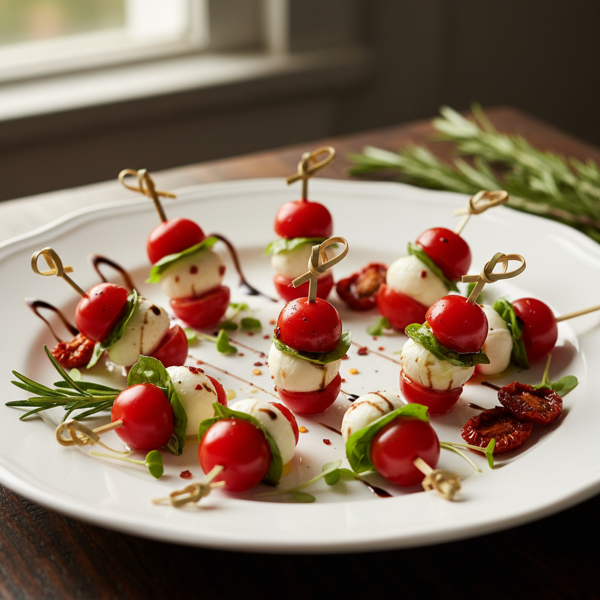
These Elegant Tomato and Marinated Bocconcini Bites are a delightful addition to any gathering, infusing tradition with a contemporary twist. Perfect for cocktail parties or pre-dinner drinks, these bite-sized appetizers are easy to prepare and require no cooking. The creamy, marinated bocconcini pairs beautifully with the freshness of rocket leaves and the sweetness of cherry tomatoes, creating a visually stunning and palate-pleasing experience. Their simplicity is matched only by their elegance, making them an irresistible choice for entertaining guests, ensuring they won't last long on any platter.
N/A
Servings
52.5
Calories
7
Ingredients
Ingredients
Olive Oil
1/3 cup (none)
Balsamic Vinegar
4 tablespoons (none)
Dried Basil
1 teaspoon (none)
Bambino Bocconcini
16 pieces (use whole or cut in half)
Rocket Leaves
16 leaves (use larger leaves for wrapping)
Cherry Tomatoes
8 pieces (halved)
Toothpicks
16 pieces (none)
Instructions
1
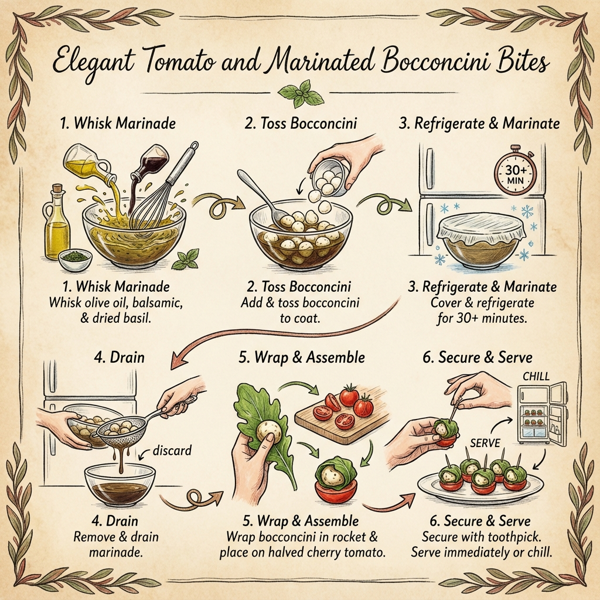
In a medium mixing bowl, whisk together the olive oil, balsamic vinegar, and dried basil until well combined.
2
Gently add the bambino bocconcini to the bowl and toss them carefully to ensure they are fully coated in the marinade.
3
Cover the bowl and refrigerate for a minimum of 30 minutes to allow the flavors to meld and the cheese to absorb the marinade.
4
Once marinated, remove the bocconcini from the refrigerator and drain them, discarding the marinade.
5
Take a larger rocket leaf and wrap each marinated bocconcini individually. Place each wrapped bocconcini on top of a halved cherry tomato.
6
Secure each assembly with a toothpick to hold everything in place. Serve immediately or store in the refrigerator until ready to serve.
Nutrition Information
5.25g
Fat
1.25g
Carbs
2g
Protein
Frequently Asked Questions
Frequently Asked Questions
How long do the bocconcini need to marinate?
The bambino bocconcini should be refrigerated in the marinade for a minimum of 30 minutes to allow the flavors to meld.
Do I need to cook anything for this recipe?
No, this is a no-cook recipe that involves only whisking, marinating, and assembly.
Is this recipe vegetarian?
Yes, these bites are vegetarian-friendly as they consist of cheese, vegetables, and oil-based dressing.
What ingredients are in the marinade?
The marinade is made by whisking together 1/3 cup olive oil, 4 tablespoons balsamic vinegar, and 1 teaspoon of dried basil.
How many bites does this recipe make?
Based on the ingredient list, this recipe makes approximately 16 individual bites.
What type of cheese is used?
The recipe calls for 16 pieces of Bambino Bocconcini, which are small, fresh mozzarella balls.
Can I use smaller rocket leaves?
It is recommended to use larger rocket leaves as they are easier to wrap around the marinated bocconcini.
How are the cherry tomatoes prepared?
The cherry tomatoes should be halved to provide a stable base for the bocconcini.
What is the best way to secure the bites?
Use a toothpick to pierce through the rocket-wrapped bocconcini and into the cherry tomato base to hold everything in place.
Should I keep the marinade after use?
The instructions suggest draining the bocconcini and discarding the marinade before assembly.
What are the nutritional calories per serving?
Each serving contains approximately 52.5 calories.
How much fat is in these bites?
There is approximately 5.25g of fat per serving.
Are these bites low in carbohydrates?
Yes, these bites are low in carbs, containing only about 1.25g of carbohydrates per serving.
How much protein is in each bite?
Each bite provides approximately 2g of protein.
Can I store these in the refrigerator before serving?
Yes, you can store the assembled bites in the refrigerator until you are ready to serve your guests.
What occasions are these bites best for?
They are perfect for cocktail parties, pre-dinner drinks, or any gathering requiring elegant finger food.
Is fresh basil required for the marinade?
The recipe specifically uses 1 teaspoon of dried basil for the marinade.
Can I use regular mozzarella instead of bocconcini?
While bocconcini is preferred for its size, you could use regular mozzarella if cut into small, bite-sized pieces.
How do you ensure the cheese is well-flavored?
Ensure you toss the cheese carefully in the bowl to coat all pieces fully before the 30-minute marinating period.
Are there any tags associated with this recipe?
The recipe is tagged with descriptors like finger food, cocktail party, marinated cheese, and quick and easy.
Is this recipe gluten-free?
Based on the ingredients listed (oil, vinegar, cheese, herbs, and vegetables), this recipe is naturally gluten-free.
Can I make these without toothpicks?
Toothpicks are necessary to hold the rocket leaf and cheese onto the tomato base for easy finger-food serving.
What is the texture of these bites?
They offer a combination of creamy cheese, crisp rocket leaves, and juicy cherry tomatoes.
Can I prepare the components ahead of time?
Yes, you can marinate the cheese and halve the tomatoes in advance, then assemble shortly before serving.
Is balsamic vinegar mandatory?
Balsamic vinegar provides the signature sweetness and acidity for the marinade, though other vinegars could be used for a different flavor profile.
How many cherry tomatoes do I need?
You need 8 cherry tomatoes, which will be halved to make 16 bases.
Can I use fresh herbs instead of dried?
Yes, fresh basil can be substituted, though you may need to increase the amount slightly to achieve the same intensity as dried basil.
Is there any added sugar in this recipe?
No, the recipe does not list sugar as an ingredient, and the nutritional data shows null for sugar content.
How should I toss the cheese in the marinade?
Gently add the bocconcini to the bowl and toss them carefully to ensure they are coated without breaking the cheese.
Do I need to peel the tomatoes?
No, the cherry tomatoes are used whole (halved) with their skin on to maintain their structure.