Elegant Japanese Seasonal Vegetable Stir-Fry
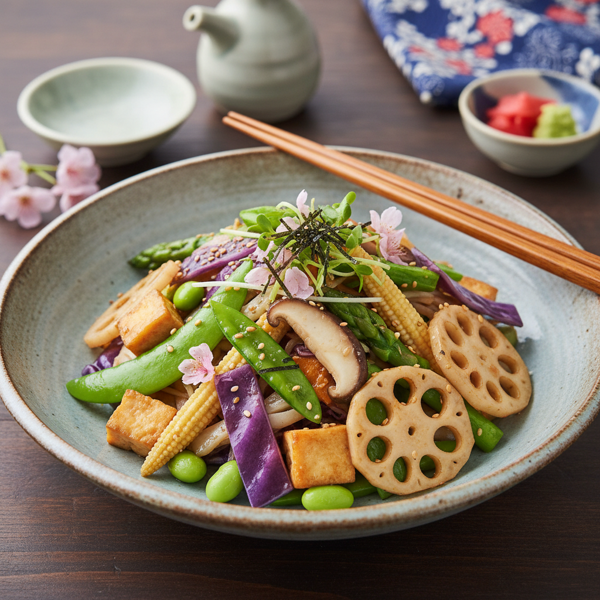
This exquisite Japanese-inspired stir-fry showcases a delightful array of fresh spring vegetables. With tender shiitake mushrooms, crisp asparagus, and vibrant snow peas, this dish celebrates the natural flavors and textures of its ingredients. Originally presented in Vegetarian Times, it offers a balanced and subtle taste inspired by traditional Japanese cuisine. Perfect as a light meal or a beautiful side dish, it highlights the importance of fresh produce and seasonal selection. While the original recipe uses Japanese arrowroot for thickening, corn starch can be a good alternative, and for those with limited access to Asian ingredients, rice wine vinegar can stand in for umeboshi vinegar.
4
Servings
N/A
Calories
11
Ingredients
Ingredients
dark sesame oil
2 tablespoons
fresh shiitake mushrooms
4 cups (stems removed, caps thinly sliced)
carrot
1 cup (thinly sliced on a diagonal)
shallot
1/4 cup (minced)
sake
1/2 cup
Japanese soy sauce
1 tablespoon
asparagus spears
2 cups (trimmed and cut into 2-inch pieces)
snow peas
1 1/2 cups (strings removed)
Japanese arrowroot
2 tablespoons (dissolved in)
vinegar (kuzu)
1/4 cup
umeboshi vinegar
2 teaspoons
Instructions
1
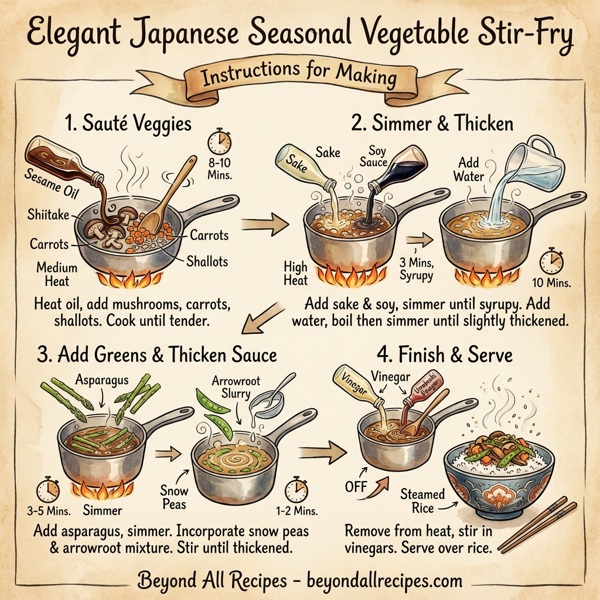
In a medium saucepan, heat the dark sesame oil over medium heat until shimmering.
2
Add the shiitake mushrooms, carrots, and minced shallots to the pan. Cook, stirring frequently, for 8 to 10 minutes until the mushrooms release their juices and the vegetables are tender.
3
Pour in the sake and Japanese soy sauce. Increase the heat to high and allow the mixture to simmer rapidly for about 3 minutes, or until the liquid becomes syrupy.
4
Add 2 1/2 cups of water to the pan and bring to a boil. Once boiling, reduce the heat and let it simmer uncovered for 10 minutes, or until the liquid has thickened slightly.
5
Gently mix in the asparagus pieces, allowing them to simmer for 3 to 5 minutes, until they are just tender.
6
Incorporate the snow peas and the dissolved Japanese arrowroot mixture into the pan. Cook, stirring continuously, for 1 to 2 minutes, until the sauce returns to a simmer and has thickened adequately.
7
Remove the saucepan from the heat and stir in both the vinegar and the umeboshi vinegar.
8
Serve the stir-fry in shallow bowls with steamed rice, ensuring that the vegetables are evenly distributed in the dish.
Nutrition Information
Frequently Asked Questions
Frequently Asked Questions
What is the Elegant Japanese Seasonal Vegetable Stir-Fry?
It is an exquisite Japanese-inspired stir-fry that showcases fresh spring vegetables like shiitake mushrooms, asparagus, and snow peas, focusing on natural flavors and textures.
What was the original source of this recipe?
The recipe was originally presented in Vegetarian Times.
How many servings does this recipe provide?
This recipe is designed to yield 4 servings.
What are the primary vegetables used in this stir-fry?
The main vegetables include fresh shiitake mushrooms, carrots, asparagus spears, and snow peas.
Is this recipe suitable for vegetarians?
Yes, it is tagged as a vegetarian dish and focuses entirely on plant-based ingredients.
What can I use as a substitute for Japanese arrowroot?
Corn starch is a good alternative for thickening the sauce if Japanese arrowroot is unavailable.
What is a good substitute for umeboshi vinegar?
Rice wine vinegar can be used as a substitute if you do not have access to umeboshi vinegar.
How should I prepare the shiitake mushrooms?
The stems should be removed and the caps should be thinly sliced.
What is the specific preparation for the carrots?
The carrots should be thinly sliced on a diagonal.
How should the asparagus be prepared?
Trim the asparagus spears and cut them into 2-inch pieces.
What prep is needed for the snow peas?
The strings should be removed from the snow peas before cooking.
What type of oil is recommended for this dish?
The recipe uses 2 tablespoons of dark sesame oil.
How long should the mushrooms, carrots, and shallots be cooked initially?
Cook them for 8 to 10 minutes until the mushrooms release their juices and the vegetables are tender.
When do I add the sake and Japanese soy sauce?
Add them after the initial vegetables have softened, then simmer on high heat for about 3 minutes until syrupy.
How much water is added to create the sauce base?
The recipe calls for 2 1/2 cups of water.
How long does the liquid simmer after adding water?
It should simmer uncovered for 10 minutes until slightly thickened.
How long do the asparagus pieces need to simmer?
Simmer the asparagus for 3 to 5 minutes until just tender.
When are the snow peas and arrowroot mixture added?
They are added after the asparagus is tender and cooked for 1 to 2 minutes until the sauce returns to a simmer.
At what point are the vinegars added to the dish?
The vinegars are stirred in after the saucepan has been removed from the heat.
What is the recommended way to serve this stir-fry?
Serve the stir-fry in shallow bowls accompanied by steamed rice.
How many distinct ingredients are in this recipe?
There are 11 ingredients in total.
Does the recipe include nutritional information like calories or fat?
No, the specific nutritional data such as calories, fat, and protein are not provided in this record.
What is kuzu in this context?
Kuzu refers to the Japanese arrowroot used as a thickening agent, often paired with vinegar in this recipe.
What should the texture of the sauce be?
The sauce should be syrupy and adequately thickened by the arrowroot.
What heat setting is used for the initial sautéing?
The sesame oil should be heated over medium heat until shimmering.
How should the shallots be prepared?
The shallots should be minced before being added to the pan.
Is this dish considered healthy?
Yes, it is tagged as healthy and focuses on fresh produce and seasonal selection.
What is the amount of Japanese soy sauce required?
The recipe uses 1 tablespoon of Japanese soy sauce.
What is the amount of sake used?
The recipe uses 1/2 cup of sake.
What tags are associated with this recipe?
Tags include japanese cuisine, vegetable stir-fry, spring vegetables, vegetarian, fresh produce, healthy, asian, mushrooms, asparagus, and quick meal.