Effortless Mock Puff Pastry
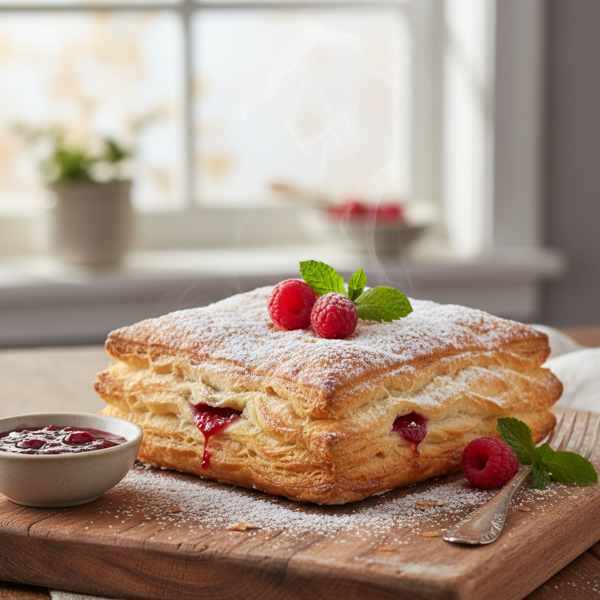
Discover the simplicity and delight of making your homemade puff pastry with minimal effort. This time-saving method delivers a flaky, buttery pastry perfect for both sweet and savory dishes. Forget the traditional complexities and enjoy this recipe that's designed for convenience without compromising taste or texture.
1
Servings
N/A
Calories
3
Ingredients
Ingredients
all-purpose flour
3/4 cup (no preparation needed)
unsalted butter
1/2 cup (cold, cut into cubes)
sour cream
1/4 cup (no preparation needed)
Instructions
1
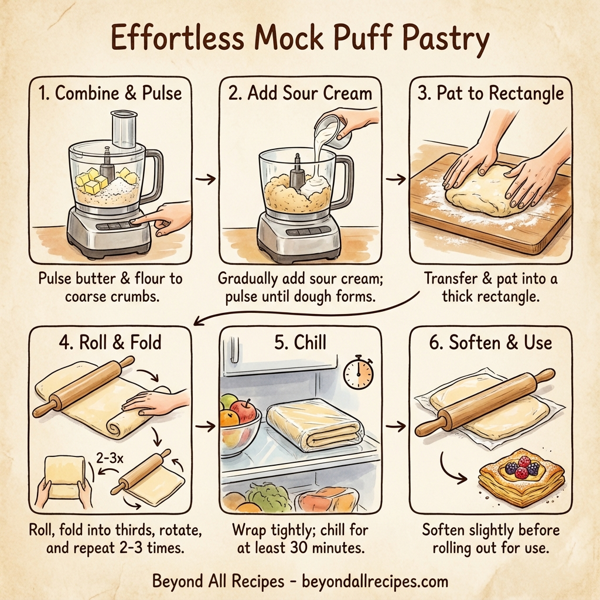
1. In a food processor, combine the cold butter cubes with the flour. Pulse several times until the mixture resembles coarse crumbs, indicative of even butter distribution.
2
2. Gradually add the sour cream to the processor, pulsing until a consistently cohesive dough forms. Do not overmix to maintain flakiness.
3
3. Transfer the dough onto a lightly floured surface, patting it into a thick rectangle.
4
4. Roll the dough out gently and fold it into thirds as you would a letter. Rotate the dough 90 degrees, roll out again, and fold into thirds. Repeat the rolling and folding process 2 to 3 more times to build layers.
5
5. Once layered adequately, wrap the dough tightly in plastic wrap. Allow it to chill in the refrigerator for at least 30 minutes to firm up the butter and relax the gluten.
6
6. Before use, let the dough soften at room temperature for about 5 minutes or lightly pound it with a rolling pin until pliable enough to roll out for your puff pastry needs.
Nutrition Information
Frequently Asked Questions
Frequently Asked Questions
What is Effortless Mock Puff Pastry?
It is a simplified method for making homemade puff pastry that delivers flaky, buttery results with minimal effort compared to traditional techniques.
What are the main ingredients for this recipe?
The recipe requires only three ingredients: all-purpose flour, cold unsalted butter, and sour cream.
How does this recipe save time?
It uses a food processor and a quick folding method instead of the lengthy traditional process of laminating dough with multiple long chilling periods.
Why is cold butter necessary?
Cold butter creates steam as it melts in the oven, which is what produces the characteristic flaky layers in the pastry.
Why should I use a food processor for this pastry?
The food processor quickly cuts the butter into the flour to create coarse crumbs without the heat from your hands melting the butter.
How should I prepare the butter for this recipe?
The butter should be unsalted, cold, and cut into small cubes before being added to the flour.
What texture should the butter and flour mixture have after pulsing?
The mixture should resemble coarse crumbs, indicating that the butter is evenly distributed but still in small pieces.
When do I add the sour cream to the dough?
Gradually add the sour cream to the processor after the butter and flour have reached a coarse crumb consistency.
How long should I pulse the dough after adding sour cream?
Pulse only until a consistently cohesive dough forms; do not overmix to ensure the final pastry remains flaky.
How do I shape the dough before rolling it out?
Transfer the dough to a lightly floured surface and pat it into a thick rectangle.
What is the 'letter fold' method mentioned in the instructions?
It involves rolling the dough out gently and folding it into thirds like a business letter to create layers.
How many times should I repeat the rolling and folding process?
You should repeat the rolling and folding process 2 to 3 more times after the initial fold to build sufficient layers.
Why must the dough be chilled for 30 minutes?
Chilling allows the butter to firm up and the gluten in the flour to relax, making the dough easier to handle and flakier when baked.
How should I store the dough while it chills?
Wrap the dough tightly in plastic wrap to prevent it from drying out in the refrigerator.
What if the dough is too hard to roll after chilling?
Let it soften at room temperature for about 5 minutes or lightly pound it with a rolling pin until it becomes pliable.
Is this mock puff pastry suitable for sweet dishes?
Yes, its buttery and neutral flavor makes it excellent for sweet dishes like fruit tarts, turnovers, and palmiers.
Can I use this pastry for savory dishes?
Absolutely, it works perfectly for savory items such as meat pies, quiches, pot pie toppers, or appetizers.
What type of flour is recommended for this recipe?
The recipe specifies all-purpose flour, which provides the right balance of strength and tenderness for the dough.
Can I substitute the sour cream with something else?
While sour cream is recommended for its fat and moisture, some bakers use full-fat Greek yogurt as a common substitute.
Can I make this dough in advance?
Yes, you can prepare the dough and keep it in the refrigerator for a day or two, or freeze it for longer storage.
Does this recipe require any special tools?
You will need a food processor for the initial mixing and a rolling pin for the layering process.
What happens if I overmix the dough in the food processor?
Overmixing can lead to a tough pastry because it develops too much gluten and melts the butter bits needed for flakiness.
Why do I need to rotate the dough 90 degrees between folds?
Rotating ensures that the layers are built evenly and helps keep the dough in a workable rectangular shape.
How many servings does this specific recipe quantity yield?
This recipe uses 3/4 cup of flour and is scaled as a single serving or small batch.
Can I double the recipe?
Yes, you can double the ingredients, though you may need to process them in batches depending on the size of your food processor.
What is the minimum chill time required?
The dough needs a minimum of 30 minutes in the refrigerator to properly set.
How thick should I roll the dough when using it for a recipe?
It depends on the specific dish, but generally, puff pastry is rolled out to about 1/8 to 1/4 inch thickness.
Why is unsalted butter preferred over salted butter?
Using unsalted butter allows you to control the exact salt content of your pastry, though salted can be used in a pinch.
Can I use this dough as a pie crust alternative?
Yes, this mock puff pastry makes a very rich, flaky, and decadent alternative to a standard shortcrust pie dough.
What is the key to success with this mock puff pastry?
The key is keeping the ingredients very cold and handling the dough as little as possible to maintain distinct bits of butter.