Easy Homemade Fresh Pasta
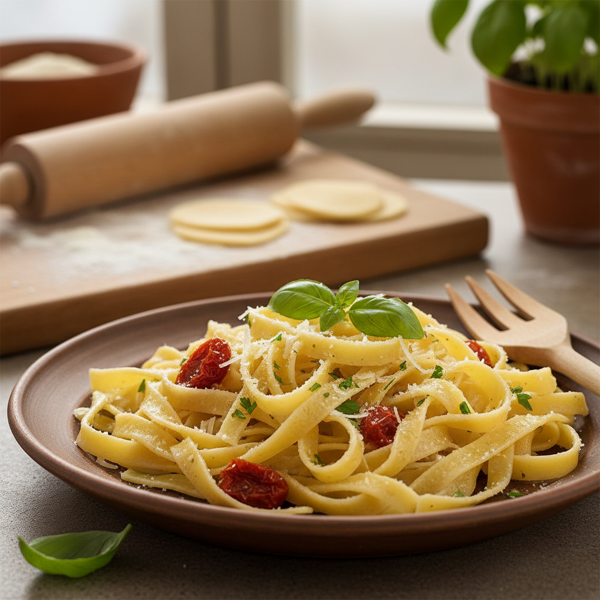
Discover the joy of making your own fresh pasta with this easy and delicious recipe! Inspired by a popular cooking show, this method utilizes a food processor to knead the dough seamlessly, making pasta-making accessible for everyone. After preparing the dough, let it rest to enhance its texture and elasticity. You can roll it out using a pasta machine or a simple rolling pin. For convenience, dry the pasta strips slightly before cutting into your desired noodle shape, making it easier to separate. These freshly made noodles can be stored in meal-sized portions in zip lock bags and frozen for later use, ensuring you always have fresh pasta on hand to elevate your favorite dishes. Whether it's spaghetti, fettuccine, or lasagna, this fresh pasta will impress family and friends alike!
N/A
Servings
N/A
Calories
4
Ingredients
Ingredients
General purpose white flour
2 cups (measured)
Eggs
2 (large, beaten)
Olive oil
1 tablespoon (measured)
Water
4 tablespoons (measured)
Instructions
1
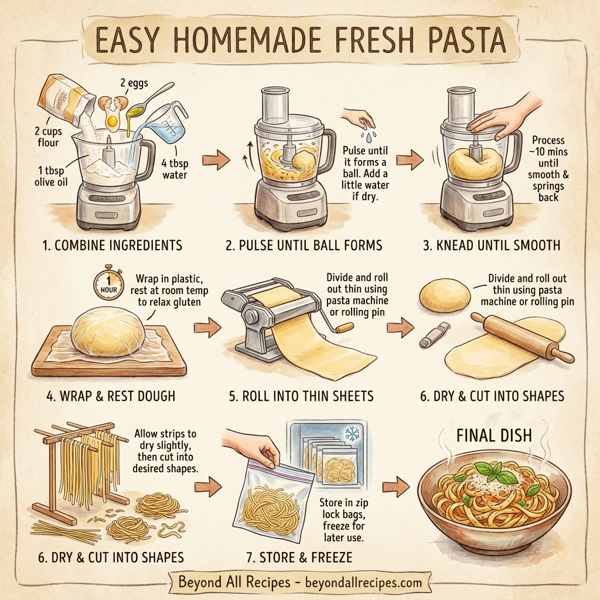
In a food processor, combine 2 cups of general-purpose white flour, 2 eggs, 1 tablespoon of olive oil, and 4 tablespoons of water.
2
Pulse the mixture until it starts to form a ball. If it seems too dry, add a little more water, adjusting based on the size of your eggs and the moisture of your flour.
3
Once the dough begins to come together, process for about 10 minutes until it is smooth and springs back when gently pressed.
4
Wrap the dough ball in plastic wrap and let it rest at room temperature for about 1 hour, allowing the gluten to relax.
5
After resting, divide the dough into manageable sections and roll it out using a pasta machine or a rolling pin until thin.
6
To cut the pasta into your preferred shape, allow the strips to dry slightly before cutting. This will help them separate easily.
7
Store the noodles in meal-sized portions within zip lock bags and freeze for later enjoyment.
Nutrition Information
Frequently Asked Questions
Frequently Asked Questions
What is Easy Homemade Fresh Pasta?
It is a simple recipe for making fresh pasta at home using a food processor to knead the dough, resulting in a delicious and versatile noodle.
What ingredients do I need for this pasta?
You will need 2 cups of general-purpose white flour, 2 eggs, 1 tablespoon of olive oil, and 4 tablespoons of water.
Can I make this pasta without a pasta machine?
Yes, you can roll out the dough using a simple rolling pin until it reaches your desired thickness.
How does using a food processor help in this recipe?
The food processor is used to seamlessly knead the dough, making the pasta-making process much faster and more accessible.
How long should I pulse the mixture in the food processor?
Pulse the mixture until it starts to form a ball. If it remains too dry, you can add a little more water.
What should I do if the pasta dough is too dry?
If the dough seems dry and won't form a ball, add water gradually, one tablespoon at a time, until the consistency is right.
How long do I need to process the dough once it forms a ball?
Once the dough comes together, process it for approximately 10 minutes until it is smooth and elastic.
How can I tell if the dough has been processed enough?
The dough is ready when it is smooth to the touch and springs back quickly when gently pressed with a finger.
Does the pasta dough need to rest?
Yes, resting the dough is crucial for relaxing the gluten, which makes it much easier to roll out.
How long should the dough rest?
Wrap the dough ball in plastic wrap and let it rest at room temperature for about 1 hour.
How should I divide the dough for rolling?
After resting, divide the dough into smaller, manageable sections to make the rolling process easier.
What is the secret to cutting the pasta into shapes easily?
Allow the rolled-out strips to dry slightly before cutting; this prevents them from sticking together and helps them separate easily.
What types of pasta shapes can I make with this recipe?
This dough is versatile and can be used to make spaghetti, fettuccine, lasagna sheets, and many other shapes.
Can I store fresh pasta for later use?
Yes, you can store the noodles in meal-sized portions in zip lock bags.
Is this fresh pasta freezable?
Yes, these noodles can be frozen in zip lock bags to ensure you always have fresh pasta available.
Do I need to beat the eggs before adding them?
The recipe suggests using large, beaten eggs for the best incorporation into the flour.
What type of flour is best for this recipe?
This recipe calls for general-purpose white flour, which is easy to find and works well for homemade pasta.
Why is olive oil included in the dough?
Olive oil adds flavor and helps create a smoother, more supple dough texture.
Can I use this recipe for lasagna?
Absolutely! Simply roll the dough into thin sheets and cut them into the appropriate size for your lasagna pan.
How many ingredients are in this recipe?
This simple recipe only requires 4 ingredients: flour, eggs, olive oil, and water.
Is this recipe considered healthy?
Yes, it is tagged as healthy cooking because it uses fresh, simple ingredients without the preservatives found in some store-bought pastas.
What is the first step in making the dough?
The first step is to combine the flour, eggs, olive oil, and water in your food processor.
How thin should I roll the pasta?
You should roll it until it is quite thin, as the pasta will expand slightly when cooked.
Can kids help with this recipe?
Yes, kids can help measure ingredients and, with supervision, help roll out and shape the dough.
Why is it easier to cut the pasta after it dries slightly?
Slight drying removes surface moisture, which prevents the strands from fusing back together after the blade passes through them.
How many servings does this recipe make?
While specific serving counts aren't provided, 2 cups of flour typically yields enough pasta for 2 to 4 people depending on the dish.
What is the texture of the finished pasta?
Fresh pasta has a tender yet firm 'al dente' texture that is much richer than dried boxed pasta.
Can I use this dough for ravioli?
Yes, this dough is elastic enough to be used for stuffed pastas like ravioli or tortellini.
Do I need to add salt to the dough?
This specific recipe doesn't list salt in the dough; usually, the pasta water is heavily salted during the cooking process instead.
How should I package the pasta for the freezer?
Place the cut noodles into zip lock bags in portions that match what you usually cook for a single meal.