Easy & Crunchy Dill Pickles
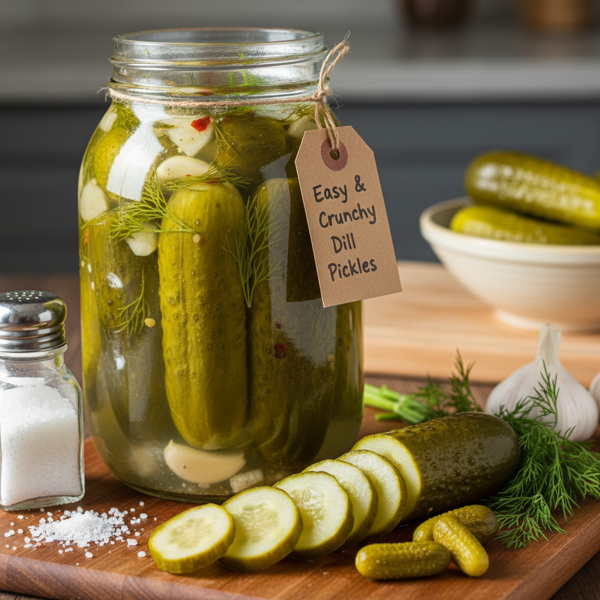
Transform fresh pickling cucumbers into delicious homemade dill pickles with this simple recipe that requires no special equipment. Perfect for snacking, sandwiches, or adding a zesty twist to your favorite dishes, these quick refrigerator dill pickles are ready in just one week. With a delightful balance of garlic, spices, and a touch of sweetness, they'll be a hit at your next gathering. Plus, they can be stored in the refrigerator for up to a month without losing their crunch!
2
Servings
60
Calories
11
Ingredients
Ingredients
pickling cucumbers or Persian cucumbers
10-12 (cleaned and sliced)
garlic cloves
12 (peeled)
fresh dill
8 sprigs (whole)
bay leaves
4 (whole)
coriander seed
1 tablespoon (whole)
black peppercorns
1 teaspoon (whole)
mustard seeds
1 teaspoon (whole)
crushed red pepper flakes
1/4 teaspoon (optional)
water
3 cups (none)
kosher salt
2 tablespoons (none)
granulated sugar
2 tablespoons (none)
Instructions
1
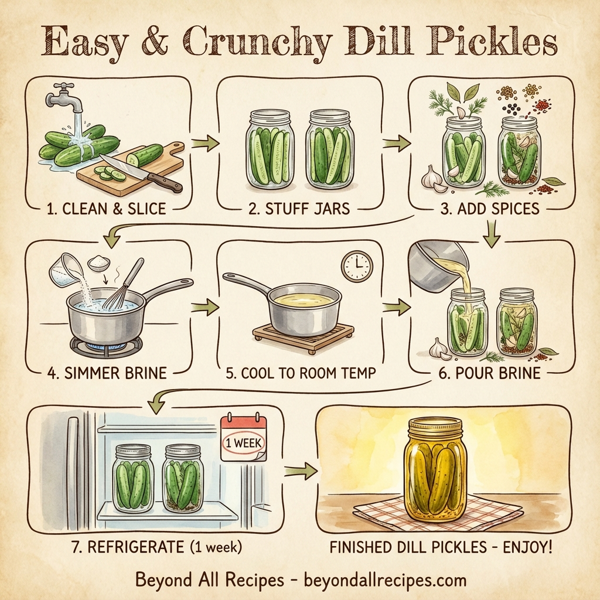
Start by thoroughly cleaning the pickling or Persian cucumbers. Trim off both ends and slice the cucumbers into your preferred shape, either spears or thin rounds.
2
Stuff the prepared cucumbers into two clean 1-quart glass jars. Make sure to pack them tightly to maximize the flavor absorption.
3
Evenly distribute the peeled garlic cloves, fresh dill sprigs, bay leaves, coriander seeds, black peppercorns, mustard seeds, and crushed red pepper flakes (if you like a spicy kick) between the two jars.
4
In a medium saucepan, mix together the water, kosher salt, and granulated sugar. Place the saucepan over moderate heat and bring the mixture to a gentle simmer, stirring occasionally until the sugar and salt have completely dissolved.
5
Once the mixture is combined and dissolved, remove the saucepan from heat and allow the brine to cool to room temperature.
6
Carefully pour the cooled brine over the cucumbers in both jars, filling them to the very top.
7
Seal the jars tightly with their lids and place them in the refrigerator. Let the pickles sit for at least one week to develop their flavor, though they can be enjoyed for up to one month.
Nutrition Information
0g
Fat
15g
Carbs
1g
Protein
Frequently Asked Questions
Frequently Asked Questions
What type of cucumbers are best for this recipe?
You should use either 10 to 12 pickling cucumbers or Persian cucumbers for the best crunch and size.
How long do the pickles need to sit before they are ready?
The pickles should stay in the refrigerator for at least one week to allow the flavors to fully develop.
Do I need special canning equipment for these pickles?
No special canning equipment is required as these are quick refrigerator pickles.
How long can I store these dill pickles in the refrigerator?
They can be stored in the refrigerator for up to one month without losing their signature crunch.
Should I pour the brine over the cucumbers while it is hot?
No, you should allow the brine to cool to room temperature before pouring it over the cucumbers in the jars.
How many jars does this recipe yield?
This recipe is designed to fill two clean 1-quart glass jars.
Can I make these pickles spicy?
Yes, you can add 1/4 teaspoon of crushed red pepper flakes to the jars if you prefer a spicy kick.
What is the best way to slice the cucumbers?
You can slice them into your preferred shape, such as long spears or thin rounds.
Do I need to peel the garlic cloves?
Yes, the 12 garlic cloves should be peeled before being distributed into the jars.
What ingredients are in the brine?
The brine consists of 3 cups of water, 2 tablespoons of kosher salt, and 2 tablespoons of granulated sugar.
Why do I need to trim the ends of the cucumbers?
Trimming the ends helps the brine penetrate the cucumber and ensures a better texture.
How many dill sprigs should I use?
The recipe calls for 8 fresh dill sprigs, distributed evenly between the two jars.
What spices are used for the pickling mix?
The spice mix includes bay leaves, coriander seeds, black peppercorns, and mustard seeds.
How should the cucumbers be packed into the jars?
You should pack the cucumbers tightly into the jars to maximize flavor absorption.
Is there sugar in these pickles?
Yes, the recipe uses 2 tablespoons of granulated sugar to create a balanced flavor profile.
What is the calorie count for this recipe?
There are approximately 60 calories per serving in these pickles.
Can I use table salt instead of kosher salt?
Kosher salt is recommended for its purity and lack of additives; table salt may cloud the brine or change the flavor.
Are these pickles shelf-stable?
No, these are refrigerator pickles and must be kept refrigerated at all times.
How much coriander seed is needed?
You will need 1 tablespoon of whole coriander seeds.
Do I need to boil the spices in the brine?
No, the spices are placed directly into the jars with the cucumbers, while only the salt and sugar are dissolved in the simmering water.
What happens if I don't wait a full week?
The pickles will still be safe to eat, but they will not have developed their full dill and garlic flavor.
Can I use dried dill instead of fresh?
While fresh dill sprigs provide the best flavor, you can use dried dill in a pinch, though the flavor profile may vary.
How much fat is in these pickles?
These pickles contain 0g of fat.
How much protein is in a serving?
There is approximately 1g of protein per serving.
What is the carbohydrate content?
There are 15g of carbohydrates per serving.
How many bay leaves do I need?
The recipe calls for 4 whole bay leaves, or 2 per jar.
How much mustard seed should I add?
You should add 1 teaspoon of whole mustard seeds divided between the jars.
How much black pepper is used?
The recipe requires 1 teaspoon of whole black peppercorns.
Do I need to stir the brine while heating?
Yes, stir occasionally until the sugar and salt have completely dissolved into the water.
Should the jars be sealed before or after refrigerating?
Seal the jars tightly with their lids immediately after adding the cooled brine, then place them in the refrigerator.