Dominican Black Bean Rice (Moro de Habichuelas Negras)
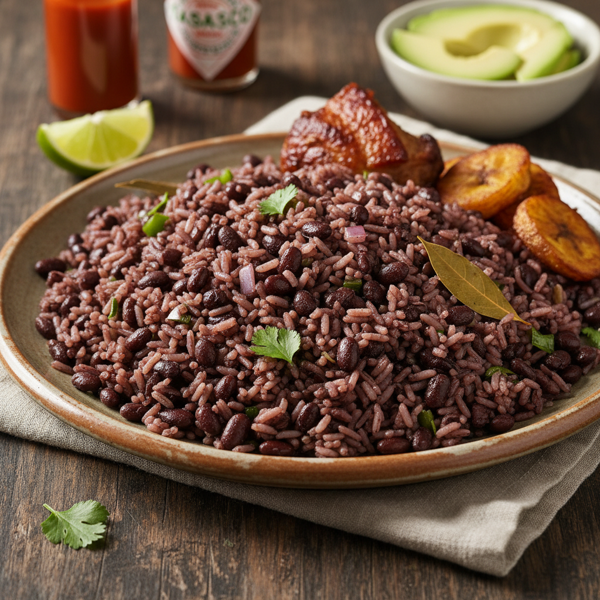
Moro de Habichuelas Negras is a delicious and comforting dish hailing from the Dominican Republic, regarded as a festive staple, especially during Christmas celebrations. This culinary delight combines fluffy rice with richly flavored black beans, enhanced by a medley of aromatic vegetables and herbs. The preparation calls for boiling dry black beans to harness their full flavor, making for a more wholesome and satisfying meal compared to canned varieties. This dish not only showcases Dominican culinary heritage but is also versatile enough to be enjoyed on any occasion. Serve it as a main course or as a side dish to meat, and relish the balance of flavors that make this dish a beloved classic.
5
Servings
240
Calories
13
Ingredients
Ingredients
rice
2 cups (uncooked)
water
4 cups (preferably the water used to boil the beans)
cooked black beans
1 cup (drained)
vegetable oil
3 tablespoons (for sautéing)
tomato paste
1 tablespoon (not sauce)
cubanel green peppers
1/4 cup (finely chopped)
red onion
1/2 medium (chopped)
dried oregano
1/2 teaspoon (dried)
fresh garlic cloves
2 (mashed or pressed)
fresh cilantro
1 sprig (with stem)
fresh parsley
1 teaspoon (finely chopped)
chicken bouillon cube
1 (crushed)
salt
1 teaspoon (to taste)
Instructions
1
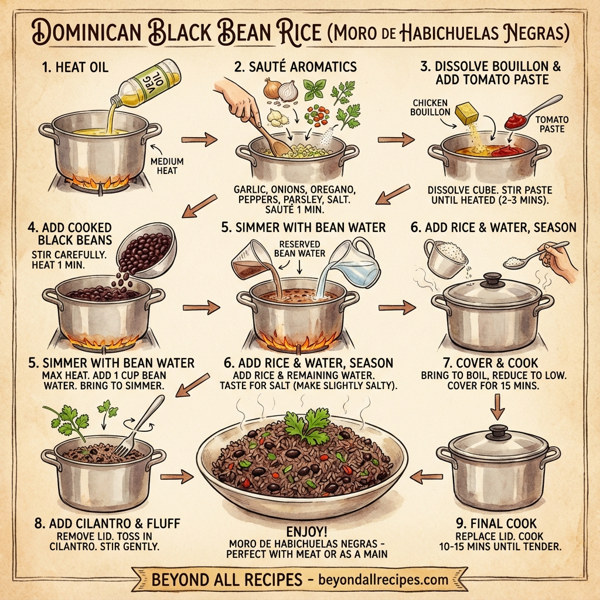
Begin by heating vegetable oil in a large pot over medium heat.
2
Once the oil is hot, add the mashed garlic, chopped onions, dried oregano, finely chopped peppers, chopped parsley, and salt. Sauté the mixture for about one minute, allowing the flavors to meld together.
3
Next, introduce the chicken bouillon cube to the pot and stir until fully dissolved.
4
Add the tomato paste to the sautéed mixture and stir continuously until heated through, about 2-3 minutes.
5
Incorporate the cooked black beans, stirring carefully to combine them with the base. Allow the beans to heat for about one minute while constantly stirring to prevent sticking.
6
Raise the heat to maximum and cautiously pour in 1 cup of the reserved bean cooking water, bringing it to a simmer.
7
Once simmering, add the rice, stirring to integrate it thoroughly, and pour in the remaining water. Taste for seasoning, adjusting the salt content to ensure it's slightly saltier than desired, as the rice will absorb some salt during cooking.
8
Bring the mixture to a rolling boil, then reduce the heat to the lowest setting and cover the pot with a lid to trap the steam.
9
After 15 minutes, remove the lid; most of the water should have evaporated. Toss in the sprig of fresh cilantro, then stir gently from the bottom to the top to combine.
10
Replace the lid and allow the mixture to cook for an additional 10-15 minutes, until the rice is tender and fully cooked.
Nutrition Information
4
Fat
44
Carbs
7
Protein
8
Fiber
Frequently Asked Questions
Frequently Asked Questions
What is Moro de Habichuelas Negras?
Moro de Habichuelas Negras is a traditional Dominican dish consisting of rice and black beans cooked together with aromatic herbs and spices.
What country does this recipe originate from?
This recipe originates from the Dominican Republic.
Is this dish served on special occasions?
Yes, it is considered a festive staple and is particularly popular during Christmas celebrations.
Can I use canned beans for this recipe?
While the recipe suggests boiling dry beans for a more wholesome and flavorful result, you can use canned beans if needed.
Why is the bean cooking water used?
The reserved cooking water from the beans is used to provide a richer flavor and deeper color to the rice.
How many servings does this recipe yield?
This recipe makes 5 servings.
What are the main aromatics used in the sauté?
The aromatics include mashed garlic, chopped red onions, dried oregano, cubanel green peppers, and fresh parsley.
How much rice is required?
The recipe calls for 2 cups of uncooked rice.
What is the calorie count per serving?
Each serving contains approximately 240 calories.
Does this dish contain meat?
The recipe uses a chicken bouillon cube for flavoring, but no actual meat is included in the rice itself.
How can I make this dish strictly vegetarian?
To make it strictly vegetarian, simply substitute the chicken bouillon cube with a vegetable bouillon cube or salt.
What type of oil is used for sautéing?
The recipe uses 3 tablespoons of vegetable oil.
How much protein is in one serving?
There are 7 grams of protein per serving.
What is the fiber content of this dish?
This dish is high in fiber, providing 8 grams per serving.
Should I use tomato sauce or tomato paste?
You should use 1 tablespoon of tomato paste, as tomato sauce has a different consistency and flavor profile.
What type of pepper is best for this recipe?
Cubanel green peppers are recommended for their specific flavor, though they should be finely chopped.
How long do you sauté the initial vegetable mixture?
The vegetables and herbs should be sautéed for about one minute to allow the flavors to meld.
When do I add the fresh cilantro?
A sprig of fresh cilantro is added after the rice has simmered for 15 minutes and most of the water has evaporated.
What is the total cooking time for the rice once covered?
The rice cooks for an initial 15 minutes, followed by another 10-15 minutes after stirring, totaling 25-30 minutes of steaming.
How much salt should I add?
The recipe suggests 1 teaspoon of salt, but you should taste the water and ensure it is slightly saltier than desired before the rice absorbs it.
Can I serve this as a main course?
Yes, it is versatile enough to be served as a hearty main course or as a side dish to various meats.
How much fat is in this recipe?
There are 4 grams of fat per serving.
What is the carbohydrate count?
Each serving contains 44 grams of carbohydrates.
What type of onion is specified?
The recipe calls for 1/2 of a medium red onion, chopped.
Do I need to crush the bouillon cube?
Yes, the chicken bouillon cube should be crushed or stirred until fully dissolved in the pot.
How much water is needed in total?
A total of 4 cups of water is used, preferably the water from boiling the beans.
What is the first step of the instructions?
The first step is heating the vegetable oil in a large pot over medium heat.
Should the heat be high or low while steaming?
Once the mixture reaches a boil, the heat should be reduced to the lowest setting for the steaming process.
How should the garlic be prepared?
The two fresh garlic cloves should be mashed or pressed before being added to the oil.
Is there sugar or cholesterol in this recipe?
According to the provided nutritional data, the sugar and cholesterol levels are not specified/null.