DIY Fruit Fly and Gnat Trap
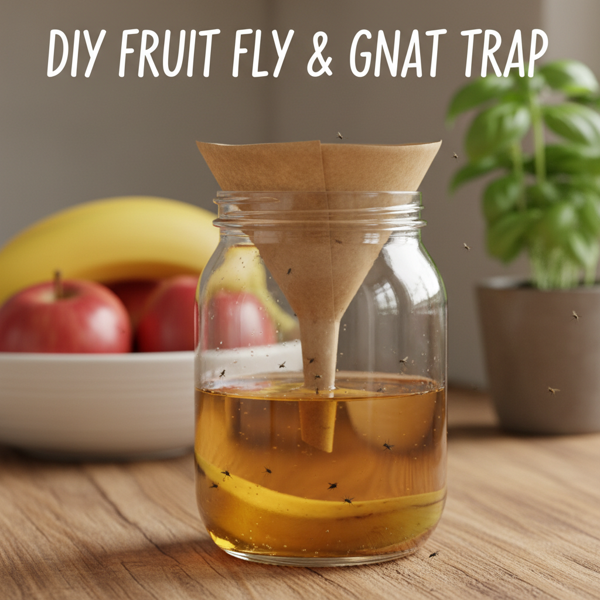
Struggling with pesky fruit flies or gnats hovering around your kitchen? This easy DIY trap is your perfect solution! Utilizing the enticing aroma of apple cider vinegar, these traps lure in the pesky insects while the added dish soap traps them effectively. With just a few ingredients you likely already have at home, you can create a practical, non-toxic trap that helps keep your kitchen clean and fresh. The best part? This method is not only economical but also eco-friendly—no need for chemical sprays or store-bought traps! Just set it up, watch it work, and enjoy a fly-free environment!
N/A
Servings
N/A
Calories
3
Ingredients
Ingredients
apple cider vinegar
3-4 tablespoons (Pour directly into the container)
white paper
1 piece (Rolled into a cone shape)
liquid dish soap
1-2 drops (Add to vinegar mixture)
Instructions
1
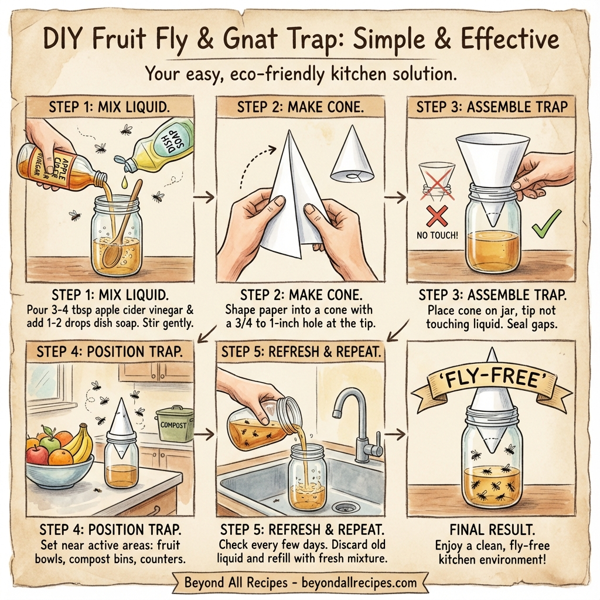
Pour 3 to 4 tablespoons of apple cider vinegar into a glass or jar. Add 1 to 2 drops of liquid dish soap and gently stir to combine. The dish soap breaks the surface tension of the vinegar, ensuring that flies can't escape once they land.
2
Take a piece of white paper and shape it into a cone with a 3/4 to 1-inch hole at the bottom. Make sure the opening is large enough for the flies to enter but small enough to trap them inside.
3
Place the cone on top of the glass or jar, ensuring that the tip of the cone does not touch the vinegar. Adjust the cone if necessary to eliminate any gaps between the paper and the rim of the glass.
4
Position your trap near areas where flies are most active, such as fruit bowls, compost bins, or kitchen counters.
5
Every couple of days, check the trap. When the vinegar loses its potency (you'll notice a reduction in fly activity), discard the old liquid and refill with fresh apple cider vinegar and a drop of dish soap. Repeat as necessary.
Nutrition Information
Frequently Asked Questions
Frequently Asked Questions
How do I make a DIY fruit fly trap?
To make the trap, pour 3 to 4 tablespoons of apple cider vinegar into a jar, add 1 to 2 drops of liquid dish soap, stir gently, and top it with a paper cone.
Why is apple cider vinegar used in this trap?
Apple cider vinegar has a sweet, fermented aroma that effectively lures fruit flies and gnats into the trap.
What is the purpose of adding dish soap?
The liquid dish soap breaks the surface tension of the vinegar, which ensures that flies sink and cannot escape once they land on the liquid.
How much apple cider vinegar is needed?
The recipe calls for 3 to 4 tablespoons of apple cider vinegar per trap.
What size should the hole in the paper cone be?
The hole at the bottom of the paper cone should be between 3/4 to 1 inch in diameter.
How does the paper cone work to trap flies?
The cone shape makes it easy for flies to enter the jar but very difficult for them to find the small opening to fly back out.
Should the tip of the paper cone touch the vinegar?
No, you should adjust the cone to ensure the tip does not touch the liquid mixture.
Where is the best place to put the fruit fly trap?
Position the trap near active areas like fruit bowls, compost bins, or kitchen counters.
How often should I refresh the trap liquid?
Check the trap every couple of days and refill it with fresh vinegar and soap when the mixture loses its potency or fly activity decreases.
Is this DIY trap safe for use in kitchens?
Yes, this trap is non-toxic and uses food-grade ingredients, making it safe for kitchen environments.
Does this trap work for gnats as well?
Yes, the combination of apple cider vinegar and dish soap is effective for both fruit flies and gnats.
Can I use white vinegar instead of apple cider vinegar?
Apple cider vinegar is preferred for its sweet scent, but you can try white vinegar if you add a pinch of sugar to attract the flies.
How many drops of dish soap should I add?
Only 1 to 2 drops of liquid dish soap are needed to break the surface tension.
Do I need to stir the vinegar and soap mixture?
Yes, stir gently to combine the soap and vinegar without creating too many bubbles.
What kind of paper should I use for the cone?
A standard piece of white paper works perfectly for creating the funnel cone.
Is this method eco-friendly?
Yes, it is an eco-friendly and economical alternative to chemical sprays or store-bought plastic traps.
How do I prevent gaps between the paper and the jar?
Adjust the cone as you place it on the rim to eliminate any gaps where flies might escape.
What should I do with the old liquid when cleaning the trap?
Discard the old liquid down the drain, wash the jar, and refill it with a fresh mixture.
Will the trap work without the paper cone?
While the soap helps trap them, the cone provides an extra layer of security to prevent flies from flying away before they land.
How many traps should I set up?
You can set up multiple traps if you have several areas of activity, such as one by the sink and one by the trash can.
Does the color of the paper matter?
White paper is suggested, but the shape and the scent of the vinegar are the most important factors.
How long does it take for the trap to start working?
The trap starts working as soon as the flies are attracted to the scent, usually within a few hours.
Can I use a plastic bottle instead of a glass jar?
Yes, any container that can hold the liquid and support the paper cone will work.
What happens if the vinegar gets on the paper cone?
If the paper gets wet, it may lose its shape or allow flies to crawl out; it is best to replace the paper if it gets soaked.
Can I use scented dish soap?
Yes, any liquid dish soap will work regardless of its scent.
Is this trap effective against large houseflies?
This specific trap is designed for small pests like fruit flies and gnats rather than large houseflies.
Why are there still flies if I have a trap?
The trap helps reduce the population, but you should also remove the source of the infestation, such as overripe fruit or damp soil.
Can I use red wine vinegar?
Yes, red wine vinegar also has a sweet, fermented scent that can attract fruit flies.
Is this trap child and pet friendly?
While the ingredients are non-toxic, it is best to keep the trap out of reach of children and pets to avoid spills.
How do I know when the vinegar has lost its potency?
You will notice a reduction in fly activity around the trap or the smell of the vinegar will become less sharp.