Deluxe Maki Sushi Rice
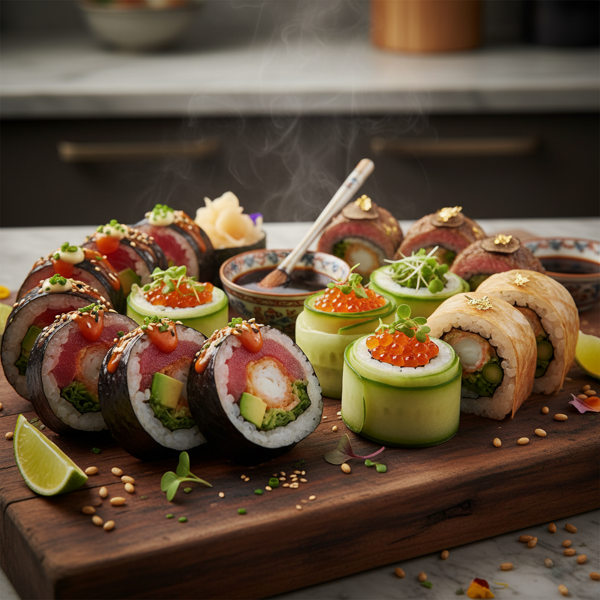
Experience the authentic taste of sushi with this Deluxe Maki Sushi Rice recipe, perfect for creating delicious sushi rolls right at home. This recipe utilizes essential Japanese short-grain rice, seasoned with vinegar, mirin, sugar, and salt for that signature flavor and glossy texture. With enough rice to make 10 rolls (5 nori sheets), this dish is ideal for lunch or snacks, and is sure to impress your family and friends. Grab your favorite fillings and rolling mat, and let’s get rolling!
N/A
Servings
N/A
Calories
5
Ingredients

Ingredients
Short-grain sushi rice
2 1/2 cups (Rinsed until water runs clear)
Rice vinegar
100 ml (N/A)
Mirin
60 ml (N/A)
Caster sugar
3 teaspoons (N/A)
Salt
2 teaspoons (N/A)
Instructions
1
Begin by rinsing the 2 1/2 cups of short-grain sushi rice under cold running water until the water runs clear. This removes excess starch for optimal texture.
2
Transfer the rinsed rice into the bowl of your rice cooker, and add the amount of water as per your rice cooker’s measurements. For this recipe, that’s usually about 4 rice cooker 'cups' of water.
3
Set your rice cooker to the 'Cook' setting and allow the rice to steam until tender and fluffy.
4
While the rice is cooking, prepare the seasoning by combining 100 ml of rice vinegar, 60 ml of mirin, 3 teaspoons of caster sugar, and 2 teaspoons of salt in a bowl. Stir until the sugar and salt have fully dissolved.
5
Once the rice cooker switches to 'Warm', let the rice sit for an additional 5 minutes to ensure even cooking.
6
Carefully remove the rice cooker bowl and place it on a trivet on your kitchen counter. Using a small plastic rice paddle, drizzle the prepared dressing over the rice in a spiral pattern, beginning from the outer edges.
7
As you pour the dressing, gently fold and stir the rice with the paddle to evenly distribute the seasoning. It's best to have a friend fan the rice or position a low-setting electric fan nearby to cool the rice down while you stir. This will give the rice a beautiful shine.
8
Continue mixing until all the dressing is incorporated and the rice has cooled to room temperature, achieving a glossy finish.
Nutrition Information
Frequently Asked Questions
Frequently Asked Questions
What is Deluxe Maki Sushi Rice?
Deluxe Maki Sushi Rice is a specially seasoned Japanese short-grain rice designed for creating authentic sushi rolls at home.
How much rice is required for this recipe?
The recipe requires 2 1/2 cups of short-grain sushi rice.
What type of rice should I use for sushi?
You should use Japanese short-grain sushi rice to achieve the correct sticky texture and flavor.
How many sushi rolls can I make with this recipe?
This recipe provides enough rice to make approximately 10 sushi rolls using 5 nori sheets.
Why do I need to rinse the sushi rice?
Rinsing the rice under cold water removes excess starch, which ensures the rice has an optimal texture rather than being too gummy.
How much water is needed for the rice cooker?
For 2 1/2 cups of rice, you should generally add water up to the 4-cup mark in your rice cooker.
What ingredients are in the sushi rice seasoning?
The seasoning is a blend of rice vinegar, mirin, caster sugar, and salt.
How much rice vinegar is used?
The recipe calls for 100 ml of rice vinegar.
How much mirin is included in the dressing?
You will need 60 ml of mirin for the sushi rice dressing.
How much sugar should I add to the sushi rice?
Add 3 teaspoons of caster sugar to the seasoning mixture.
How much salt is needed for the seasoning?
The recipe requires 2 teaspoons of salt.
How long should the rice sit after cooking?
Once the rice cooker switches to the warm setting, let the rice sit for 5 minutes to ensure even cooking.
How do I apply the seasoning to the rice?
Drizzle the prepared dressing over the rice in a spiral pattern, starting from the outer edges.
What tool should I use to mix the sushi rice?
Use a small plastic rice paddle to gently fold and stir the rice without smashing the grains.
Why is fanning the rice important?
Fanning the rice while mixing cools it down quickly and helps achieve a beautiful, glossy shine.
At what temperature should the rice be before rolling?
The rice should be cooled to room temperature before you begin making your sushi rolls.
Can I use this rice for lunch or snacks?
Yes, this maki sushi rice is ideal for preparing both lunch meals and quick snacks.
What gives the rice its signature glossy texture?
The combination of the vinegar-based dressing and the fanning process while mixing creates the signature glossy look.
Is this a difficult recipe to make?
No, it is considered an easy recipe that allows you to enjoy authentic Japanese flavors at home.
How do I know when the rice is done cooking?
The rice is done when it is tender, fluffy, and the rice cooker has finished its cycle.
Should the water be clear when rinsing the rice?
Yes, you should rinse the rice until the water runs clear to ensure the starch is removed.
What is the best way to stir the dressing into the rice?
Gently fold the rice with a paddle while pouring the dressing to ensure every grain is evenly seasoned.
Can I use regular table sugar instead of caster sugar?
While caster sugar dissolves more easily, you can use regular sugar as long as you stir until it is fully dissolved.
Do I need any special equipment for this recipe?
You will need a rice cooker, a bowl, a rice paddle, and ideally a fan to cool the rice.
What tags are associated with this recipe?
This recipe is tagged under sushi rice, maki sushi, Japanese cuisine, lunch, snacks, and homemade sushi.
How do I ensure the seasoning is distributed evenly?
Pouring in a spiral pattern and using a folding motion with the paddle helps distribute the seasoning perfectly.
Can children help with this recipe?
Yes, children can help with fanning the rice or rinsing the grains, making it a fun family activity.
How many nori sheets does this recipe cover?
This recipe provides enough rice to cover 5 standard nori sheets.
What should the consistency of the cooked rice be?
The rice should be tender and fluffy, with a sticky quality that holds together for sushi rolling.
Is mirin necessary for this recipe?
Mirin is a key ingredient that provides sweetness and depth of flavor to the sushi rice dressing.