Delightful Crab Risotto with Scallions and Nori
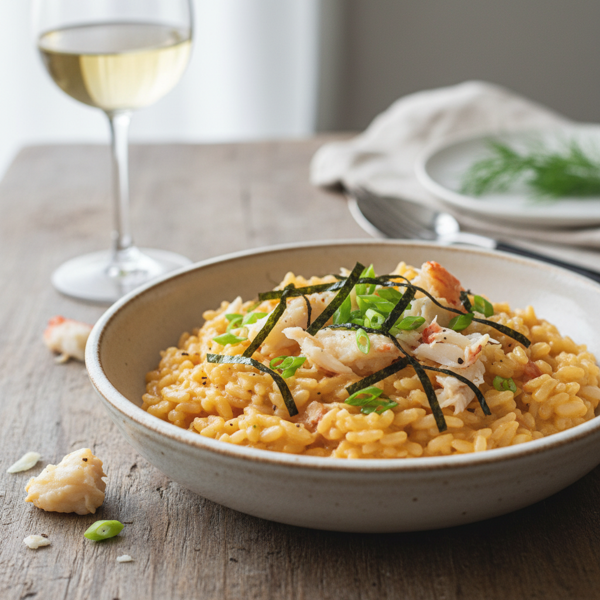
Indulge in this rich and flavorful Crab Risotto, also known as Kani Zosui, a comforting Japanese dish that combines tender rice, succulent crab meat, and the umami essence of dashi broth. Perfect for sharing, this recipe is a delightful fusion of textures and tastes, topped with fresh scallions and delicate nori. Ideal for a cozy family dinner or an impressive gathering, this dish showcases the sweetness of crab and the warmth of a traditional Japanese soup-inspired risotto.
N/A
Servings
N/A
Calories
10
Ingredients

Ingredients
hot cooked rice
4 cups (Cooked and kept warm)
canned crabmeat
7 ounces (Flaked and cleaned)
eggs
4 (Beaten)
scallion
1 (Chopped finely)
dashi
4 cups (Hot)
mirin
2 tablespoons (None)
salt
2 teaspoons (None)
light soy sauce
3 tablespoons (None)
fresh ginger juice
1 tablespoon (Juiced from fresh ginger)
nori
1/4 sheet (Cut into small pieces)
Instructions
1
Begin by rinsing and draining the canned crabmeat, discarding any white tendons. Flake the crabmeat into bite-sized pieces and set aside.
2
In a small bowl, beat the eggs until well combined. Chop the scallion finely, separating the white and green parts.
3
In a large pot, combine the dashi broth, mirin, salt, and light soy sauce. Heat over medium-high heat until the mixture comes to a boil.
4
Once boiling, gently stir in the hot cooked rice and flaked crab meat. Allow the mixture to boil again, then reduce the heat to medium and cook for 2 to 3 minutes, stirring occasionally.
5
After cooking for a few minutes, add the fresh ginger juice. Next, slowly pour in the beaten eggs in a circular motion over the rice mixture to create ribbons of egg.
6
When the eggs are halfway cooked, cover the pot and remove it from the heat. Let it rest for about 5 minutes to allow the residual heat to finish cooking the eggs.
7
Spoon the risotto into individual soup bowls. Finally, garnish with the chopped green parts of the scallion and sprinkle pieces of nori on top for a burst of flavor and a beautiful presentation.
Nutrition Information
Frequently Asked Questions
Frequently Asked Questions
What is the traditional name for this Crab Risotto?
This dish is also known as Kani Zosui, a traditional Japanese soup-inspired rice dish.
What type of crabmeat is recommended for this recipe?
The recipe calls for 7 ounces of canned crabmeat, which should be flaked and cleaned.
How should I prepare the canned crabmeat before cooking?
You should rinse and drain the canned crabmeat, making sure to discard any white tendons before flaking it into bite-sized pieces.
What kind of broth is used as the base?
The base of the risotto is 4 cups of hot dashi broth.
Can I use a substitute for dashi?
While dashi provides the traditional umami flavor, you could use a light fish or vegetable stock if dashi is unavailable.
How much rice is needed for this recipe?
The recipe requires 4 cups of hot cooked rice.
Should the rice be freshly cooked?
Yes, the recipe specifically calls for hot cooked rice to be stirred into the boiling broth.
How many eggs are used in the risotto?
Four eggs are beaten and added to the mixture to create ribbons.
What is the purpose of adding the eggs in a circular motion?
Pouring the beaten eggs in a circular motion helps create delicate ribbons of egg throughout the rice.
How long do I cook the rice and crab mixture?
Once the rice and crab are added and the mixture boils, reduce the heat and cook for 2 to 3 minutes.
When do I add the fresh ginger juice?
The ginger juice is added after the rice and crab have cooked for a few minutes, just before pouring in the eggs.
How do I get fresh ginger juice?
You can obtain it by grating fresh ginger and squeezing the pulp to extract the liquid juice.
What seasonings are added to the dashi broth?
The broth is seasoned with 2 tablespoons of mirin, 2 teaspoons of salt, and 3 tablespoons of light soy sauce.
Why is light soy sauce used instead of dark soy sauce?
Light soy sauce is typically used to preserve the color of the dish while providing the necessary saltiness.
What should I do after adding the eggs?
When the eggs are halfway cooked, cover the pot, remove it from the heat, and let it rest for 5 minutes.
Why is it important to let the pot rest off the heat?
Resting allows the residual heat to finish cooking the eggs gently without overcooking the other ingredients.
How are the scallions prepared?
The scallion is chopped finely, with the white parts used during cooking and the green parts reserved for garnish.
How much nori is needed for garnishing?
The recipe suggests using 1/4 sheet of nori, cut into small pieces.
Is this dish considered a soup or a risotto?
It is a fusion dish; while called a risotto, it is inspired by Japanese Zosui, which is a soup-like rice dish.
What flavor profile does this dish have?
It features the sweetness of crab combined with the savory umami of dashi and the warmth of ginger.
Can I use fresh crab instead of canned?
Yes, fresh cooked crabmeat can be used as a delicious alternative to canned crabmeat.
How many servings does this recipe provide?
While not specified, 4 cups of rice and 4 cups of broth typically serve 4 to 6 people.
Is this recipe easy to make?
Yes, it is considered an easy recipe that is great for quick meals or impressive gatherings.
Can I add other vegetables to the Kani Zosui?
While this version is traditional, you could add small amounts of shiitake mushrooms or spinach for extra nutrition.
What is the best way to serve the risotto?
Spoon it into individual soup bowls and garnish immediately with scallions and nori.
Is mirin necessary for this recipe?
Mirin adds a distinct sweetness and glaze to the broth which is characteristic of Japanese cuisine.
Does this dish contain dairy?
No, this recipe is dairy-free as it uses dashi broth and eggs rather than cream or butter.
What is the texture of the finished dish?
The texture is comforting and soft, similar to a thick rice soup or a moist porridge.
Can I use brown rice instead of white rice?
White rice is traditional for Zosui for its softness, but brown rice can be used if you prefer a nuttier texture and longer cooking time.
How should I store leftovers?
Store leftovers in an airtight container in the fridge; note that the rice will continue to absorb liquid and may need a splash of broth when reheating.