Delightful Canadian Scones
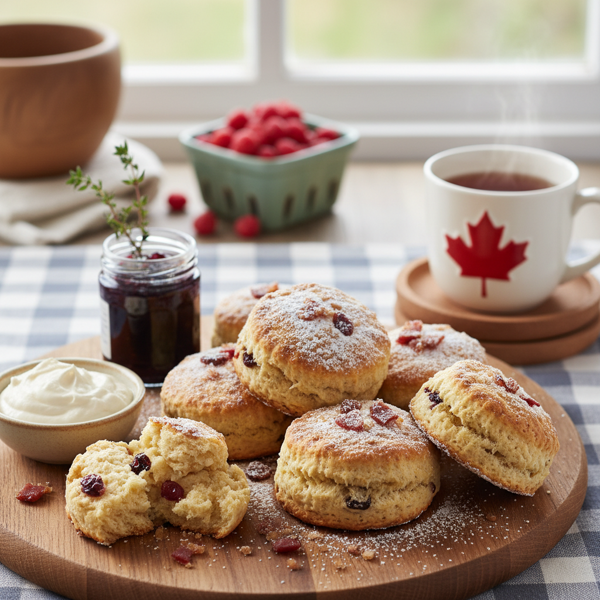
Indulge in the rich, buttery goodness of these Delightful Canadian Scones, perfect for afternoon tea or a cozy breakfast. This recipe, inspired by Canadian Living, combines simple ingredients to create a tender, flaky biscuit that pairs wonderfully with jam, clotted cream, or simply enjoyed on their own. Whether you’re hosting a brunch or enjoying a quiet moment with coffee, these scones are sure to impress. Easy to make and even easier to eat, these delightful treats are a must-try for any baking enthusiast.
N/A
Servings
150
Calories
8
Ingredients
Ingredients
all-purpose flour
2 1/4 cups (measured)
granulated sugar
2 tablespoons (measured)
baking powder
2 1/2 teaspoons (measured)
baking soda
1/2 teaspoon (measured)
salt
1/2 teaspoon (measured)
cold butter
1/2 cup (cubed)
buttermilk
1 cup (measured)
large egg
1 (lightly beaten for brushing)
Instructions
1
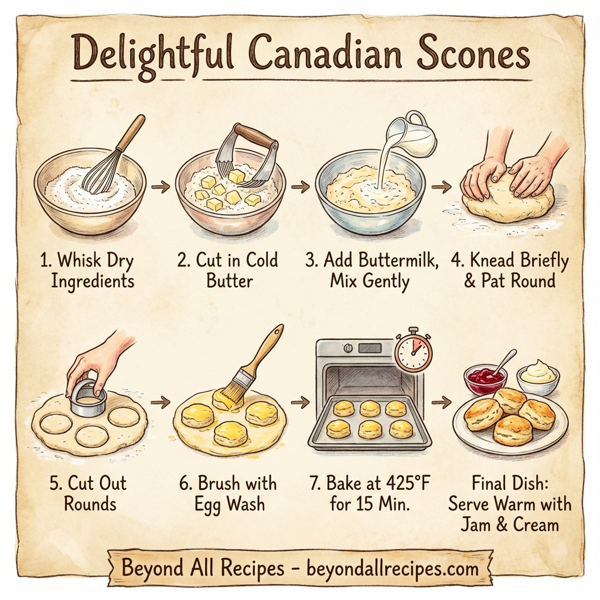
Preheat your oven to 425°F (220°C) and line a rimless baking sheet with parchment paper or a silicone mat. Alternatively, dust it lightly with flour.
2
In a large mixing bowl, whisk together the all-purpose flour, granulated sugar, baking powder, baking soda, and salt until well combined.
3
Using a pastry blender or your fingertips, cut the cold, cubed butter into the flour mixture until it resembles coarse crumbs. Make sure to work quickly to keep the butter cold.
4
Pour the buttermilk over the dry ingredients and use a fork to gently combine until a soft, slightly sticky dough forms. Do not overmix.
5
Transfer the dough to a lightly floured surface and gently knead it 10 times to bring it together. If the dough is very sticky, sprinkle a little extra flour as needed.
6
Pat or roll the dough into a generous ½-inch thick round. Using a 2-inch cutter, cut out rounds and place them on the prepared baking sheet, ensuring they are spaced closely together.
7
Gather any dough scraps, gently re-pat them, and cut out additional rounds. You may also form a final scone with the remaining scraps for a 'baker’s scone.'
8
Brush the tops of the scones with the lightly beaten egg to give them a beautiful golden color when baked.
9
Bake in the center of the preheated oven for about 15 minutes, or until the scones are golden brown. Allow to cool on the pan for 5 minutes before transferring to a wire rack to cool completely.
10
For best results when cutting out scones, dip the cutter into flour before each cut to prevent sticking, and try to cut the rounds with minimal spacing to avoid toughening the dough.
Nutrition Information
7.5
Fat
16.67
Carbs
2.5
Protein
Frequently Asked Questions
Frequently Asked Questions
What is this recipe?
The recipe is for Delightful Canadian Scones, which are rich, buttery, tender, and flaky biscuits.
What is the inspiration for this scone recipe?
This recipe is inspired by Canadian Living.
What are the suggested serving pairings for these scones?
These scones pair wonderfully with jam, clotted cream, or can be enjoyed on their own with coffee or tea.
What temperature should I preheat my oven to?
Preheat your oven to 425 degrees Fahrenheit (220 degrees Celsius).
How should I prepare the baking sheet?
Line a rimless baking sheet with parchment paper or a silicone mat, or alternatively dust it lightly with flour.
Which dry ingredients are whisked together?
Whisk together the all-purpose flour, granulated sugar, baking powder, baking soda, and salt.
How should the butter be prepared before adding it to the flour?
The butter should be cold and cut into cubes.
What tool should I use to combine the butter and flour?
Use a pastry blender or your fingertips to cut the butter into the flour mixture.
What should the mixture look like after adding the butter?
The mixture should resemble coarse crumbs.
Why is it important to work quickly with the butter?
Working quickly helps keep the butter cold, which is essential for a flaky texture.
What is the liquid component of the dough?
The dough uses 1 cup of buttermilk.
How should the buttermilk be mixed in?
Pour it over the dry ingredients and use a fork to gently combine until a soft, slightly sticky dough forms.
Is it okay to overmix the dough?
No, you should not overmix the dough.
How many times should the dough be kneaded?
Gently knead the dough 10 times to bring it together.
What should I do if the dough is too sticky during kneading?
Sprinkle a little extra flour as needed if the dough is very sticky.
How thick should the dough be rolled or patted?
The dough should be a generous 1/2-inch thick.
What size cutter is recommended for the scones?
A 2-inch cutter is recommended.
How should the scone rounds be placed on the baking sheet?
Place them closely together on the prepared baking sheet.
What should I do with the remaining dough scraps?
Gather the scraps, gently re-pat them, and cut out additional rounds.
What is a baker's scone?
A baker's scone is a final scone formed from the very last bits of remaining scraps.
What is used to glaze the tops of the scones?
Brush the tops with a lightly beaten large egg.
Why are the scones brushed with an egg?
The egg wash gives the scones a beautiful golden color when baked.
Where should the scones be placed in the oven?
Bake the scones in the center of the preheated oven.
How long do the scones need to bake?
They should bake for about 15 minutes.
How do I know when the scones are done?
They are done when they are golden brown.
How long should the scones cool on the pan?
Allow them to cool on the pan for 5 minutes before moving them.
Where should the scones finish cooling?
Transfer them to a wire rack to cool completely.
How can I prevent the cutter from sticking to the dough?
Dip the cutter into flour before each cut to prevent sticking.
Why should the rounds be cut with minimal spacing?
Cutting with minimal spacing helps avoid toughening the dough.
What is the calorie count per scone?
Each scone contains approximately 150 calories.