Deliciously Sweet German Fruit Flan
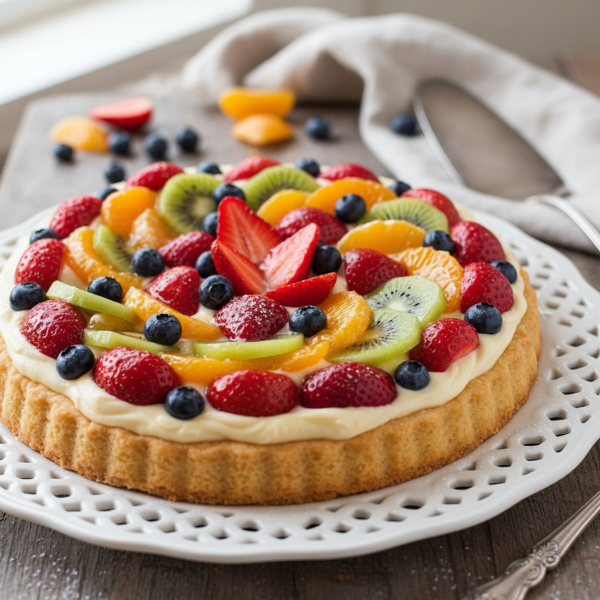
Indulge in the classic flavors of a Deliciously Sweet German Fruit Flan, a dessert that beautifully showcases the essence of fresh seasonal fruits atop a tender sponge cake base. This traditional delicacy, also known as Obst Kuchen, is often enjoyed during afternoon coffee hours in Germany, served alongside generous dollops of freshly whipped cream. The flan features a light sponge cake that melts in your mouth, complemented by a silky layer of custard and artfully arranged fresh fruits such as strawberries, kiwis, apricots, cherries, and more. To add a glossy finish, a fruit glaze made from homemade or store-bought jams seals in the freshness, making it a delightful centerpiece for any gathering. Perfect for special occasions or simple family treats, this recipe is adapted from my dear friend Maite C's family recipe shared during our time at Ft. Campbell KY, and it continues to bring joy to our gatherings.
N/A
Servings
N/A
Calories
11
Ingredients
Ingredients
margarine or butter
1/4 lb (softened)
eggs
2 (separated)
sugar
1/4 lb (150 grams or 1/2 cup plus 3 tablespoons)
flour
1/4 lb (150 grams or 1/2 cup plus 3 tablespoons)
dry yeast
1 packet (1/4 ounce)
vanilla extract
1 teaspoon (or 1 tablespoon vanilla sugar)
milk
1/2 cup (approximate)
prepared custard
2/3 cup (optional)
fresh fruit
2-3 cups (such as strawberries, kiwis, apricots, and cherries)
fruit jam
1/2 cup (mixed with a little water, for glazing)
freshly whipped cream
to serve
Instructions
1
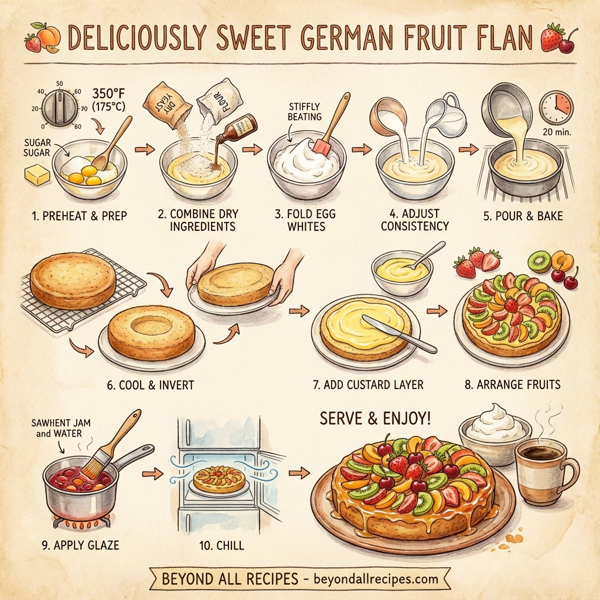
Preheat your oven to 350°F (175°C).
2
In a large mixing bowl, beat the egg yolks until light and fluffy. Gradually add in the sugar and softened margarine (or butter), mixing well until smooth.
3
Sprinkle in the dry yeast and flour, then add the vanilla extract (or vanilla sugar) and stir until all ingredients are well combined.
4
In a separate clean bowl, beat the egg whites until they form stiff peaks. Gently fold the whipped egg whites into the flour mixture, taking care to keep the batter light and airy.
5
Gradually mix in enough milk to achieve a soft and pourable batter consistency.
6
Grease a 10-inch German flan pan (or torte/springform pan) with butter. Pour the batter into the pan, spreading it evenly with a spatula.
7
Bake in the preheated oven for about 20 minutes, or until a toothpick inserted in the center comes out clean.
8
Once baked, remove the cake from the oven and allow it to cool in the pan on a wire rack for 15 minutes. Carefully invert the flan onto a cake plate or serving platter.
9
If using, spread a thin layer of prepared custard over the cooled sponge cake before adding the fresh fruits.
10
Arrange an assortment of fresh fruits atop the cake, such as strawberries, kiwis, apricots, cherries, and any seasonal favorites.
11
In a small saucepan, combine fruit jam with a little water over low heat until smooth. Brush the glaze over the arranged fruit to provide a shiny finish.
12
Chill the completed fruit flan in the refrigerator until ready to serve.
13
When serving, add generous dollops of freshly whipped cream alongside each slice, and enjoy with a warm cup of coffee!
Nutrition Information
Frequently Asked Questions
Frequently Asked Questions
What is German Fruit Flan?
German Fruit Flan, also known as Obst Kuchen, is a traditional dessert featuring a light sponge cake base topped with custard and fresh seasonal fruits.
What is the common German name for this dish?
This dish is commonly known in Germany as Obst Kuchen.
Where did this specific recipe originate?
This recipe was adapted from a family recipe shared by the creator's friend, Maite C., during their time at Ft. Campbell, KY.
At what temperature should I bake the flan?
The flan should be baked in a preheated oven at 350 degrees Fahrenheit or 175 degrees Celsius.
What type of pan is best for this recipe?
A 10-inch German flan pan is ideal, but a torte or springform pan can also be used.
How should the eggs be prepared?
The eggs must be separated; yolks are beaten with sugar and fat, while whites are beaten to stiff peaks and folded in later.
Can I use butter instead of margarine?
Yes, you can use either softened margarine or softened butter for the sponge cake base.
How much flour is required for the cake?
The recipe calls for 1/4 pound of flour, which is approximately 150 grams or 1/2 cup plus 3 tablespoons.
Does the recipe use yeast?
Yes, the recipe uses one packet of dry yeast, which is about 1/4 ounce.
What can I use if I do not have vanilla extract?
You can substitute 1 teaspoon of vanilla extract with 1 tablespoon of vanilla sugar.
How do I ensure the batter remains light and airy?
Gently fold the whipped egg whites into the flour mixture to maintain the airiness of the batter.
How much milk should be added to the batter?
Add approximately 1/2 cup of milk gradually until you achieve a soft and pourable consistency.
How long does the baking process take?
The cake typically bakes for about 20 minutes.
How can I tell if the cake is fully cooked?
The cake is done when a toothpick inserted into the center comes out clean.
How long should the flan cool before being removed from the pan?
Allow the cake to cool in the pan on a wire rack for 15 minutes before inverting it onto a serving platter.
Is the custard layer mandatory?
No, spreading a thin layer of prepared custard over the sponge cake is an optional step before adding the fruit.
What fruits are recommended for the topping?
Strawberries, kiwis, apricots, and cherries are recommended, but any seasonal favorite will work.
How much fruit is needed for one flan?
You will need roughly 2 to 3 cups of fresh fruit to cover the top of the cake.
How is the fruit glaze made?
The glaze is made by combining 1/2 cup of fruit jam with a little water in a saucepan over low heat until smooth.
What is the purpose of the fruit glaze?
The glaze provides a glossy, shiny finish to the fruit and helps seal in its freshness.
Can I use store-bought jam for the glaze?
Yes, either homemade or store-bought jams can be used to create the fruit glaze.
When should the flan be chilled?
The completed fruit flan should be chilled in the refrigerator after assembly until it is ready to be served.
What is the traditional way to serve German Fruit Flan?
It is traditionally served with generous dollops of freshly whipped cream and a warm cup of coffee.
Is this dessert suitable for special occasions?
Yes, it is considered a delightful centerpiece for gatherings, special occasions, or simple family treats.
What is the texture of the sponge cake base?
The sponge cake base is designed to be light and melt-in-your-mouth tender.
Do I need to grease the pan?
Yes, you should grease the 10-inch pan with butter before pouring in the batter.
Can I use frozen fruit instead of fresh?
The recipe specifically calls for fresh seasonal fruits to ensure the best texture and essence for the flan.
How many servings does this recipe provide?
While not explicitly stated, a 10-inch flan typically serves 8 to 10 people.
What consistency should the cake batter be?
The batter should be soft and pourable once the milk is incorporated.
Can the flan be made in a springform pan?
Yes, a springform pan is a suitable alternative if you do not have a specific German flan or torte pan.