Deliciously Soft Whole Wheat Bread
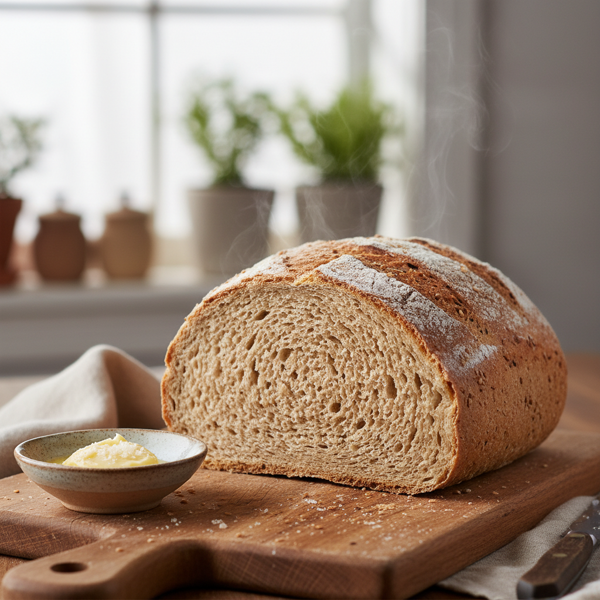
Indulge in the wholesome goodness of homemade bread with this easy, low-fat whole wheat recipe. Perfect for any bread machine, this recipe combines two types of flour for a delightful texture that rises beautifully every time. With just a handful of simple ingredients, you'll enjoy a nutritious loaf that is perfect for sandwiches, toast, or simply enjoyed warm with a pat of butter. Whether you're a novice or an experienced bread maker, this recipe will deliver consistent results, making it a staple in your kitchen. Bake a delicious loaf that’s not only satisfying but also healthy, packed with fiber and nutrients to fuel your day!
N/A
Servings
N/A
Calories
7
Ingredients
Ingredients
water
1 1/3 cups (Warm to lukewarm temperature)
butter or margarine
2 tablespoons (Softened)
sugar
2 tablespoons (Granulated)
salt
1 teaspoon (Fine sea salt)
whole wheat flour
2 cups (Measured)
white bread flour
2 cups (Measured)
bread machine yeast
2 teaspoons (Active dry yeast)
Instructions
1
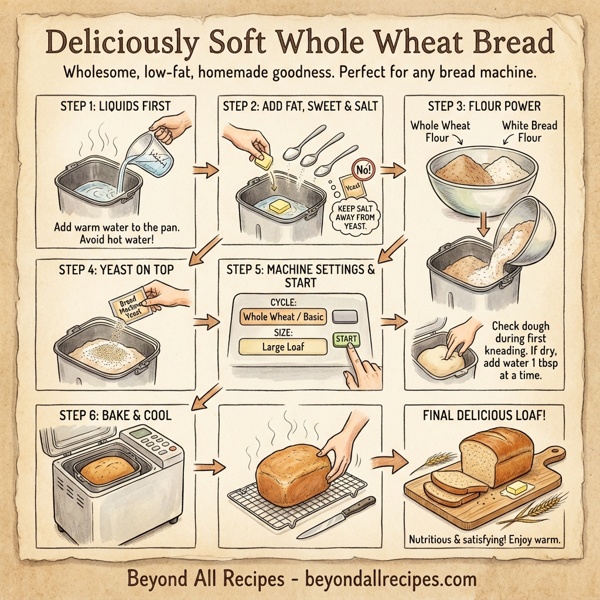
Start by adding the warm water to the bread machine pan. Make sure the water is not too hot to avoid killing the yeast.
2
Next, add the softened butter or margarine, followed by the sugar and salt, making sure to keep the salt away from the yeast.
3
In a separate bowl, combine the whole wheat flour and white bread flour before pouring them into the bread machine.
4
Finally, sprinkle the bread machine yeast on top of the flour mixture.
5
Select the whole wheat or basic cycle on your bread machine, ensuring it's set for a large loaf. If using an older machine, opt for the powdered milk/wheat setting.
6
Press start and allow the bread machine to work its magic. Keep an eye on the dough during the first kneading phase; if it seems too dry, add a little more water (one tablespoon at a time).
7
Once the baking cycle is complete, carefully remove the bread from the pan and let it cool on a wire rack before slicing.
Nutrition Information
Frequently Asked Questions
Frequently Asked Questions
What is the main benefit of this whole wheat bread recipe?
This recipe provides a nutritious, high-fiber, and low-fat homemade bread that is perfect for sandwiches or toast.
Is this bread recipe suitable for a bread machine?
Yes, this recipe is specifically designed to be easy and consistent when using any standard bread machine.
How many types of flour are used in this bread?
This recipe uses two types of flour: whole wheat flour and white bread flour, to achieve a perfect rise and texture.
What temperature should the water be?
The water should be warm to lukewarm to ensure the yeast activates properly without being killed by excessive heat.
Can I use margarine instead of butter?
Yes, you can use either 2 tablespoons of softened butter or margarine in this recipe.
How much yeast is required for this loaf?
The recipe calls for 2 teaspoons of bread machine yeast or active dry yeast.
What is the first step in the bread machine process?
Start by adding the warm water to the bread machine pan as the base for your ingredients.
Why is salt kept away from the yeast?
Salt can inhibit or kill yeast if they come into direct contact before the mixing process begins.
Should I mix the flours before adding them to the machine?
Yes, it is recommended to combine the 2 cups of whole wheat flour and 2 cups of white bread flour in a separate bowl first.
Which bread machine cycle should I select?
You should select the whole wheat or basic cycle on your machine, ensuring it is set for a large loaf.
What setting should be used for older bread machines?
If you are using an older bread machine, the powdered milk or wheat setting is the best option.
What should I look for during the first kneading phase?
Keep an eye on the dough to ensure it isn't too dry; it should form a smooth, elastic ball.
How can I fix dough that is too dry during kneading?
If the dough appears too dry, add more water one tablespoon at a time until the consistency improves.
How should the bread be cooled after baking?
Carefully remove the bread from the pan and let it cool completely on a wire rack before slicing.
Is this bread considered healthy?
Yes, it is a healthy choice as it is low-fat and packed with fiber and nutrients from the whole wheat flour.
How many ingredients are needed for this recipe?
There are 7 simple ingredients: water, butter, sugar, salt, whole wheat flour, white bread flour, and yeast.
What amount of sugar is used in this recipe?
The recipe requires 2 tablespoons of granulated sugar.
What type of salt is recommended?
The recipe calls for 1 teaspoon of fine sea salt.
How much water is used for the dough?
You will need 1 1/3 cups of warm water.
Is this recipe good for beginners?
Absolutely, the instructions are simple and designed to deliver consistent results for novice bread makers.
Can I eat this bread while it is still warm?
Yes, it is delicious enjoyed warm, perhaps with a pat of butter, though it is easier to slice once cooled.
What size loaf does this recipe make?
This recipe is designed to produce a single large loaf of bread.
Does this bread have a soft texture?
Yes, the combination of white bread flour with whole wheat flour ensures the loaf is deliciously soft.
Is there any preparation needed for the butter?
The butter or margarine should be softened to room temperature before being added to the pan.
How should the yeast be added?
The yeast should be sprinkled on top of the flour mixture as the final ingredient.
Can this bread be used for toast?
Yes, the texture of this whole wheat bread makes it excellent for toasting.
Is this a low-fat bread recipe?
Yes, this recipe is specifically noted for being a low-fat whole wheat bread option.
How much whole wheat flour is used?
The recipe uses 2 cups of measured whole wheat flour.
How much white bread flour is used?
The recipe uses 2 cups of measured white bread flour.
What is the texture of the finished bread?
The finished bread has a delightful texture that is both soft and hearty, making it a kitchen staple.