Delectable Caramel-Covered Apples
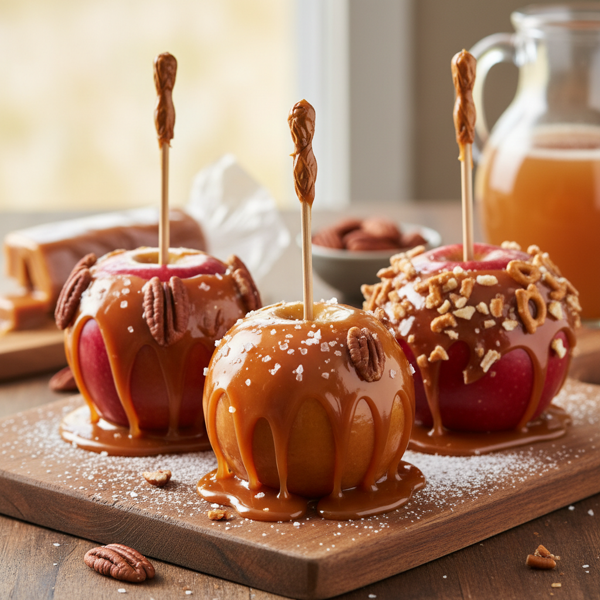
Indulge in the ultimate sweet treat with our Delectable Caramel-Covered Apples! These luscious apples are enveloped in a luxurious, homemade caramel sauce that's creamy, chewy, and irresistibly sweet. Once coated, you can personalize your apples by rolling them in your choice of crunchy nuts or colorful sprinkles. This delightful activity is perfect for two—one person can handle the caramel while the other adds their favorite toppings! A classic favorite for fall, Halloween, or simply as a decadent snack, these caramel apples will delight friends and family alike. Get ready to experience a delightful combination of fresh fruit and rich caramel in every delightful bite!
N/A
Servings
257
Calories
9
Ingredients
Ingredients
Apples
9 (9 large or 10-12 medium, washed and dried)
Wooden sticks
9 (for handles, inserted into apples)
Granulated sugar
1 cup (for the caramel sauce)
Brown sugar
1 cup (packed, for the caramel sauce)
Unsalted butter
3/4 cup (for the caramel sauce)
Sweetened condensed milk
300 ml (one can, for the caramel sauce)
Corn syrup
2/3 cup (for the caramel sauce)
Salt
1/4 teaspoon (for the caramel sauce)
Vanilla extract
2 tablespoons (for flavoring the caramel)
Instructions
1
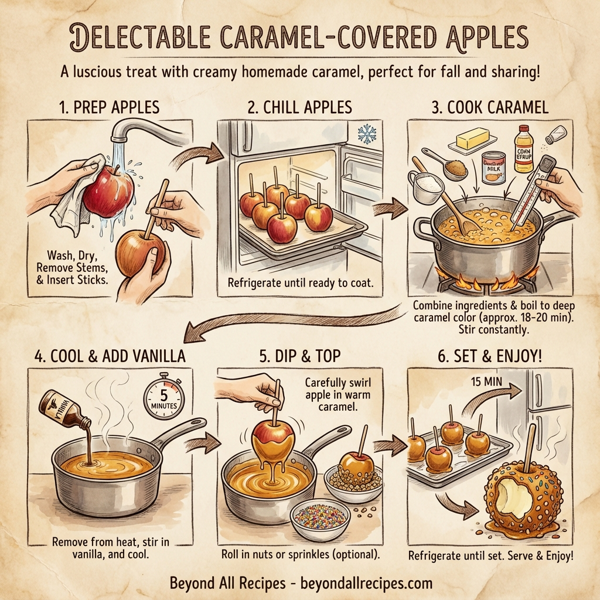
Start by washing the apples thoroughly to remove any wax and impurities, then dry them completely.
2
Remove the stems from the apples and insert a wooden stick firmly into the top of each apple, about halfway through to ensure stability.
3
Place the apples on a lined baking sheet and refrigerate until ready to coat.
4
In a heavy-bottomed saucepan (12 cups or larger), combine the granulated sugar, brown sugar, unsalted butter, sweetened condensed milk, corn syrup, and salt. Stir the mixture over medium-high heat until it reaches a gentle boil.
5
Once boiling, reduce the heat to medium-low and continue to simmer, stirring frequently, for 18-20 minutes or until the mixture thickens and reaches a deep caramel color, which corresponds to 234-236°F (112-113°C) on a candy thermometer. Ensure to constantly stir around the edges to prevent scorching.
6
Remove the saucepan from heat and stir in the vanilla extract. Allow the caramel to cool for about 5 minutes.
7
Prepare a rimmed baking sheet by lining it with greased foil or parchment paper to prevent sticking.
8
Hold each apple by the stick and carefully swirl it in the warm caramel, ensuring the apple is coated up to just below the stem. Allow any excess caramel to drip back into the saucepan.
9
If desired, roll the caramel-coated apple in chopped nuts, sprinkles, or any other preferred coatings before placing it on the prepared baking sheet.
10
Refrigerate the coated apples for about 15 minutes, or until the caramel has set. Serve and enjoy your delightful caramel-covered apples!
Nutrition Information
11g
Fat
40g
Carbs
1g
Protein
Frequently Asked Questions
Frequently Asked Questions
What are Delectable Caramel-Covered Apples?
They are fresh apples enveloped in a luxurious, homemade caramel sauce that is creamy, chewy, and irresistibly sweet.
How many apples does this recipe make?
The recipe yields 9 large apples or approximately 10 to 12 medium-sized apples.
Why should I wash and dry the apples before starting?
Washing removes wax and impurities, and drying them completely ensures the caramel adheres properly to the skin.
How do I prepare the wooden sticks for the apples?
Remove the stems and insert a wooden stick firmly into the top of each apple, about halfway through for stability.
Should the apples be cold before they are dipped?
Yes, placing the apples on a lined baking sheet in the refrigerator until you are ready to coat them helps the caramel set.
What size saucepan is required for the caramel?
A heavy-bottomed saucepan that holds 12 cups or more is recommended.
What are the ingredients for the homemade caramel sauce?
The sauce is made from granulated sugar, brown sugar, unsalted butter, sweetened condensed milk, corn syrup, salt, and vanilla extract.
How much sugar is used in the caramel?
The recipe calls for 1 cup of granulated sugar and 1 cup of packed brown sugar.
What type of butter is recommended?
The recipe specifies 3/4 cup of unsalted butter.
How much sweetened condensed milk is needed?
One 300 ml can of sweetened condensed milk is required.
What is the purpose of corn syrup in this recipe?
2/3 cup of corn syrup is used to help achieve the correct caramel texture and prevent crystallization.
How much vanilla extract should I add?
The recipe calls for 2 tablespoons of vanilla extract for flavoring.
At what heat should the caramel be cooked?
Start at medium-high heat until boiling, then reduce to medium-low to simmer.
How long does the caramel need to simmer?
It should simmer for 18 to 20 minutes until it thickens and reaches the desired color.
What temperature should the caramel reach on a candy thermometer?
The caramel should reach between 234 and 236 degrees Fahrenheit (112 to 113 degrees Celsius).
Why is frequent stirring necessary during simmering?
Stirring, especially around the edges, prevents the caramel mixture from scorching.
When do I add the vanilla extract to the mixture?
Remove the saucepan from the heat first, then stir in the vanilla extract.
How long should the caramel cool before dipping the apples?
The caramel should cool for about 5 minutes after being removed from the heat.
How should the baking sheet be prepared?
Line a rimmed baking sheet with greased foil or parchment paper to prevent sticking.
What is the best technique for coating the apples?
Hold the apple by the stick and swirl it in the warm caramel, coating it up to just below the stem.
Should I let the excess caramel drip off?
Yes, allow any excess caramel to drip back into the saucepan before placing the apple on the sheet.
Can I add toppings to the caramel apples?
Absolutely! You can roll the coated apples in chopped nuts, sprinkles, or any other preferred coatings.
How do I get the caramel to set?
Refrigerate the coated apples for about 15 minutes or until the caramel has hardened.
What are some good occasions for these apples?
They are perfect for fall, Halloween, or as a decadent snack for friends and family.
How many calories are in one caramel apple?
Each serving contains approximately 257 calories.
What is the fat content per serving?
There are 11 grams of fat per serving.
How many carbohydrates are in a caramel apple?
There are 40 grams of carbohydrates per serving.
Is there any protein in this treat?
Yes, each serving contains 1 gram of protein.
Can this be a group activity?
Yes, it is a great activity for two people where one person dips the apples and the other adds toppings.
What makes the caramel sauce unique?
It is a homemade blend that results in a creamy, chewy texture that is more decadent than store-bought versions.