Decadent Vegan Vanilla Crème Brûlée
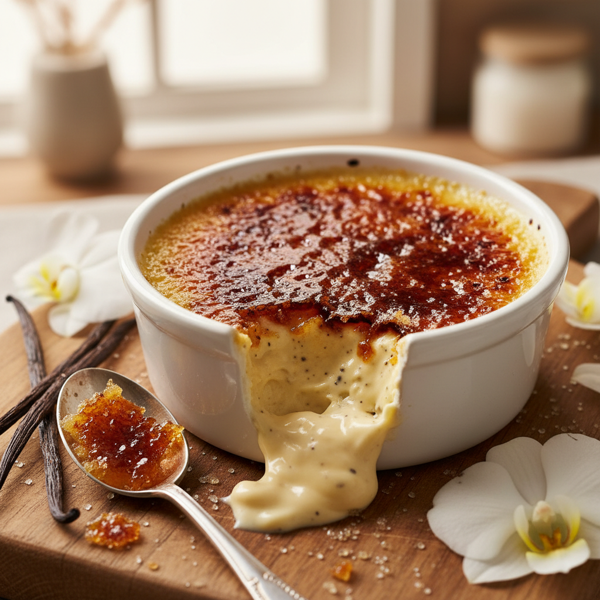
Indulge in this delightfully rich and creamy vegan crème brûlée that boasts all the flavor of the classic dessert without the use of dairy. Made with wholesome soft silken tofu, natural fruit sugar, and a hint of vanilla, this dessert captures the essence of French cuisine. Each luscious bite melts in your mouth, while the crispy caramelized sugar topping adds an irresistible crunch. Perfect for dinner parties or a cozy dinner at home, this dessert proves that vegan treats can be just as decadent and satisfying. Serve chilled for the ultimate dessert experience that will impress both vegans and non-vegans alike!
N/A
Servings
N/A
Calories
7
Ingredients
Ingredients
soft silken tofu
1 (12 ounce) package (drained and slightly pressed)
fruit sugar
1/2 cup (none)
soymilk
1/3 cup (none)
vanilla extract
2 tablespoons (none)
arrowroot powder
2 tablespoons (none)
salt
1 pinch (none)
sugar (for brulee topping)
3 tablespoons (for sprinkling)
Instructions
1
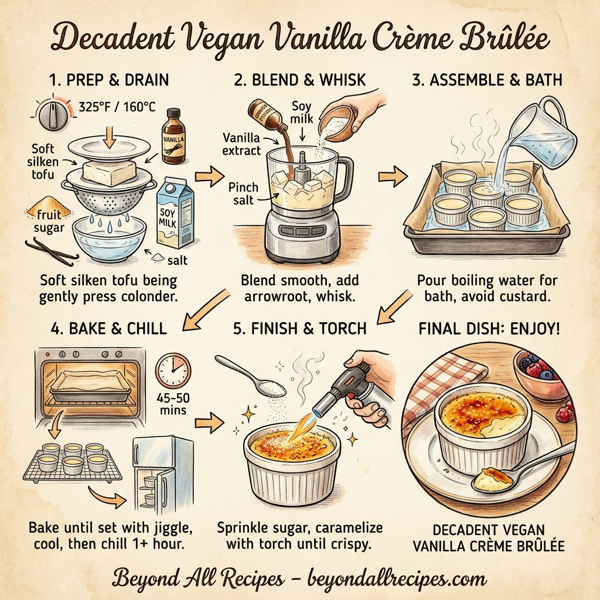
Preheat your oven to 325°F (160°C).
2
Drain and gently press the silken tofu to remove any excess liquid while you gather and prepare the remaining ingredients.
3
Prepare six ramekins by placing them in a shallow brownie baking pan. Cut a piece of parchment paper to fit the bottom of the pan, if desired.
4
Boil a kettle full of water, which will be used for the water bath.
5
In a food processor, combine the soft silken tofu, fruit sugar, vanilla extract, soy milk, and a pinch of salt. Blend until the mixture is completely smooth and creamy.
6
With the food processor running, gradually whisk in the arrowroot powder until fully incorporated.
7
Evenly distribute the prepared custard into the ramekins, filling them about three-quarters full.
8
Carefully pour the boiling water into the baking pan around the ramekins, ensuring that the water reaches about two-thirds of the way up the sides of the ramekins. Be cautious not to splash any water into the custard.
9
Cover the pan with parchment paper to prevent excess moisture and transferring everything to the preheated oven.
10
Bake for approximately 45 to 50 minutes, or until the custards are set but still have a slight jiggle in the center.
11
Once baked, carefully remove the ramekins from the water bath and allow them to cool on a wire rack for about 10 minutes before transferring to the refrigerator. Let them chill completely for at least an hour.
12
When you are ready to serve, sprinkle about 1 teaspoon of sugar evenly over the top of each custard.
13
Using a kitchen torch, gently pass the flame over the sugar until it caramelizes and turns a lovely amber color. Careful not to burn the sugar.
14
Allow the caramel to cool and harden for a few moments before serving. The topping should be thin, crispy, and crackly. Enjoy!
Nutrition Information
Frequently Asked Questions
Frequently Asked Questions
What is Vegan Vanilla Crème Brûlée?
It is a plant-based version of the classic French custard dessert, made using silken tofu and soy milk instead of eggs and heavy cream.
Is this recipe dairy-free?
Yes, this recipe is entirely dairy-free and vegan, utilizing silken tofu and soy milk.
What type of tofu should I use?
You must use soft silken tofu to achieve the necessary smooth and creamy custard consistency.
Can I use firm tofu instead of silken?
No, firm or extra-firm tofu will result in a grainy texture. Silken tofu is essential for the characteristic melt-in-your-mouth feel.
How do I prepare the tofu for this recipe?
Drain the liquid from the package and gently press the tofu to remove excess moisture before blending.
What is fruit sugar?
Fruit sugar, or fructose, is a natural sweetener that often has a finer crystal size, helping it dissolve easily into the custard.
Can I substitute fruit sugar with regular sugar?
Yes, regular granulated white sugar can be used as a 1:1 substitute for fruit sugar in the custard base.
What is the purpose of arrowroot powder?
Arrowroot powder acts as a thickening agent that helps the vegan custard set firmly while maintaining a smooth texture.
Can I substitute arrowroot powder with cornstarch?
Yes, cornstarch can be used as a substitute for arrowroot powder if needed.
Do I have to use soy milk?
Soy milk is recommended for its protein content which aids in setting, but other plant milks can be used.
Can I use almond or oat milk instead?
Yes, unsweetened almond or oat milk will work, though the final texture may vary slightly from the soy milk version.
How much vanilla extract is used?
The recipe calls for 2 tablespoons of vanilla extract to ensure a rich, decadent vanilla flavor.
Why is a water bath (bain-marie) necessary?
A water bath ensures the custard cooks gently and evenly, preventing the edges from overcooking or the top from cracking.
How high should the water be in the baking pan?
The boiling water should reach about two-thirds of the way up the sides of the ramekins.
What temperature should I bake the crème brûlée at?
The oven should be preheated and set to 325°F (160°C).
How long does it take to bake?
The custards typically need to bake for 45 to 50 minutes.
How do I know when the custards are done?
They are ready when they are set at the edges but still have a slight, uniform jiggle in the center.
Why do I need to chill the custard?
Chilling is crucial because it allows the custard to fully firm up and develop its final luscious texture.
How long should I chill the dessert before serving?
Chill the ramekins for at least one hour, though several hours or overnight is preferred for the best results.
How do I create the caramelized sugar topping?
Sprinkle a teaspoon of sugar over the chilled custard and use a kitchen torch to melt and brown it into a hard shell.
What if I don't have a kitchen torch?
You can use your oven's broiler for a few minutes, though you must watch it very closely to prevent burning.
What sugar is best for the brûlée topping?
Granulated white sugar or turbinado sugar works best for achieving a thin, crispy, and crackly topping.
Can I make this dessert in advance?
Yes, you can bake and chill the custards a day ahead. Always wait to add and torch the sugar until just before serving.
How many servings does this recipe provide?
This recipe is designed to fill approximately six standard-sized ramekins.
Is this recipe gluten-free?
Yes, all the primary ingredients including tofu, soy milk, and arrowroot are naturally gluten-free.
Can I add other flavors like coffee or chocolate?
Yes, you can easily customize the flavor by adding espresso powder or cocoa powder to the blender mixture.
Why did my custard come out watery?
Wateriness usually results from not draining the tofu well enough or underbaking the custards.
How should I store leftovers?
Store any leftover custards in the refrigerator covered with plastic wrap for up to 3 to 4 days.
Is this recipe suitable for dinner parties?
Absolutely! It is an elegant and impressive dessert that satisfies both vegan and non-vegan guests.
What is the final texture of the dessert?
The final result features a silky, creamy interior contrasted by a thin, brittle, and caramelized sugar crust.