Decadent Overnight Caramel Pecan Sticky Buns
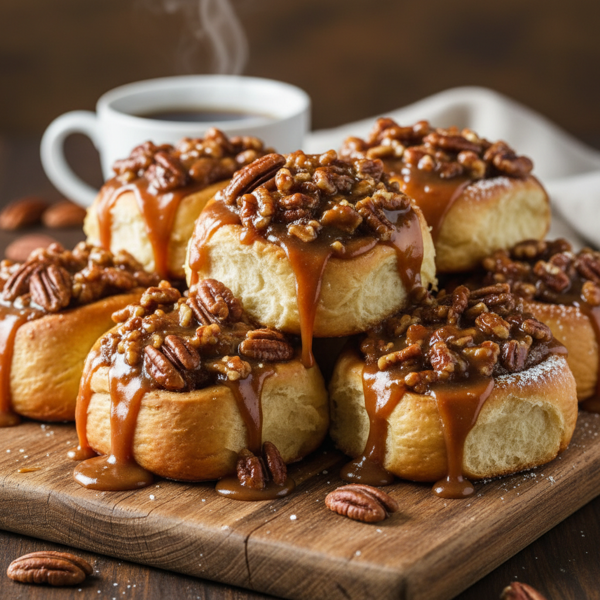
Indulge in these luscious, gooey sticky buns that are perfectly balanced in sweetness and richness. Ideal for a special breakfast or brunch, these unbelievably tender buns are made with a buttery, nuanced dough, filled with warm spices and brown sugar, and topped with a heavenly caramel glaze and toasted pecans. Designed for convenience, this recipe allows you to prepare the dough and shape the buns the night before, making your morning effortless. Simply let them rise and bake to golden perfection. Enjoy these delightful treats fresh out of the oven or warm them up later for a comforting snack.
12
Servings
280
Calories
17
Ingredients
Ingredients
eggs
3 large (at room temperature)
buttermilk
3/4 cup (at room temperature)
granulated sugar
1/4 cup
table salt
1 1/4 teaspoons
instant yeast
2 1/4 teaspoons
unbleached all-purpose flour
4 1/4 cups (plus additional for dusting work surface)
unsalted butter
6 tablespoons (melted and cooled until warm)
packed light brown sugar
3/4 cup (for the filling)
corn syrup
3 tablespoons (light or dark)
heavy cream
2 tablespoons
ground cinnamon
2 teaspoons
ground cloves
1/4 teaspoon
unsalted butter
1 tablespoon (melted, for brushing)
packed light brown sugar
1/4 cup (for topping)
table salt
1 pinch
vanilla extract
1 teaspoon
pecans
3/4 cup (toasted in skillet until fragrant and cooled)
Instructions
1
For the Dough:
2
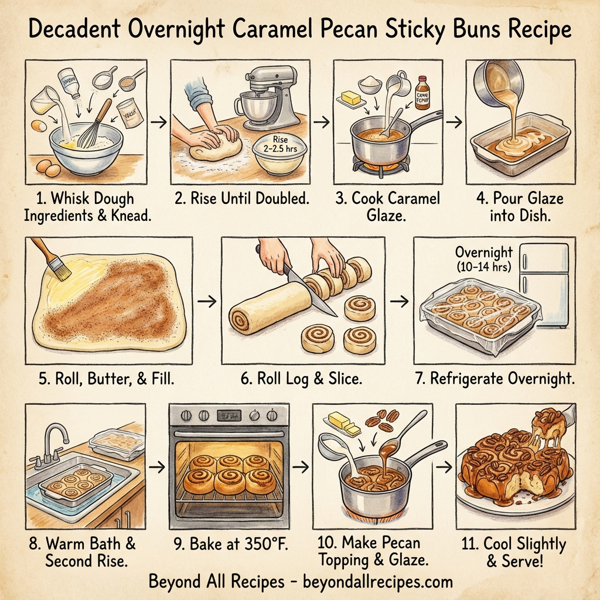
In the bowl of a standing mixer, whisk together the eggs, buttermilk, granulated sugar, salt, and instant yeast until combined.
3
Add about 2 cups of flour and the melted butter; stir with a wooden spoon or rubber spatula until the mixture is evenly moistened.
4
Incorporate the remaining flour (reserving about 1/4 cup for kneading) and knead with a dough hook on low speed for about 5 minutes, checking the consistency. The dough should feel soft and moist but not wet; add extra flour as needed.
5
Knead for another 5 minutes, until the dough clears the sides of the bowl but still sticks to the bottom.
6
Transfer the dough to a floured surface and knead by hand for about 1 minute to ensure uniformity. The dough should not stick during this process; if it does, incorporate additional flour a tablespoon at a time.
7
Lightly spray a large bowl or plastic container with nonstick cooking spray and place the dough in it. Spray the top of the dough lightly, cover tightly with plastic wrap, and set in a warm, draft-free spot until doubled in size, about 2 to 2.5 hours.
8
For the Glaze:
9
In a small saucepan, combine the glaze ingredients: unsalted butter, light brown sugar, corn syrup, heavy cream, and a pinch of salt. Cook over medium heat, whisking occasionally, until the butter is melted and the mixture is completely combined.
10
Pour the glaze into a nonstick 13 by 9-inch baking dish, using a rubber spatula to ensure it covers the bottom evenly. Set the dish aside.
11
To Assemble and Bake the Buns:
12
In a small bowl, combine the filling ingredients: light brown sugar, ground cinnamon, ground cloves, and a pinch of salt. Mix thoroughly, breaking up any lumps with your fingers; set aside.
13
Turn the risen dough onto a lightly floured surface, shaping it into a rough rectangle with the long side facing you.
14
Roll the dough into a 16 by 12-inch rectangle, lightly flouring it to prevent sticking. Brush the surface of the dough with 1 tablespoon of melted butter, leaving a 1/2-inch border along the top edge. Brush the sides of the baking dish with the remaining melted butter.
15
Evenly sprinkle the filling mixture over the dough, again leaving a 3/4-inch border along the top edge, and gently press it into the dough.
16
Starting from the long edge nearest you, roll the dough into a tight cylinder, pinching the seam to seal it. Stretch the cylinder to an even thickness, about 18 inches in length, and push in the ends to maintain an even diameter.
17
Using a serrated knife, slice the cylinder in half, then each half into quarters, creating 12 evenly sized buns (end pieces may be smaller).
18
Arrange the buns cut-side down in the prepared baking dish, cover tightly with plastic wrap, and refrigerate for 10 to 14 hours.
19
The next morning, place the baking dish in a warm-water bath (about 120°F) in a kitchen sink or large roasting pan for 20 minutes.
20
After removing from the water bath, let the buns stand at room temperature until slightly puffy and pressed against one another, about 1.5 hours.
21
About 1 hour before baking, adjust the oven rack to the lowest position, place a pizza stone in the oven if using, and preheat to 350°F.
22
Bake the sticky buns on the prepared stone until golden brown and the center of the dough registers about 180°F (approximately 25 to 30 minutes).
23
Cool the buns on a wire rack for 10 minutes before inverting onto a rimmed baking sheet or platter; scrape any remaining glaze over the buns as they cool.
24
For the Pecan Topping:
25
In a small saucepan, combine the topping ingredients: unsalted butter, brown sugar, corn syrup, and salt. Bring to a simmer over medium heat while whisking until fully combined.
26
Off the heat, stir in the vanilla extract and toasted pecans until they are evenly coated.
27
Spoon a heaping tablespoon of the nut mixture over the center of each sticky bun.
28
Allow the buns to cool for 15 to 20 minutes. Serve warm, pulling apart or carefully cutting them with a serrated knife.
Nutrition Information
13.3g
Fat
36.7g
Carbs
4g
Protein
Frequently Asked Questions
Frequently Asked Questions
What are Decadent Overnight Caramel Pecan Sticky Buns?
They are luscious, gooey buns made with a buttery dough, filled with warm spices and brown sugar, and topped with a caramel glaze and toasted pecans.
How many buns does this recipe yield?
This recipe makes 12 evenly sized sticky buns.
How long should the dough be refrigerated overnight?
The dough should be refrigerated for 10 to 14 hours.
What is the purpose of the warm-water bath in the morning?
The warm-water bath helps take the chill off the refrigerated dough and encourages the second rise.
What temperature should the water bath be?
The water bath should be approximately 120°F.
How long do the buns need to rise after the water bath?
They should stand at room temperature for about 1.5 hours until slightly puffy.
What temperature should the oven be set to?
The oven should be preheated to 350°F.
Where should the oven rack be positioned?
The oven rack should be adjusted to the lowest position.
How do I know the sticky buns are fully baked?
The buns are done when they are golden brown and the center of the dough registers about 180°F.
What ingredients are in the caramel glaze?
The glaze consists of unsalted butter, light brown sugar, corn syrup, heavy cream, and a pinch of salt.
What spices are used in the filling?
The filling uses light brown sugar, ground cinnamon, ground cloves, and a pinch of salt.
How should the pecans be prepared?
Pecans should be toasted in a skillet until fragrant and then cooled before use.
Can I use a pizza stone for baking these buns?
Yes, placing a pizza stone in the oven during preheating is recommended for this recipe.
What size baking dish is required?
A nonstick 13 by 9-inch baking dish is needed.
How many calories are in one serving?
Each bun contains approximately 280 calories.
What type of yeast is used in the dough?
The recipe calls for 2 1/4 teaspoons of instant yeast.
How long is the first rise for the dough?
The first rise takes about 2 to 2.5 hours in a warm, draft-free spot.
What should the dough consistency feel like?
The dough should feel soft and moist but not wet.
How large should the dough be rolled out?
The dough should be rolled into a 16 by 12-inch rectangle.
How do I ensure the buns are evenly sized?
Slice the dough cylinder in half, then slice each half into quarters to create 12 pieces.
How long should the buns cool before inverting them?
Let the buns cool on a wire rack for 10 minutes before inverting onto a platter.
Can I use dark corn syrup instead of light?
Yes, the recipe allows for either light or dark corn syrup.
What is the fat content per serving?
Each serving contains 13.3g of fat.
Do the eggs and buttermilk need to be room temperature?
Yes, both the eggs and buttermilk should be at room temperature for the dough.
How is the pecan topping applied?
A heaping tablespoon of the prepared nut and syrup mixture is spooned over the center of each bun.
What is the total carbohydrate count per serving?
Each bun has 36.7g of carbohydrates.
How long should I knead the dough by hand?
After using a dough hook, knead by hand for about 1 minute to ensure uniformity.
How do I prevent the dough from sticking during rolling?
Use a lightly floured surface and lightly flour the dough as you roll it.
Should I brush the dough with butter before filling?
Yes, brush the surface with 1 tablespoon of melted butter, leaving a border at the top.
Can these be served warm?
Yes, they are best served warm, either fresh from the oven or reheated as a snack.