Decadent Goat Cheese Gnudi
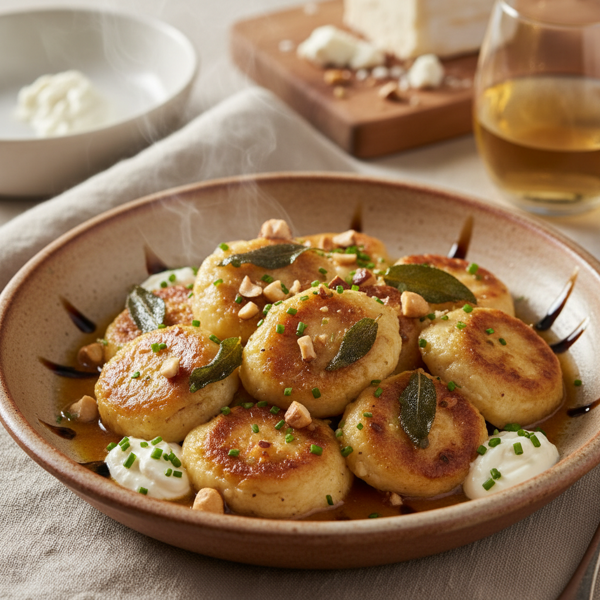
Indulge in the rich and creamy flavors of these decadent Goat Cheese Gnudi, a delicious adaptation of traditional gnocchi. Often referred to as 'gnudi,' which translates to 'nude' in Italian, these little pillows of goodness capture the essence of ravioli filling without the carbohydrate-heavy pasta shell. Made predominantly from an irresistible blend of goat cheese, cream cheese, and Parmesan, these dumplings provide a unique twist on a classic dish. Perfectly suited for those seeking a low-carb meal, each bite is a satisfying combination of cheesy goodness and a tender texture that pairs beautifully with your choice of sauce. Ideal for a cozy dinner or a festive gathering, this dish will impress your guests while keeping things light and healthy.
N/A
Servings
N/A
Calories
6
Ingredients
Ingredients
Soy flour
1/2 cup (sifted)
All-purpose flour
1/2 cup (sifted)
Parmesan cheese
1 1/2 cups (grated)
Egg yolks
3 large (only)
Goat cheese
8 ounces (softened)
Cream cheese
8 ounces (softened)
Instructions
1
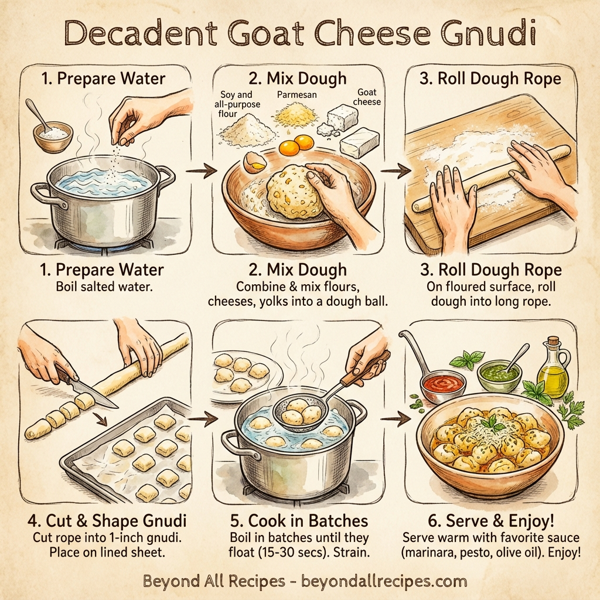
Start by bringing a large pot of water to a gentle boil over medium heat. Add a pinch of salt for flavor.
2
In a large mixing bowl, combine the sifted soy flour, all-purpose flour, grated Parmesan cheese, egg yolks, softened goat cheese, and cream cheese. Using your hands, mix the ingredients together until you form a cohesive dough ball.
3
Dust a large wooden surface with a bit of flour to prevent sticking. Take a small handful of the dough and roll it between your palms to create a rope approximately 1/2 to 3/4 inch thick and about one foot long.
4
Using a small knife, cut the rope into 1-inch sections to form the gnudi. Repeat this process until all of the dough is shaped, yielding around 172 gnudi. Place the dumplings on a cookie sheet lined with wax paper or non-stick foil to prevent sticking.
5
Carefully add a portion (about 30 gnudi) to the boiling water. Watch as they float to the surface, which indicates they are cooking properly. Allow them to float for about 15 to 30 seconds before using a strainer to remove them. Transfer the cooked gnudi to a large platter or bowl.
6
Continue to boil and strain the remaining gnudi in batches. Once all the gnudi are cooked, serve them warm topped with your favorite sauce—be it a marinara, pesto, or a simple drizzle of olive oil and fresh herbs. Enjoy!
Nutrition Information
Frequently Asked Questions
Frequently Asked Questions
What are Goat Cheese Gnudi?
Goat Cheese Gnudi are light, pillowy dumplings similar to gnocchi but made primarily from cheese instead of potato, representing the 'nude' filling of a ravioli.
What does the term 'gnudi' mean?
The word 'gnudi' translates to 'nude' in Italian, referring to the fact that these are essentially ravioli fillings served without the pasta shell.
Is this Goat Cheese Gnudi recipe low-carb?
Yes, this recipe is designed as a low-carb alternative to traditional pasta, using a blend of cheeses and a small amount of soy and all-purpose flour.
What are the primary cheeses used in this recipe?
This recipe uses a rich blend of goat cheese, cream cheese, and grated Parmesan cheese.
How many gnudi does this recipe produce?
This recipe yields approximately 172 individual gnudi dumplings.
What kind of flour is required for the dough?
The recipe requires 1/2 cup of sifted soy flour and 1/2 cup of sifted all-purpose flour.
How should the goat cheese and cream cheese be prepared?
Both the goat cheese and the cream cheese should be softened before mixing to ensure a smooth dough consistency.
How do you form the gnudi dough?
Combine the flours, Parmesan, egg yolks, and softened cheeses in a bowl and mix by hand until a cohesive dough ball forms.
What is the best way to shape the gnudi?
Roll small handfuls of dough into ropes about 1/2 to 3/4 inch thick on a floured surface, then cut into 1-inch sections.
How long should the dough ropes be?
It is recommended to roll the dough into ropes that are approximately one foot long before cutting.
How thick should the gnudi be?
The dough ropes should be rolled to a thickness of between 1/2 inch and 3/4 inch.
What prevents the gnudi from sticking after they are shaped?
Place the cut gnudi on a cookie sheet lined with wax paper or non-stick foil to prevent them from sticking together.
How do you cook the gnudi?
Carefully add the gnudi to a large pot of gently boiling salted water and cook until they float to the surface.
How long do the gnudi need to boil?
Once they float to the surface, let them cook for an additional 15 to 30 seconds before removing.
Should I cook all 172 gnudi at once?
No, it is best to cook the gnudi in batches of about 30 at a time to ensure they cook properly and do not crowd the pot.
How can I tell when the gnudi are done cooking?
The gnudi are nearly done when they rise and float on the surface of the boiling water.
What tool should I use to remove the cooked gnudi?
Use a strainer or slotted spoon to carefully lift the cooked gnudi out of the water.
What type of egg product is used in the dough?
This recipe uses 3 large egg yolks to help bind the cheese and flour mixture.
Can I use this recipe for a party?
Yes, because it makes a large quantity (172 pieces) and has a decadent flavor, it is ideal for festive gatherings or dinner parties.
What sauces pair well with Goat Cheese Gnudi?
They pair beautifully with marinara sauce, pesto, or a simple drizzle of olive oil with fresh herbs.
Is salt added to the cooking water?
Yes, adding a pinch of salt to the boiling water is recommended for extra flavor.
What is the texture of these gnudi like?
These gnudi have a tender, creamy, and satisfying cheesy texture that is lighter than traditional potato gnocchi.
Why is the flour sifted?
Sifting the soy and all-purpose flour helps prevent clumps and ensures a smoother, more uniform dough.
Is this recipe considered a healthy option?
Yes, it is described as a light and healthy recipe, particularly for those looking to reduce their carbohydrate intake.
What should I use to dust the work surface?
Use a bit of extra flour on your wooden surface to prevent the cheese dough from sticking while you roll it.
Can I serve these cold?
Gnudi are best served warm immediately after they have been boiled and strained.
What makes this recipe unique compared to traditional pasta?
Its uniqueness comes from the dominant use of goat cheese and cream cheese, making it much richer than flour-based pasta.
How long is the total cooking time per batch?
Each batch takes only a few minutes to boil until they float, plus an additional 15-30 seconds of floating time.
Is there any special preparation for the Parmesan cheese?
The Parmesan cheese should be finely grated before being added to the dough mixture.
Can I use fresh herbs with this dish?
Yes, fresh herbs are highly recommended as a garnish or mixed with olive oil for a simple, elegant presentation.